 Appointment Lookup
 213-596-2538
Washer not working? Learn the most common reasons your washing machine won't start, fill, spin, or drain—plus when to DIY and when to call a pro.
What Does It Mean When an LG Washer Won't Drain?
What Are the Most Common Reasons an LG Washer Won't Drain?
How Do I Drain an LG Washer Manually?
How to Clean the Drain Pump Filter on an LG Washer
How Do I Know If My LG Washer's Drain Pump Is Bad?
When Should You Call a Professional for LG Washer Drain Repair?
Frequently Asked Questions
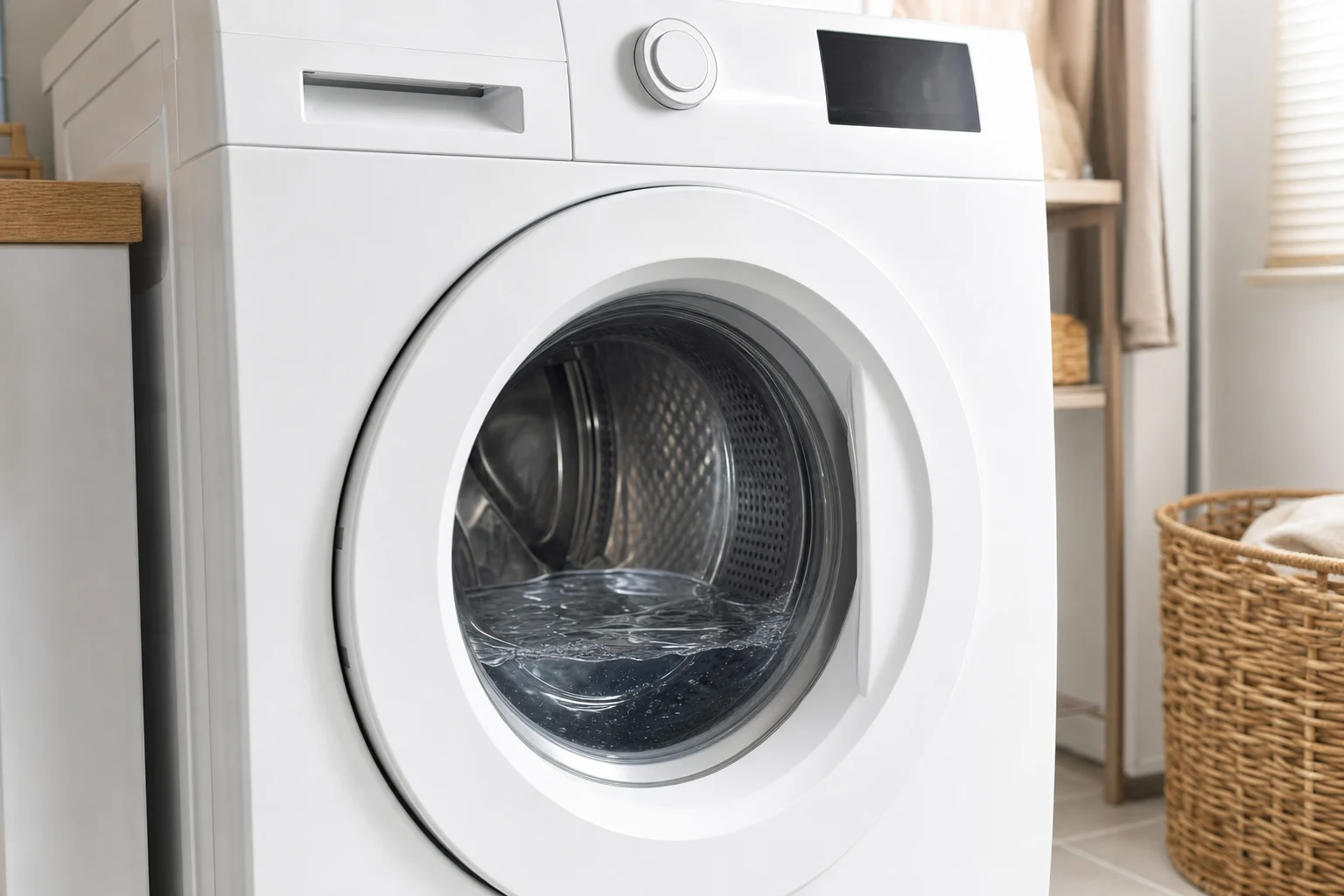
An LG washer typically won't drain because of a clogged drain pump filter, a kinked drain hose, a failed drain pump, or a faulty door lock—often shown by an OE error code. Clearing the drain filter and inspecting the hose resolves most cases. Persistent problems usually point to a pump or control board failure that needs a technician. This guide walks through what the OE code means, how to drain the tub manually, how to clean the filter, and how to tell the difference between a quick DIY fix and a repair worth booking out.
KEY TAKEAWAYS
When an LG washer finishes a cycle with water still sitting in the tub—or stops mid-cycle and flashes an error—the drain system has failed to move water out fast enough. On LG models, that's almost always signaled by an OE code on the display panel.
OE stands for "outlet error." The washer's control board expects the tub to be empty within a set number of minutes after the pump activates. If a water-level sensor still detects water past that window, the machine stops the cycle and posts OE. The code itself doesn't tell you why the water didn't leave—only that it didn't. That's why you have to check the filter, hose, and pump in order.
LG front-load washers have a drain pump filter accessible behind a small panel at the bottom front of the machine. Top-load LG washers typically don't have a user-accessible filter—debris ends up in the pump housing itself, which is harder to reach. Both styles use an electric drain pump and a corrugated drain hose that runs to a standpipe or utility sink.
A tub full of water isn't just an inconvenience. Running another cycle can overflow the door seal, soak the motor and control board, and dump gallons onto your laundry room floor. If your washer won't drain, stop using it until the water is out and the cause is identified. Our full washer symptom guide for LG models that won't drain covers the safe shutdown sequence.
Ranked by how often our technicians see them in the field, here are the top five causes.
Lint, coins, hair ties, and small socks collect in the pump filter over months of use. Once flow is restricted, the pump can't move water fast enough to satisfy the sensor and OE trips. This is the fix for roughly two-thirds of no-drain calls on LG front-loaders.
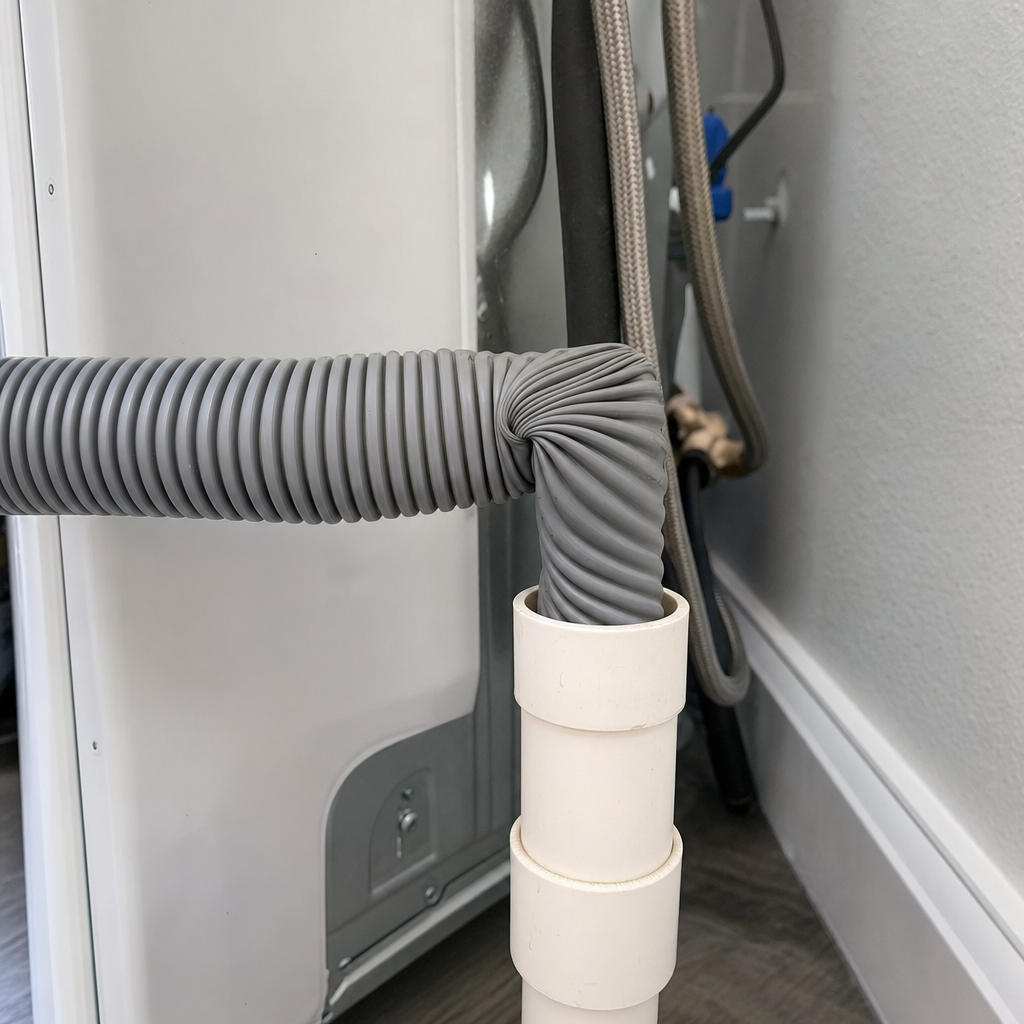
A hose crushed behind the machine, or one shoved too far down a standpipe, will strangle drainage. Detergent scum and lint can also build up inside the hose over years.
Drain pumps typically last 7–10 years. When the motor's windings burn out or the impeller cracks, you'll hear a hum or nothing at all when the drain phase starts.
LG washers won't drain or spin if the control board doesn't see a "door locked" signal. A failed door lock switch mimics a drain failure exactly.
Less common, but a corroded connector or failed relay on the main control board can prevent the pump from getting power even when everything else is intact.
Before you can inspect anything, the tub has to be empty.
Top-loaders don't have a front access panel. Disconnect the drain hose from the standpipe, lower it into a bucket below the washer's water line, and let gravity pull the water out. Have several buckets ready—a full LG top-load tub holds 15+ gallons.
⚠️ Warning: Never open the door of a front-load washer with water above the door glass line. It will flood.
This is the highest-payoff 15 minutes of maintenance you can do on an LG front-loader.
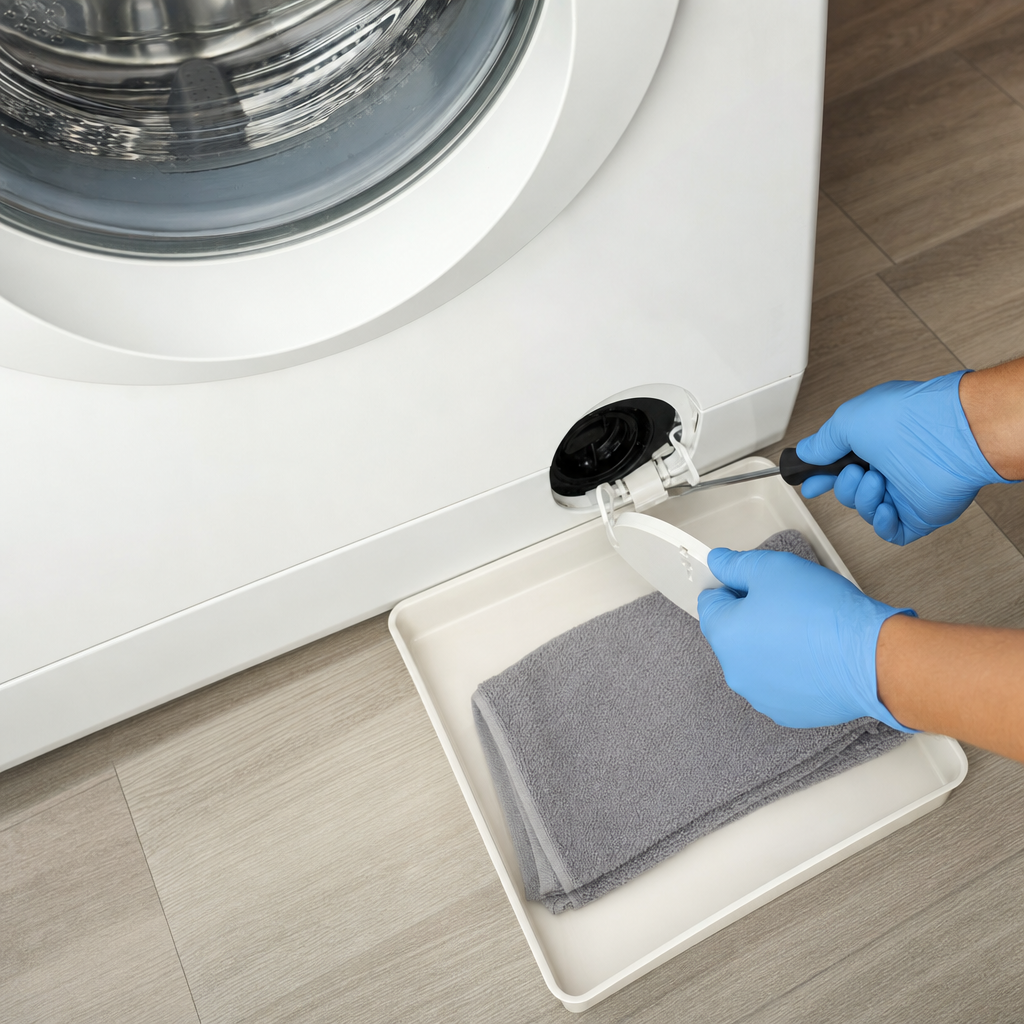
Look at the bottom-front of the machine. You'll see either a hinged rectangular door or a pop-off cover. Pry it gently at the notch with a flat screwdriver or coin.
LG recommends monthly. If you wash pet bedding, shop rags, or heavily linted items, do it every two weeks. Households that never clean the filter are the ones who end up needing a pump replacement years earlier than expected.
A clean filter and a clear hose narrow it down to the pump itself. Here's what a failing pump sounds and behaves like.
When the drain phase starts, put your ear near the front-bottom of the machine. A steady hum with no gurgle means the pump motor is getting power but the impeller isn't spinning—usually a seized bearing or a jammed impeller.
A broken impeller vane will rattle loudly during drain. A grinding sound means the pump is chewing on debris that got past the filter (which itself may be cracked).
If you've cleaned the filter, straightened the hose, and confirmed the standpipe isn't clogged, and the OE code comes back within a few cycles, the pump is the next component to replace. Related washer spin problems often share the same root cause—no drain, no spin.
Some jobs are worth the 15 minutes. Others aren't worth risking a flooded floor or a warranty-voiding tear-down.
Sears Home Services dispatches manufacturer-trained technicians who arrive with commonly needed LG parts on the truck. Your technician diagnoses the problem, provides an exact quote—parts and labor—that doesn't change once given, and only proceeds with your approval. All repairs come with a service guarantee. You can book LG washer repair online or by phone, and same-day appointments may be available in your area.
| Issue | Typical Repair Cost Range | DIY-Friendly? |
|---|---|---|
| Clogged drain filter | $0 (self-service) | Yes |
| Blocked or kinked drain hose | $90–$200 | Sometimes |
| Drain pump replacement | $250–$450 | No |
| Door lock assembly | $200–$350 | No |
| Control board fault | $350–$600 | No |
The diagnostic fee runs $90 to $150 depending on the appliance and is waived if you proceed with the repair. For homeowners weighing coverage on multiple aging appliances, a home service plan can offset repeat repair costs. If the machine is past 10 years old and facing a pump plus control board bill, replacement often makes more sense than repair—browse our full washer repair services page for guidance, or check the repair FAQ for scheduling details. For related symptoms like an LG washer that won't wash, the diagnostic path overlaps significantly.
With years of experience, our technicians possess the skills to repair your washer, regardless of the issue.
Loading scheduler options...
Washer not working? Learn the most common reasons your washing machine won't start, fill, spin, or drain—plus when to DIY and when to call a pro.
Learn how to repair a Kenmore washer with step-by-step fixes for common issues like leaks, no spin, and error codes. DIY tips plus when to call a pro.

Learn how a hall sensor works in a washer to control spin basket speed and direction.

Learn how a pressure transducer works to detect water level in a washing machine.
The drum is the core part of the washer that holds your laundry and enables the cleaning process through rotation, agitation, and rinsing.
Hard water is water that contains high levels of dissolved minerals, particularly calcium and magnesium. It contrasts with soft water, which has lower concentrations of these minerals.
A washing machine pedestal is a platform that raises the washer off the ground, providing easier access to the appliances and often includes additional storage space such as drawers.
A washer tub is the interior part of a washing machine where clothes are placed for washing, typically made of stainless steel, plastic, or porcelain-coated metal, designed to hold water and withstand the agitation or spinning during the wash cycle.
The most common reasons your LG washer is leaking from bottom are a clogged water valve assembly, broken motor or a cracked drain hose.
The most common reasons your GE washer won't start cycle are a malfunctioning electronic control board, jammed door lock assembly or a faulty user interface.
The most common reasons your Whirlpool washer is not rinsing are a faulty lid switch, a bad water-level pressure switch, or a defective timer.
The most common reasons your GE washer is not filling are a clogged water valve assembly, malfunctioning electronic control board or a bad water level pressure switch.
The most common reasons your Samsung washer top load is not filling with water are a clogged water valve, a malfunctioning PCB, or a cracked hose.
The most common reasons your Samsung washer is noisy are a damaged suspension rod, malfunctioning electronic control board or a broken motor.