 Appointment Lookup
 213-596-2538
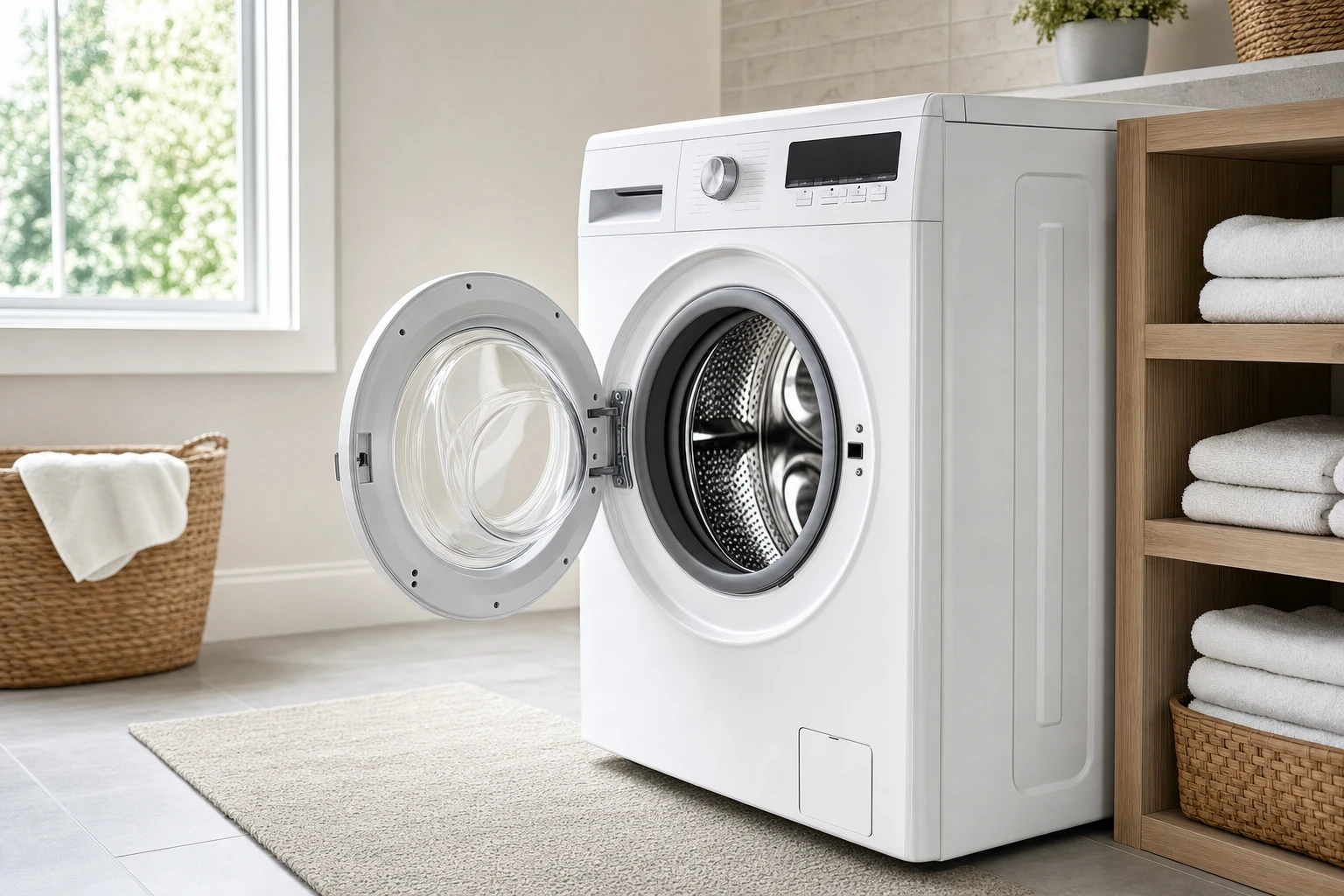
Washer not working? Learn the most common reasons your washing machine won't start, fill, spin, or drain—plus when to DIY and when to call a pro.
What Are the Most Common Kenmore Washer Problems?
How Do You Safely Prepare to Repair a Kenmore Washer?
How Do You Fix a Kenmore Washer That Won't Start or Spin?
How Do You Fix a Kenmore Washer That's Leaking or Won't Drain?
What Do Kenmore Washer Error Codes Mean?
When Should You Call a Professional for Kenmore Washer Repair?
Frequently Asked Questions
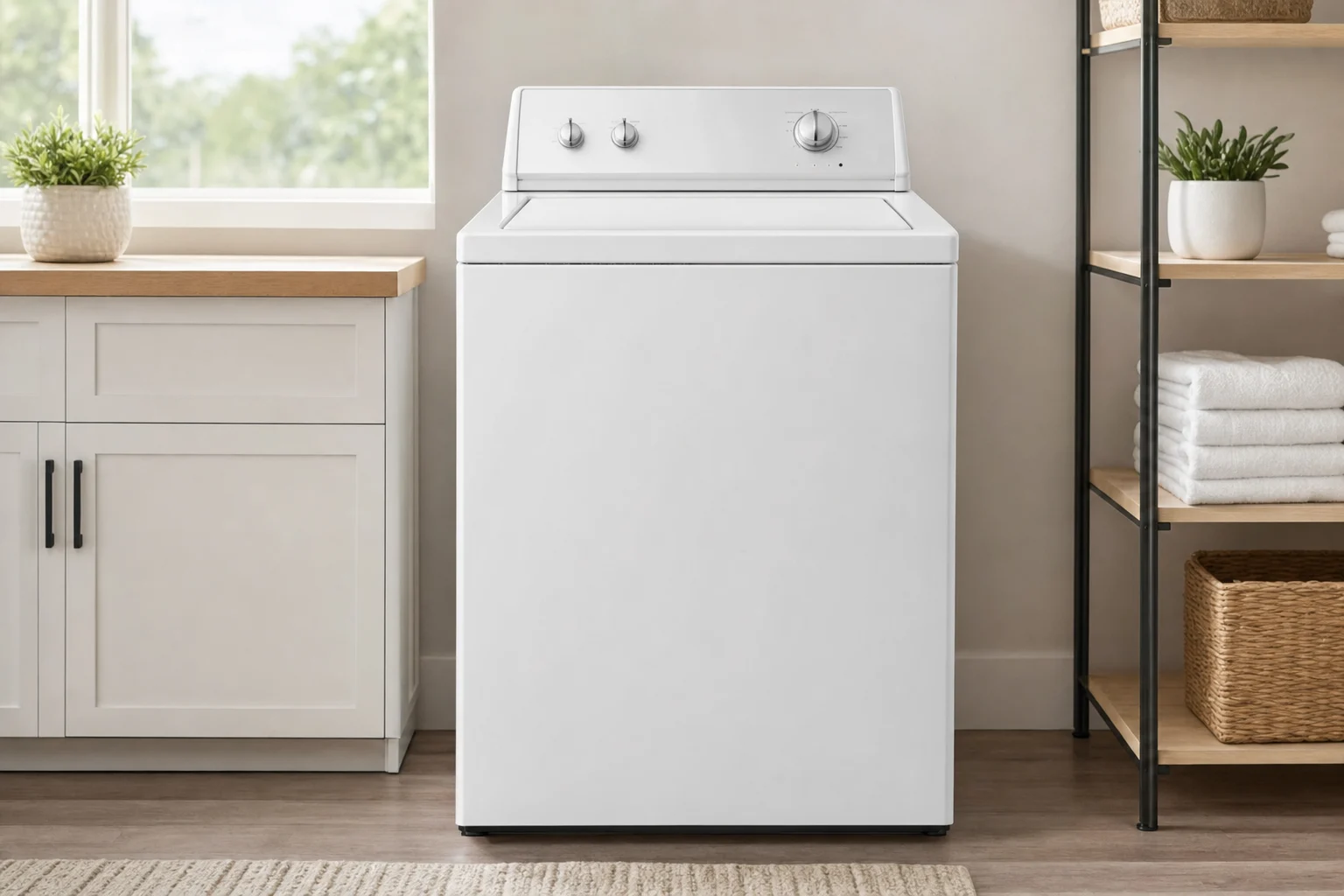
To repair a Kenmore washer, identify the symptom first, then check power, load balance, hoses, and the lid switch or door lock before testing the drive belt, pump, or control board. Simple issues like clogged filters or unbalanced loads are DIY-friendly. Electrical faults, transmission problems, and sealed-tub leaks belong to a manufacturer-trained technician. This guide walks you through the diagnostic sequence Sears Home Services technicians use every day — the same order of checks, the same safety steps, and honest guidance on when to stop and call for help.
KEY TAKEAWAYS
Kenmore top-load and front-load washers are built by several manufacturers (Whirlpool, LG, and Frigidaire among them), so symptoms overlap with those brands. After 1.1 million completed orders per year across our service network, five failures show up again and again.
Dead control panel or no response when you press Start. Usually a tripped outlet, an engaged control lock, or a failed lid switch — not a dead machine. Check the breaker first.
Motor hums or the tub fills but never turns. On top-loaders, this is almost always a broken motor coupler or worn drive belt. On front-loaders, suspect the door lock assembly or drive belt.
Puddles under the machine or water tracking across the floor mid-cycle. Fill hoses, the drain hose clamp, the tub-to-pump hose, and the front-load door boot are the four usual suspects.
Cycle stalls with standing water in the drum, or the tub never fills. Drainage failures point to a clogged pump or coin trap. Fill failures point to inlet valve screens, kinked hoses, or a closed shut-off.
Loud thumping in spin or grinding during agitation. Unbalanced load first, then worn tub bearings, a bad shock absorber, or a foreign object stuck in the outer tub.
If the machine is showing a code on the display, jump ahead to the error-code section. For a broader view of failure patterns, our washer repair archive covers dozens of specific symptoms.
Before you pop a single panel, do these three things. Every technician does them, in this order, every time.
⚠️ Warning: Do not bypass a lid switch or door lock to keep the washer running with the lid open. Those switches exist because the drum spins at 600–1,200 RPM and can pull a hand in fast.
Run through these four checks in order. Nine times out of ten, one of them ends the problem.
Plug a lamp into the same outlet to confirm 120V. If the outlet is live, check whether the Control Lock or Child Lock indicator is illuminated — press and hold that button for three seconds to release it. A soft reset (unplug for 60 seconds, plug back in) clears most control glitches.
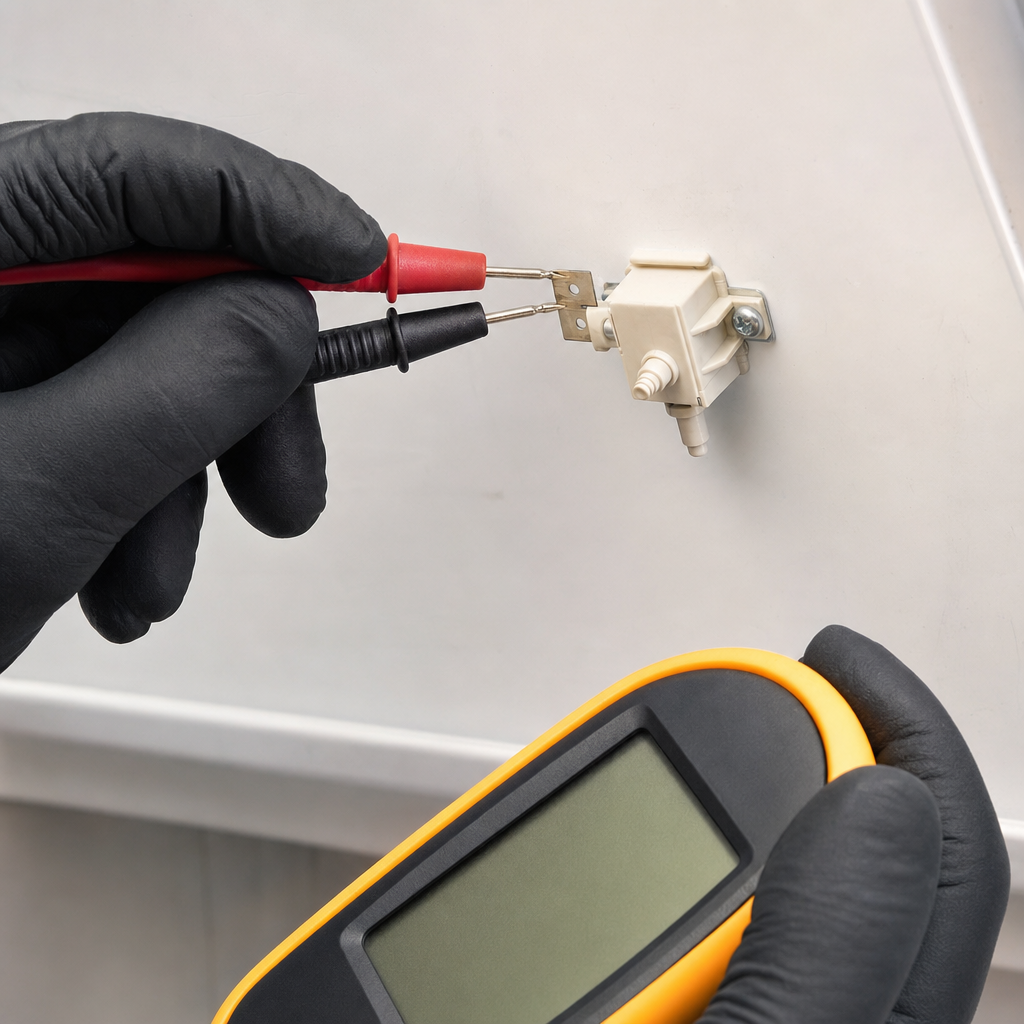
On top-loaders, the lid switch is a small plastic actuator under the lid hinge. With the washer unplugged, disconnect the harness and use a multimeter on the two terminals — you should read continuity when the lid closes. No continuity = replace the switch. Front-load door locks are tested the same way but require pulling the boot back to reach the harness.
On direct-drive top-loaders, the motor coupler is a plastic-and-rubber part between the motor and transmission. If the tub fills and drains but won't agitate or spin, the coupler is almost certainly sheared. Belt-drive and front-load models use a rubber belt — look for cracks, glazing, or a belt that's jumped off the pulley. If the machine won't power on at all, our Kenmore washer not working troubleshooting page breaks the diagnostic tree down further.
An unbalanced load will make a Kenmore washer pause, redistribute, and sometimes throw a uL or LF code. Redistribute wet laundry evenly around the drum. Then check that all four leveling feet are firmly on the floor — a rocking washer will refuse to spin at full speed.
Leaks and drainage problems share a lot of the same suspects. Work outside-in.
Pull the washer forward. Look at the two fill hoses (hot and cold) at the back — bulges, cracks, or a wet hose collar means replace it. Rubber hoses should be swapped every 5 years; braided stainless every 10. Check the drain hose for kinks and the standpipe for a clog.
Most front-load Kenmores and some newer top-loaders have an accessible debris filter behind a small kick-panel door at the bottom front. Put a shallow pan under it — there's always residual water — unscrew the filter, and pull out coins, hair ties, lint mats, and the occasional sock.
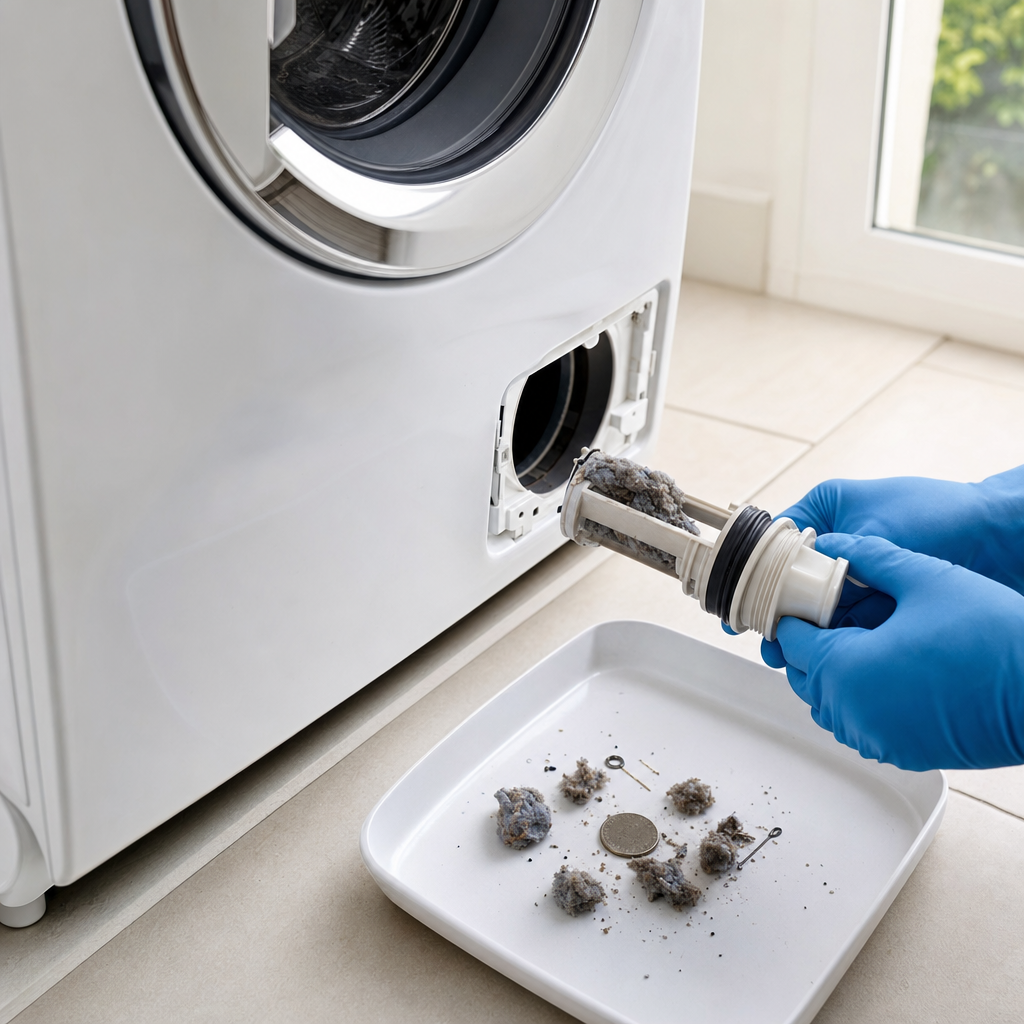
If the coin trap is clean but the machine still won't drain, the pump impeller may be jammed or the pump motor may be burned out. You can hear a bad pump — it'll hum without moving water. Full teardown steps for this specific failure are on our Kenmore washer won't drain guide.
Front-load leaks often come from the door boot (that rubber gasket around the door opening). Peel back the folds and look for tears, mold pockets, or trapped debris holding the seal open. A torn boot is a replaceable part but a two-hour job with a spring clamp — many homeowners hand this one to a pro.
Kenmore error codes vary by manufacturer platform, but these are the ones you'll see most.
| Code | Meaning | First check |
|---|---|---|
| F02 / F21 | Long drain — water not leaving in time | Coin trap, drain hose, pump |
| F35 / Sud | Pressure sensor or oversudsing | Detergent type/amount, air dome tube |
| LD | Long drain (Elite models) | Same as F02 |
| uL | Unbalanced load | Redistribute, check leveling |
| F70 / F71 | Control board communication | Reset; likely board replacement |
F02 and F21 mean the machine tried to drain and couldn't finish in the allowed time. Start at the coin trap. F35 is a pressure-sensor or suds issue — switch to HE detergent and use less of it.
LD = long drain. uL = unbalanced load. Sud = too many suds slowing the drain. All three are DIY-solvable in most cases. Full code reference lives in our common washer error codes article.
Unplug the washer for a full 60 seconds, plug it back in, and press Start. That's the soft reset. It clears transient codes. If the same code returns within one cycle, the underlying part has actually failed.
Call a pro when you're dealing with a failed control board (F70/F71 that won't clear), tub bearings that grind in spin, a leaking outer tub, or a transmission that clunks in agitation. These jobs require the tub to come out — that's a specialty repair.
| Situation | Typical cost range | Recommendation |
|---|---|---|
| Belt, coupler, pump, hose | $150–$400 | Repair |
| Control board | $300–$550 | Repair if under 8 years |
| Bearings / outer tub | $500–$800 | Consider replacement |
| New mid-range washer | $700–$1,200 | Replace if machine is 10+ years |
Our deep-dive on whether it's worth repairing your washer walks through the math. And if you'd rather cover future breakdowns before they happen, a Sears Protect plan covers most brands, any age.
When you book Kenmore washer repair service with SHS, a manufacturer-trained technician arrives with commonly needed parts on the truck. They diagnose the failure, provide an exact quote — parts and labor — that doesn't change once given, and complete the repair the same visit when parts are on hand. Every repair carries a service guarantee. The $90 to $150 diagnostic fee is waived if you proceed with the repair. To lock in a slot, schedule washer repair service online or by phone.
With years of experience, our technicians possess the skills to repair your washer, regardless of the issue.
Loading scheduler options...
Washer not working? Learn the most common reasons your washing machine won't start, fill, spin, or drain—plus when to DIY and when to call a pro.

Learn how a hall sensor works in a washer to control spin basket speed and direction.

Learn how a pressure transducer works to detect water level in a washing machine.

Learn how a pressure switch works in a washing machine to control water fill level.
The drum is the core part of the washer that holds your laundry and enables the cleaning process through rotation, agitation, and rinsing.
Hard water is water that contains high levels of dissolved minerals, particularly calcium and magnesium. It contrasts with soft water, which has lower concentrations of these minerals.
A washing machine pedestal is a platform that raises the washer off the ground, providing easier access to the appliances and often includes additional storage space such as drawers.
A washer tub is the interior part of a washing machine where clothes are placed for washing, typically made of stainless steel, plastic, or porcelain-coated metal, designed to hold water and withstand the agitation or spinning during the wash cycle.
The most common reasons your LG washer is leaking from bottom are a clogged water valve assembly, broken motor or a cracked drain hose.
The most common reasons your GE washer won't start cycle are a malfunctioning electronic control board, jammed door lock assembly or a faulty user interface.
The most common reasons your Whirlpool washer is not rinsing are a faulty lid switch, a bad water-level pressure switch, or a defective timer.
The most common reasons your GE washer is not filling are a clogged water valve assembly, malfunctioning electronic control board or a bad water level pressure switch.
The most common reasons your Samsung washer top load is not filling with water are a clogged water valve, a malfunctioning PCB, or a cracked hose.
The most common reasons your Samsung washer is noisy are a damaged suspension rod, malfunctioning electronic control board or a broken motor.