 Appointment Lookup
 213-596-2538
Washer not working? Learn the most common reasons your washing machine won't start, fill, spin, or drain—plus when to DIY and when to call a pro.

A pressure transducer is the component inside some washing machines that detects water level in the tub. It’s similar to a water level pressure switch but works differently to detect and communicate the tub water level to the main electronic control board in the washer.
In this article, we’ll reveal how this electronic water level detector works.
KEY TAKEAWAYS
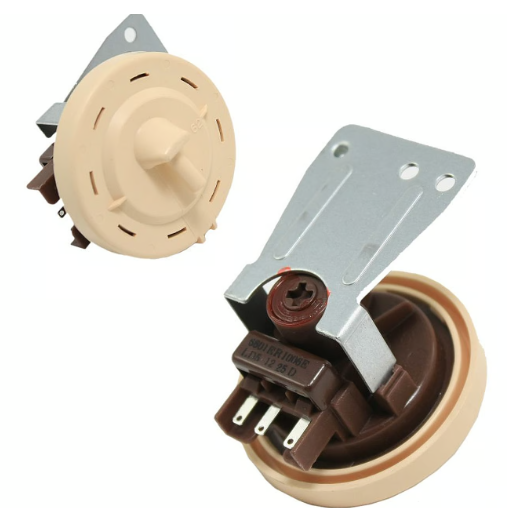
The pressure transducer in your washer detects water level in the tub and converts the water level reading to a digital signal that it transmits through wires to the main electronic control board in the washing machine.
The main control board uses the water level pressure transducer signal to detect when the tub is full. When the tub is full, the control continues to the next step in the wash or rinse cycle to tumble or agitate the clothes.
Here’s a basic explanation of how a pressure transducer works to detect water level in the washer tub:
In this manner, the water level pressure transducer helps the washer’s electronic control board precisely control water level in the machine’s tub.
While the water level pressure transducer is an accurate and reliable component, failures in the water level sensing system do occasionally occur.
Because a water level pressure transducer transmits a frequency signal to the control board, the internal logic in the control board will detect problems with the signal and display an error code on the control panel when a failure occurs.
When you see an error code on your washer, look up the code on our washer error code charts and follow the troubleshooting recommended to fix the problem.
Here are some common pressure transducer failures that you may face:
The water level pressure transducer depends on the air tube for accurate measurement of the water level in the tub.
Damage or a loose connection in the air tube that causes an air leak will prevent the pressure transducer from accurately detecting water level in the tub.
Unplug the washer and check the air tube for damage and replace the tube if you find cracks, tears or damage.
Reconnect the air tube if the find it loose or disconnected at the bottom of the tub or on the water level pressure transducer.
The washer electronic control board depends on wiring to detect signals from the water level pressure transducer.
Loose or disconnected wires will typically cause the control to display an error code on the display. For example, LG washers will display the PE error code when the pressure transducer wire harness is damaged or disconnected.
Unplug the washer and check the pressure transducer wire harness connections on the electronic control board and the pressure transducer.
Reconnect any loose wires and replace any broken wires.
Although rare, pressure transducers sometimes fail due to internal wiring problems or an internal circuit board failure.
When this happens you’ll need to unplug the washer and replace the water level pressure transducer.
The water level pressure transducer is incorporated into the electronic control board on common Kenmore, Whirlpool, Amana and Maytag top-load washers. To replace the pressure transducer on those models, you’ll need to replace the entire electronic control board.
Here’s a DIY video that shows how to replace the control board in those machines:
If you’re unable to resolve an issue with the water level pressure transducer on your own, schedule washer repair service and we’ll send a Sears Home Services technician to your home to fix the washer.
The pressure transducer plays a critical role in washer operations. Understanding how it works and how to troubleshoot common problems will help you keep your washer running smoothly.
When your washer breaks down, keep in mind that Sears Home Services is always standing by with the best washer repair technicians in the business.
Trust us to help you keep your washer and all of your home appliances in top shape.
A misreading pressure transducer can disrupt your washer’s fill levels, causing underfilled or overflowing cycles. If recalibrating sensors doesn’t fix the issue, it might be time for front load washing machine repair. Certified technicians will ensure your washer’s electronic sensors accurately gauge water levels.
With years of experience, our technicians possess the skills to repair your washer, regardless of the issue.
Loading scheduler options...
Washer not working? Learn the most common reasons your washing machine won't start, fill, spin, or drain—plus when to DIY and when to call a pro.
Learn how to repair a Kenmore washer with step-by-step fixes for common issues like leaks, no spin, and error codes. DIY tips plus when to call a pro.

Learn how a hall sensor works in a washer to control spin basket speed and direction.

Learn how a pressure switch works in a washing machine to control water fill level.
The drum is the core part of the washer that holds your laundry and enables the cleaning process through rotation, agitation, and rinsing.
Hard water is water that contains high levels of dissolved minerals, particularly calcium and magnesium. It contrasts with soft water, which has lower concentrations of these minerals.
A washing machine pedestal is a platform that raises the washer off the ground, providing easier access to the appliances and often includes additional storage space such as drawers.
A washer tub is the interior part of a washing machine where clothes are placed for washing, typically made of stainless steel, plastic, or porcelain-coated metal, designed to hold water and withstand the agitation or spinning during the wash cycle.
The most common reasons your LG washer is leaking from bottom are a clogged water valve assembly, broken motor or a cracked drain hose.
The most common reasons your GE washer won't start cycle are a malfunctioning electronic control board, jammed door lock assembly or a faulty user interface.
The most common reasons your Whirlpool washer is not rinsing are a faulty lid switch, a bad water-level pressure switch, or a defective timer.
The most common reasons your GE washer is not filling are a clogged water valve assembly, malfunctioning electronic control board or a bad water level pressure switch.
The most common reasons your Samsung washer top load is not filling with water are a clogged water valve, a malfunctioning PCB, or a cracked hose.
The most common reasons your Samsung washer is noisy are a damaged suspension rod, malfunctioning electronic control board or a broken motor.