 Appointment Lookup
 213-596-2538
Washer not working? Learn the most common reasons your washing machine won't start, fill, spin, or drain—plus when to DIY and when to call a pro.
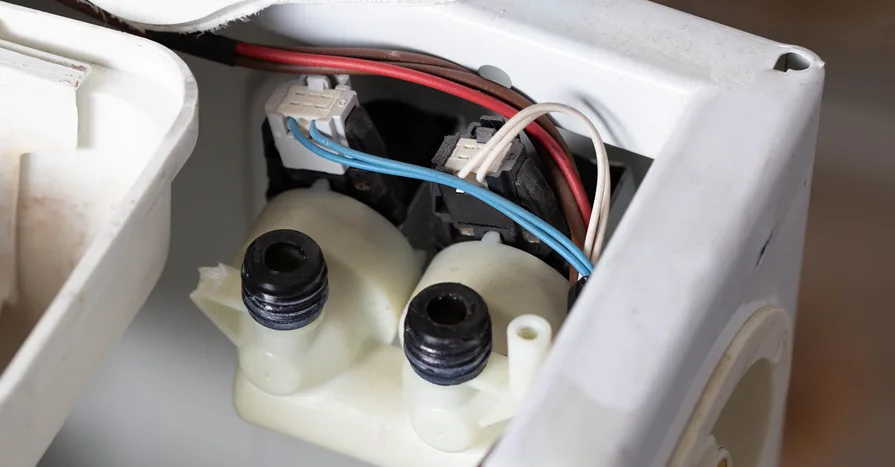
When you toss a load of laundry into your washing machine, you probably don’t think twice about how the washer achieves just the right water temperature for your clothes. Behind the scenes, a small but essential component called the mixing valve is doing the heavy lifting.
But how does the mixing valve work, and why is it so important? Let’s examine the mechanics of this critical washer part.
KEY TAKEAWAYS

A mixing valve is a device inside your washing machine that combines hot and cold water to achieve the desired temperature for each cycle. It acts as a regulator, ensuring your washer gets water that matches your selected settings, whether it's hot, warm, or cold.
The mixing valve is typically located near the water inlet at the back of the machine, where the hot and cold water hoses connect. It’s a blend of mechanical and electrical components that make the whole process seamless.
The mixing valve operates in three main stages:
When you set your washer to a specific water temperature setting, such as "cold wash" or "warm rinse," the control panel sends an electrical signal to the mixing valve. This signal tells the valve which combination of hot and cold water to release.
The mixing valve contains solenoid valves for hot and cold water. These solenoids act as gates, opening or closing based the hot and cold water valves based on the signal received.
Here are some examples of how a simple mixing valve without a temperature sensor works:
In many washers, a built-in temperature sensor or thermostat monitors the water temperature as it flows out of the valve and into the drum.
If the temperature is off, the thermostat sends feedback to the mixing valve to adjust the hot/cold water ratio.
Here are some examples of how a temperature-sensing mixing valve works:
Here are reasons why washers use mixing valves.
By controlling water temperature accurately, the mixing valve helps conserve energy. For example, modern machines avoid over-reliance on hot water, reducing energy consumption while still effectively cleaning clothes.
Different fabrics require different water temperatures to avoid damage. A mixing valve ensures that your delicates aren’t subjected to scalding water and that your heavily soiled items get the warm water needed for deep cleaning.
Water temperature affects how well detergents dissolve and activate. A mixing valve ensures detergents perform optimally, giving you cleaner clothes with every wash.
While mixing valves are durable, they can encounter problems over time:
If you notice irregular water temperatures, delayed fills, or leaks, the mixing valve might need cleaning or replacement.
For those confident in completing DIY appliance repairs, you can follow the instructions in this helpful YouTube video that shows how to safely replace the mixing valve in a common washing machine:
To ensure your mixing valve stays in top shape:
Here’s a video that shows a Sears Home Services technician discussing the importance of professional washer maintenance:
The mixing valve may be a hidden component in your washing machine, but it plays a pivotal role in ensuring every cycle is effective and fabric-friendly. By understanding how this ingenious device works, you can appreciate the engineering behind your washer—and troubleshoot issues more effectively if they arise.
If you notice any washer problems, don’t hesitate to schedule service. We’ll send a Sears Home Services technician to your home to fix the problem.
When temperature fluctuations persist despite adjusting the mixing valve, there might be hidden scale buildup or a faulty thermostat inside the washer. Rather than guess, set up a washer service near me call. Technicians will restore consistent water temps so your clothes get the treatment they deserve.
With years of experience, our technicians possess the skills to repair your washer, regardless of the issue.
Loading scheduler options...
Washer not working? Learn the most common reasons your washing machine won't start, fill, spin, or drain—plus when to DIY and when to call a pro.
Learn how to repair a Kenmore washer with step-by-step fixes for common issues like leaks, no spin, and error codes. DIY tips plus when to call a pro.

Learn how a hall sensor works in a washer to control spin basket speed and direction.

Learn how a pressure transducer works to detect water level in a washing machine.
The drum is the core part of the washer that holds your laundry and enables the cleaning process through rotation, agitation, and rinsing.
Hard water is water that contains high levels of dissolved minerals, particularly calcium and magnesium. It contrasts with soft water, which has lower concentrations of these minerals.
A washing machine pedestal is a platform that raises the washer off the ground, providing easier access to the appliances and often includes additional storage space such as drawers.
A washer tub is the interior part of a washing machine where clothes are placed for washing, typically made of stainless steel, plastic, or porcelain-coated metal, designed to hold water and withstand the agitation or spinning during the wash cycle.
The most common reasons your LG washer is leaking from bottom are a clogged water valve assembly, broken motor or a cracked drain hose.
The most common reasons your GE washer won't start cycle are a malfunctioning electronic control board, jammed door lock assembly or a faulty user interface.
The most common reasons your Whirlpool washer is not rinsing are a faulty lid switch, a bad water-level pressure switch, or a defective timer.
The most common reasons your GE washer is not filling are a clogged water valve assembly, malfunctioning electronic control board or a bad water level pressure switch.
The most common reasons your Samsung washer top load is not filling with water are a clogged water valve, a malfunctioning PCB, or a cracked hose.
The most common reasons your Samsung washer is noisy are a damaged suspension rod, malfunctioning electronic control board or a broken motor.