 Appointment Lookup
 213-596-2538

Is it worth repairing a microwave? Find out the pros and cons of repairing your microwave at Sears Home Services.
What Is a Microwave Steamer and How Does It Work?
What Are the Different Types of Microwave Steamers?
What Foods Can You Cook in a Microwave Steamer?
What Are the Benefits of Using a Microwave Steamer?
How Do You Use a Microwave Steamer Safely?
Can a Microwave Steamer Damage Your Microwave?
Frequently Asked Questions
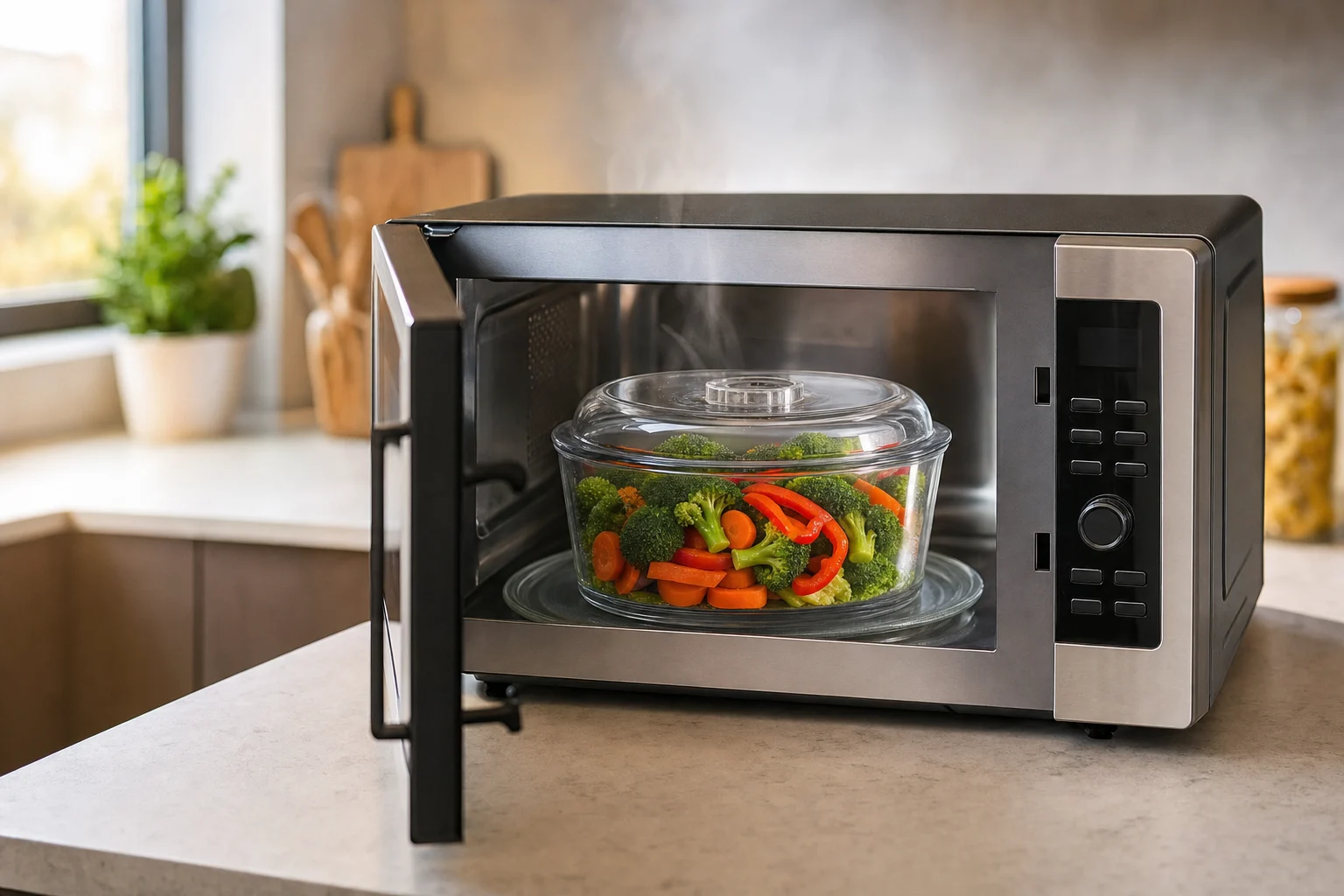
A microwave steamer is a heat-safe container—usually silicone, BPA-free plastic, or glass—that steams food inside your microwave by trapping water vapor around it. It cooks vegetables, fish, grains, and dumplings faster than stovetop steaming while preserving nutrients, texture, and color. For homeowners with a built-in or over-the-range microwave, a steamer is one of the most useful accessories you can own — but it does put extra moisture into your microwave, so how you use it matters. Here's how they work, what to cook in one, and how to protect your appliance from long-term steam damage.
KEY TAKEAWAYS
A microwave steamer is a purpose-built container that turns your microwave into a compact steam cooker. You add a small amount of water (or rely on moisture in the food itself), close the vented lid, and the microwave's energy heats the water into steam that circulates around the food.
Most steamers share three parts:
Some designs stack two tiers so you can cook protein on one level and vegetables on another.
Microwaves excite water molecules in both the reservoir water and the food itself. The reservoir water boils quickly, filling the sealed container with hot vapor. Because the lid is vented rather than fully sealed, pressure stays safe while the trapped steam cooks the food from all sides. The result is faster, gentler cooking than boiling — food never sits in water, so water-soluble vitamins stay put.
Food-grade silicone is flexible, collapses for storage, and tolerates high heat. BPA-free plastic is lightweight and inexpensive but can stain and warp over time. Glass and ceramic hold heat evenly and won't absorb odors, but they're heavy and can crack if dropped or thermally shocked. Whichever you choose, look for a clear "microwave-safe" label from the manufacturer.
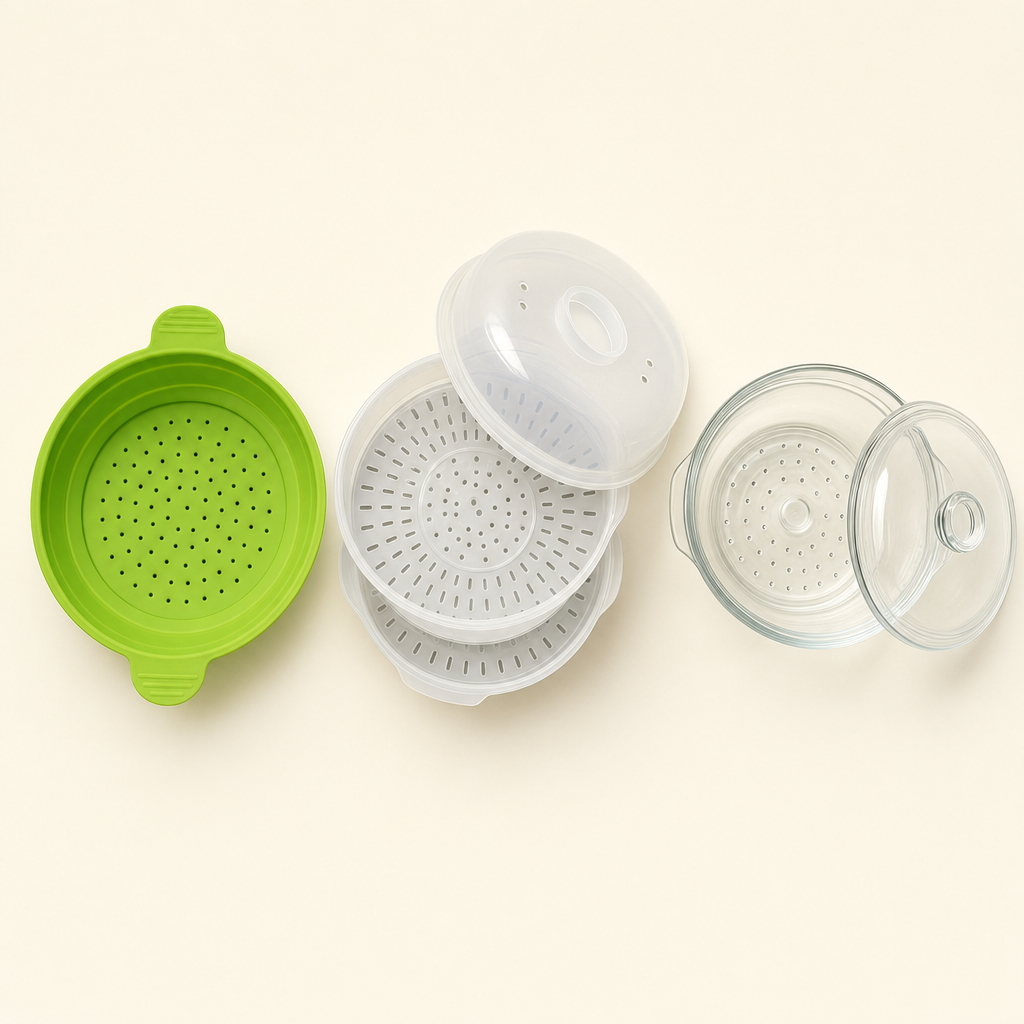
Not every steamer works the same way. Here are the main styles you'll see.
These fold flat for storage and pop up into a bowl shape with a vented lid. Great for small kitchens and single-serving cooking. Most rely on the moisture in the food itself rather than added water.
The workhorse design. A water reservoir on the bottom, one or two perforated trays above, and a locking vented lid. Ideal for cooking a full meal — say, salmon on top, broccoli below — in a single run.
Heavier, more durable, and safe for use in a regular oven too. Good for reheating or gentle steam-braising. The downside: they're heavy when full and hot, so use both hands and thick mitts.
Pre-portioned frozen vegetables often come in microwave steam bags. They work in a pinch but generate a lot of hot air fast — pierce or vent per the package to prevent bursting.
Steaming is best for foods that cook quickly and benefit from moist heat.
Cut into even pieces. Broccoli and green beans typically take 3–4 minutes on high. Carrots, cauliflower, and cubed potatoes take 5–7 minutes. Add a tablespoon or two of water unless your steamer says otherwise. Check for tenderness with a fork before serving.
A 6-ounce salmon fillet steams in about 3–4 minutes. Shrimp cook in 2–3 minutes and turn opaque and pink when done. Add lemon slices, herbs, or a splash of white wine to the reservoir for flavor.
Use a taller glass steamer designed for grains. Rice generally cooks in 15–20 minutes at reduced power (50–70%). It's slower than a rice cooker but frees up burners and pots.
Steam is the correct way to reheat dumplings, bao, and tamales — it revives texture without drying them out. Two to three minutes usually does the job. For general leftovers, a light steam beats the microwave's usual dry reheat.
Compared with stovetop steaming or boiling, microwave steaming has real advantages for weeknight cooking. For more ideas on getting the most from your appliance, see our microwave use and care articles.
A microwave heats only the water and food, not a large pot and burner. Small portions cook in a fraction of the time and use a fraction of the electricity. For one or two servings, it's the more efficient choice.
Because food never sits submerged in water, water-soluble vitamins (C, B-complex) stay in the food instead of leaching out. Vegetables also hold their bright color better than in boiling water.
One container, one lid, one rinse. No steaming basket to fish out of a hot pot, no scorched saucepan if you forgot about it.
| Method | Time (1 serving broccoli) | Cleanup | Nutrient retention |
|---|---|---|---|
| Microwave steamer | 3–4 min | One container | High |
| Stovetop steamer basket | 8–12 min | Pot + basket | High |
| Boiling | 5–7 min | Pot + colander | Lower (vitamins leach) |
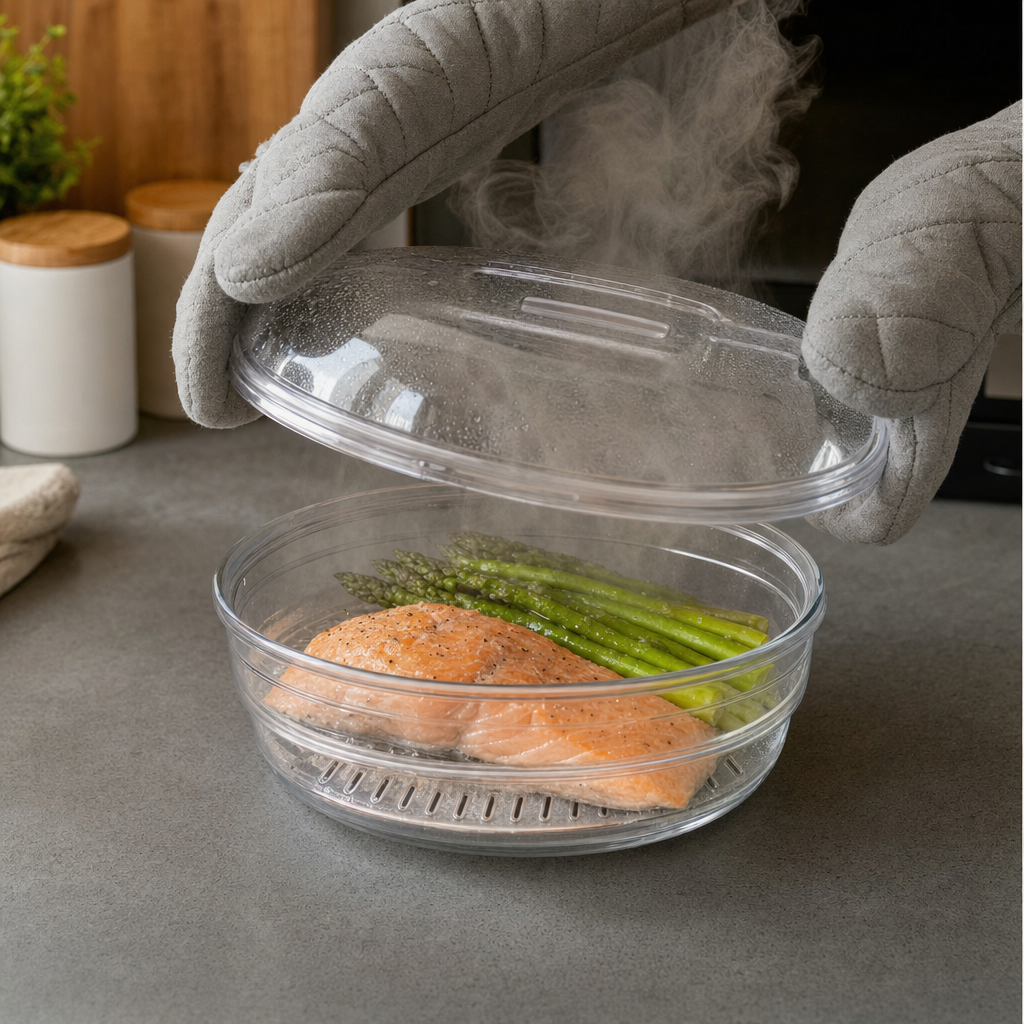
Steam burns are the most common injury with these accessories. A few habits keep you safe and protect your appliance.
Most steamers call for 2 to 4 tablespoons of water in the base. Too little and you'll scorch the container; too much and food ends up boiling. Follow the manufacturer's guide — collapsible silicone models often need no added water at all.
Always use the vent hole or leave the lid slightly ajar. A fully sealed container can pop the lid off or crack from pressure. Never wrap in plastic wrap as a substitute lid.
Let it rest 30–60 seconds after the timer ends. Use thick oven mitts on both sides, and open the lid away from your face — the first burst of steam is hot enough to scald.
⚠️ Warning: Never put anything with metallic paint, foil trim, or a wire handle in the microwave — it can spark and damage the magnetron. Skip old takeout containers and unlabeled plastic tubs; they can melt or leach chemicals when superheated.
Used occasionally, no. Used heavily every day, steam can shorten the life of a built-in or over-the-range unit — the two categories Sears Home Services repairs.
Repeated steam plumes leave condensation on the cavity walls, door seal, and vent grille. Over months, that moisture can corrode metal surfaces, warp interior paint, and clog vent filters. Wipe the cavity dry after each steam session, and clean the charcoal or grease filter on over-the-range models per the owner's manual.
Heavy, wet containers can strain the turntable coupler and roller ring. If the plate wobbles, stops turning, or grinds, stop using it until it's inspected. A noisy microwave is often an early sign of a worn drive motor or coupler.
Watch for:
Any of these warrant a professional look. Sears Home Services' 1,500+ manufacturer-trained technicians with an average of 10+ years of experience diagnose built-in and over-the-range microwaves from most major brands — schedule microwave repair service online or by phone, and your technician provides an exact quote for parts and labor before any work begins.
For long-term coverage on major appliances, a home warranty plan from Sears Protect can help offset future repair costs. And for more on keeping your microwave running longer, browse our microwave maintenance guides.
With years of expertise, our technicians can swiftly diagnose and repair your microwave, ensuring it's back in working order in no time.
Loading scheduler options...
Is it worth repairing a microwave? Find out the pros and cons of repairing your microwave at Sears Home Services.

Discover the top causes of microwave malfunctions in 2026 with Sears Home Services.

Several factors can impact how long a microwave lasts.

Find out how magnetrons work in microwave ovens to cook food.
A microwave waveguide cover is a small, often mica or plastic piece inside the microwave that covers the opening where microwaves enter the cooking chamber, protecting the microwave's internal components from food splatter and ensuring efficient distribution of the microwaves.
A microwave diode is an electrical component that allows current to flow in one direction only, playing a crucial role in converting incoming electrical power into the microwave energy that cooks the food.
A microwave sensor is a technologically advanced feature in modern microwave ovens that measures vapor (steam) emitted by the food, adjusting the cooking time and power levels automatically for optimal results.
A microwave magnetron is a component in microwave ovens that generates the microwaves used to cook food.
The most common reasons a Whirlpool microwave light won't turn on are a defective control panel, a burned out light bulb, or a malfunctioning PCB.
The most common reasons your Kenmore Elite microwave has no power are a bad thermostat, malfunctioning electronic control board or a broken switch.
The most common reasons your Whirlpool microwave is not working are a bad thermostat, malfunctioning electronic control board or a broken switch.
The most common reasons your Samsung microwave is not turning on are a bad thermostat, malfunctioning electronic control board or an inoperative power supply board.
The most common reasons your Samsung microwave won't close are a warped door assembly, a broken door latch, or a bent door hinge.
The most common reasons your Frigidaire microwave stopped working are a malfunctioning electronic control board, bad thermostat or a broken switch.