 Appointment Lookup
 213-596-2538

Learn how a convection microwave oven works and how to maintain it.
What is a Magnetron?
How Does a Magnetron Generate Microwaves?
Directing the Microwaves to the Food
Why Do Microwaves Heat Food So Quickly?
Safety Features of Magnetrons
Maintaining Your Microwave for Safe Operation
Innovations in Magnetron Technology
Fun Fact: The Accidental Discovery of the Microwave Oven
Frequently Asked Questions

Magnetrons are the unsung heroes of the kitchen, powering the microwaves that cook or reheat our food in seconds. But have you ever wondered how these fascinating devices work?
Understanding the science behind magnetrons opens up a world of physics and engineering that’s not only interesting but reveals just how ingenious microwave ovens really are. Let’s take a closer look at what magnetrons are, how they work, and why they’re so efficient for heating food.
KEY TAKEAWAYS
A magnetron is a type of vacuum tube that generates microwaves using the interaction between a stream of electrons and a magnetic field.
Originally developed in the 1920s for radar technology, magnetrons made their way into home microwave ovens in the 1940s. The magnetron is the device responsible for producing the high-frequency radio waves that we know as microwaves.
In microwave ovens, these waves penetrate food, causing the water molecules inside to vibrate rapidly, which generates heat through friction of molecules colliding together and cooks the food.
The magnetron might look like a small, unassuming part of your microwave oven, but it contains complex components that create powerful electromagnetic waves. Here’s a breakdown of how it works.
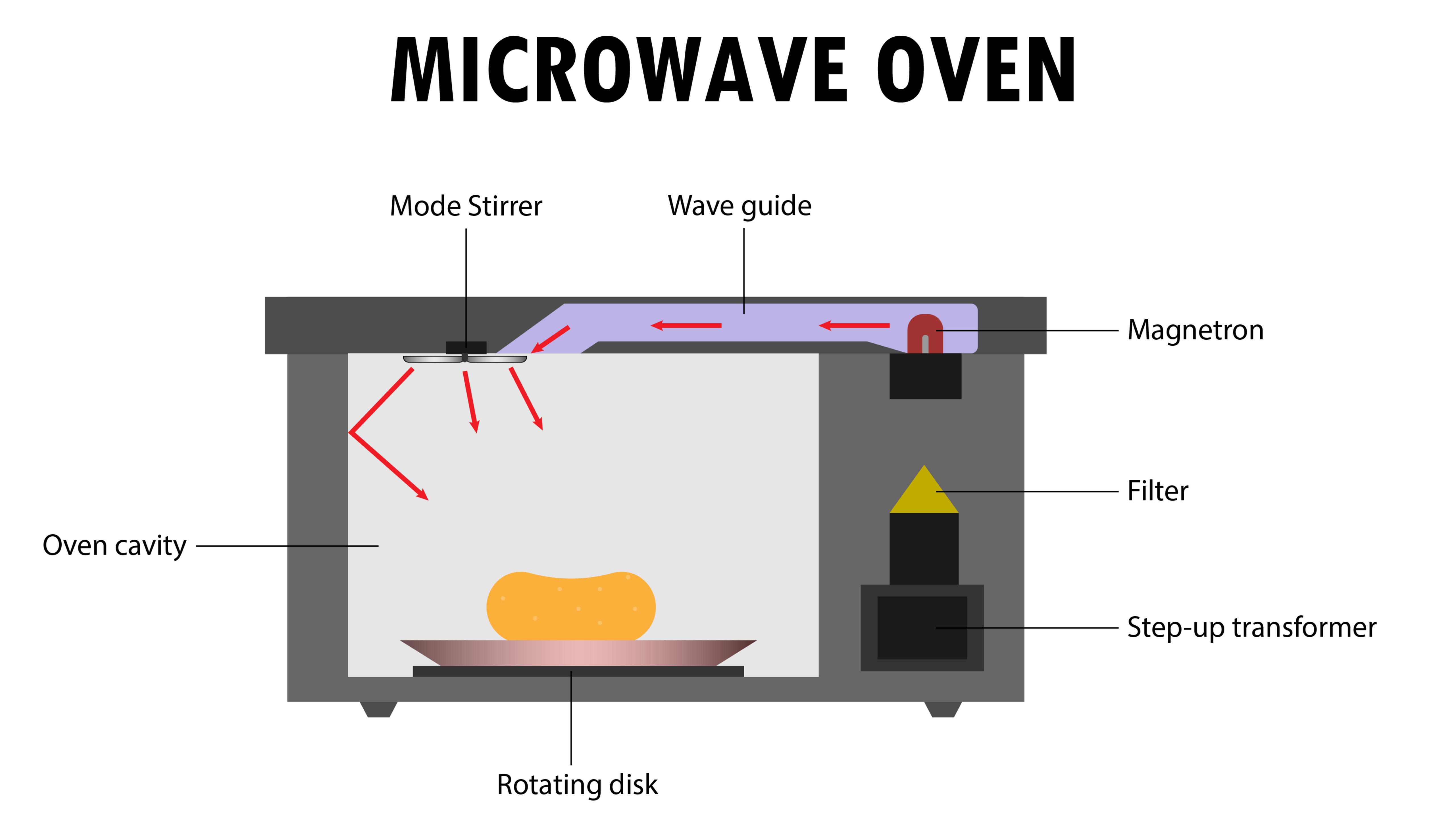
Here’s the process that a microwave oven uses to heat food:
The efficiency of microwave heating lies in molecular friction. Water molecules in food are polar, meaning they have positive and negative ends.
When exposed to microwaves, these molecules attempt to align with the rapidly changing electric fields, causing them to spin and vibrate millions of times per second. This motion creates heat due to friction, which then spreads throughout the food.
Since the microwaves penetrate the outer layers and heat the food from the inside and out, they cook or reheat food much faster than conventional ovens, which rely on transferring heat through conduction from the outer surface inward.
Because magnetrons generate high-energy radiation, microwave ovens are equipped with several safety features:
These features make modern microwaves safe for everyday use, allowing the magnetron to work its magic only when it’s fully enclosed.
Follow the instructions in the owner’s manual for your microwave oven to keep it well-maintained and operating safely.
Keep the inside of the oven cavity clean and free of splatters. Splatters can cause arc marks inside the cavity. When you see small arc marks inside the cavity, follow the tips in this video to repair the damage:
As noted in the video, when you see large arc marks or damage in the microwave oven cavity, schedule microwave repair to have a service technician visit your home and fix the damage.
In addition to keeping the oven cavity of your microwave clean, schedule yearly professional microwave maintenance to have a Sears Home Services technician visit your home and check all microwave functions, make any necessary adjustments and perform professional cleaning to keep your appliance in top shape and lasting longer.
Though magnetrons have been largely unchanged in domestic microwaves, recent innovations aim to improve their efficiency, precision, and energy consumption.
Some advanced microwave ovens now use inverter technology, which can adjust the power level for more precise cooking instead of simply turning the magnetron on and off. This improvement allows for more even heating, which reduces the chances of overcooking or creating cold spots in food.
Additionally, solid-state microwave technology, which uses semiconductors to produce microwaves, is emerging as a potential replacement for magnetrons. Solid-state microwaves can be controlled more precisely, allowing for more even heating and better energy efficiency.
Microwave ovens were invented by accident. In 1945, Percy Spencer, an engineer working for Raytheon, was testing radar equipment when he noticed that a chocolate bar in his pocket had melted. Curious, he tested other foods and quickly realized that microwaves generated by the magnetron could heat food.
By 1947, the first commercial microwave ovens were introduced—though they were massive and cost thousands of dollars. Today’s sleek, affordable microwaves owe their existence to this happy accident.
In summary, the magnetron is an essential part of microwave ovens, creating the microwaves that cook food quickly and efficiently.
It achieves this through a complex interaction of electron flow, magnetic fields, and carefully tuned cavities, transforming electrical energy into high-frequency waves that heat food from within.
So next time you use your microwave oven, take a moment to appreciate the magnetron and its fascinating science. This little device is what makes your quick meals possible, blending engineering and physics in a truly remarkable way.
With years of expertise, our technicians can swiftly diagnose and repair your microwave, ensuring it's back in working order in no time.
Loading scheduler options...
Learn how a convection microwave oven works and how to maintain it.
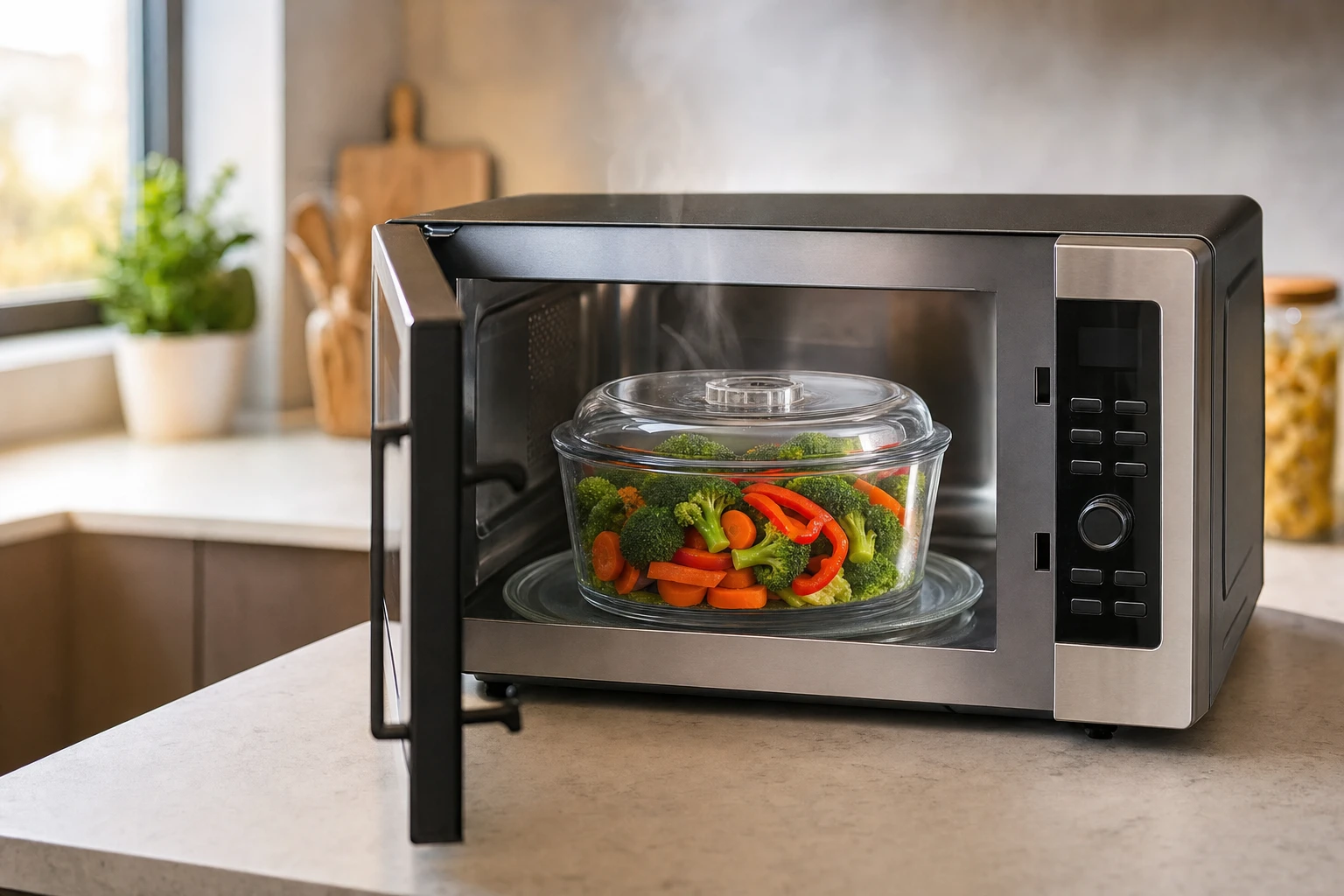
What is a microwave steamer? Learn how it works, what foods it cooks best, safety tips, and how to avoid damaging your built-in microwave.

Is it worth repairing a microwave? Find out the pros and cons of repairing your microwave at Sears Home Services.

Discover the top causes of microwave malfunctions in 2026 with Sears Home Services.
A microwave waveguide cover is a small, often mica or plastic piece inside the microwave that covers the opening where microwaves enter the cooking chamber, protecting the microwave's internal components from food splatter and ensuring efficient distribution of the microwaves.
A microwave diode is an electrical component that allows current to flow in one direction only, playing a crucial role in converting incoming electrical power into the microwave energy that cooks the food.
A microwave sensor is a technologically advanced feature in modern microwave ovens that measures vapor (steam) emitted by the food, adjusting the cooking time and power levels automatically for optimal results.
A microwave magnetron is a component in microwave ovens that generates the microwaves used to cook food.
The most common reasons a Whirlpool microwave light won't turn on are a defective control panel, a burned out light bulb, or a malfunctioning PCB.
The most common reasons your Kenmore Elite microwave has no power are a bad thermostat, malfunctioning electronic control board or a broken switch.
The most common reasons your Whirlpool microwave is not working are a bad thermostat, malfunctioning electronic control board or a broken switch.
The most common reasons your Samsung microwave is not turning on are a bad thermostat, malfunctioning electronic control board or an inoperative power supply board.
The most common reasons your Samsung microwave won't close are a warped door assembly, a broken door latch, or a bent door hinge.
The most common reasons your Frigidaire microwave stopped working are a malfunctioning electronic control board, bad thermostat or a broken switch.