 Appointment Lookup
 213-596-2538
Washer not working? Learn the most common reasons your washing machine won't start, fill, spin, or drain—plus when to DIY and when to call a pro.

Experiencing issues with your GE washer’s drain pump can be frustrating, but don’t worry. We’ve got you covered with these 4 quick tips to get it working again. Whether it’s a clogged drain hose or a malfunctioning pump, our troubleshooting guide will help you identify and fix the problem. Always remember to follow proper safety precautions and consult your appliance’s manual before attempting any repairs. Let’s dive in and get your GE washer’s drain pump back in working order.
KEY TAKEAWAYS
When your GE washer’s drain pump isn’t working, the first thing to examine is the house drain and hose. A clogged washer drain or kinked drain hose can prevent water from draining properly, leading to issues with the drain pump. Follow these steps to troubleshoot and fix the problem.
By following these steps, you can often resolve issues with a GE washer’s drain pump not working. However, if the problem persists, it may be necessary to schedule washer repair service. Our Sears Home Services technician will visit your home to diagnose and repair the issue.
Run a Drain & Spin cycle to see if you hear the drain pump running. If the drain pump doesn’t run, check the wire harness connection on the drain pump if you’re completely confident in your DIY washer repair abilities to safely access the drain pump. Have a washer repair technician complete this step if you’re uncomfortable with accessing the drain pump on your own.
Reconnecting the drain pump wire harness securely may fix the problem with your GE washer drain pump not working.
If the drain pump runs in the drain mode in a front-load GE washer, the drain pump filter may be clogged.
Follow the steps in the image below to clean the drain pump filter on your GE front-load washer if it has a filter access door at the bottom of the front panel.
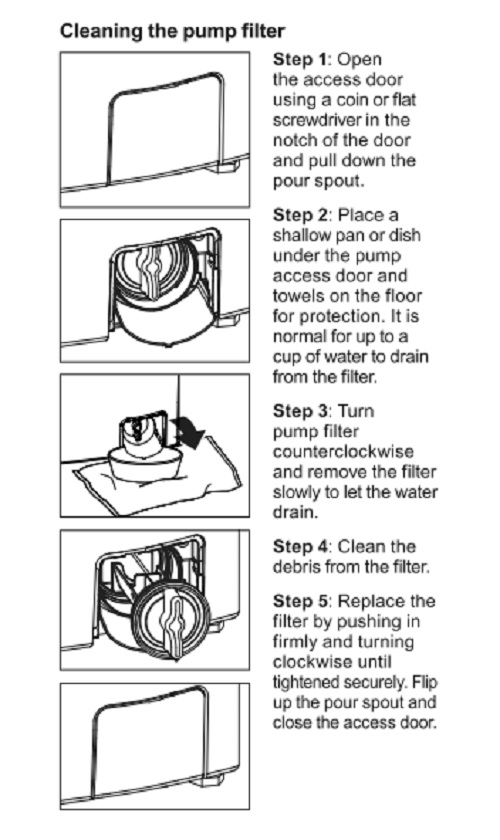
To access and clean the filter on a GE washer without an access door, follow the procedure shown in this YouTube video:
pWU0NonOHhAClearing the drain pump filter in your GE front loader may fix the drain problem. If you need to have a Sears Home Services technician fix the drain pump in your GE washer, schedule washing machine repair service.
Sometimes, a power surge or glitch through the electric lines will cause the electronic control board to lock up and stop functioning. Resetting the control board will sometimes fix a problem with the drain pump not working in your GE washer.
To reset the electronic control board, unplug the washer power cord to completely disconnect electrical power from the washing machine. Leave the power cord unplugged to 1 minute and then plug it back in to restore power.
Run a Drain & Spin cycle to see if the drain pump works.
If these tips don’t help you fix a problem with the GE washer drain pump not working, schedule repair service and we’ll send a Sears Home Services technician to your home to fix the problem.
One final tip, having your GE washing machine professionally cleaned and maintained yearly will help prevent problems with the drain system. Along with cleaning and maintaining the entire washer, our Sears Home Services technician will check all washer functions including filling, agitating, draining and spinning. The tech will be able to spot and fix small problems before you wind up with major failures in the washer such as a drain pump not working.
Schedule your GE washer maintenance now. Professional annual maintenance will also help your GE washing machine last longer.
If you’ve run through these quick fixes and your GE washer drain pump is still acting up, there could be an internal component malfunction. Rather than guess, have a wash machine repairman take a closer look. They’ll pinpoint the exact cause—whether it’s a jammed impeller or a wiring glitch—and get your washer draining properly again.
With years of experience, our technicians possess the skills to repair your washer, regardless of the issue.
Loading scheduler options...
Washer not working? Learn the most common reasons your washing machine won't start, fill, spin, or drain—plus when to DIY and when to call a pro.
Learn how to repair a Kenmore washer with step-by-step fixes for common issues like leaks, no spin, and error codes. DIY tips plus when to call a pro.

Discover top load washer troubleshooting tips for common issues like water leaks, excessive vibrations, failure to fill with water, detergent residue, and startup problems.

Overloading your washing machine can lead to various issues, including premature wear and tear on vital components such as drive parts, seals, and bearings.
The drum is the core part of the washer that holds your laundry and enables the cleaning process through rotation, agitation, and rinsing.
Hard water is water that contains high levels of dissolved minerals, particularly calcium and magnesium. It contrasts with soft water, which has lower concentrations of these minerals.
A washing machine pedestal is a platform that raises the washer off the ground, providing easier access to the appliances and often includes additional storage space such as drawers.
A washer tub is the interior part of a washing machine where clothes are placed for washing, typically made of stainless steel, plastic, or porcelain-coated metal, designed to hold water and withstand the agitation or spinning during the wash cycle.
The most common reasons your LG washer is leaking from bottom are a clogged water valve assembly, broken motor or a cracked drain hose.
The most common reasons your GE washer won't start cycle are a malfunctioning electronic control board, jammed door lock assembly or a faulty user interface.
The most common reasons your Whirlpool washer is not rinsing are a faulty lid switch, a bad water-level pressure switch, or a defective timer.
The most common reasons your GE washer is not filling are a clogged water valve assembly, malfunctioning electronic control board or a bad water level pressure switch.
The most common reasons your Samsung washer top load is not filling with water are a clogged water valve, a malfunctioning PCB, or a cracked hose.
The most common reasons your Samsung washer is noisy are a damaged suspension rod, malfunctioning electronic control board or a broken motor.