 Appointment Lookup
 213-596-2538
LG washer not draining? Learn the top causes—clogged drain pump filter, kinked hose, bad pump—and when to call a pro for fast repair.
Decoding the Error Code F21: Understanding Your Whirlpool Washer's Problem
Why is Your Whirlpool Washer Showing F21? The Root Causes
Your Step-by-Step Guide to Fixing the F21 Error
Preventing Future F21 Headaches: Best Practices for Your Whirlpool Duet Washer
Still Stuck? Don’t Hesitate to Consult a Professional
Frequently Asked Questions
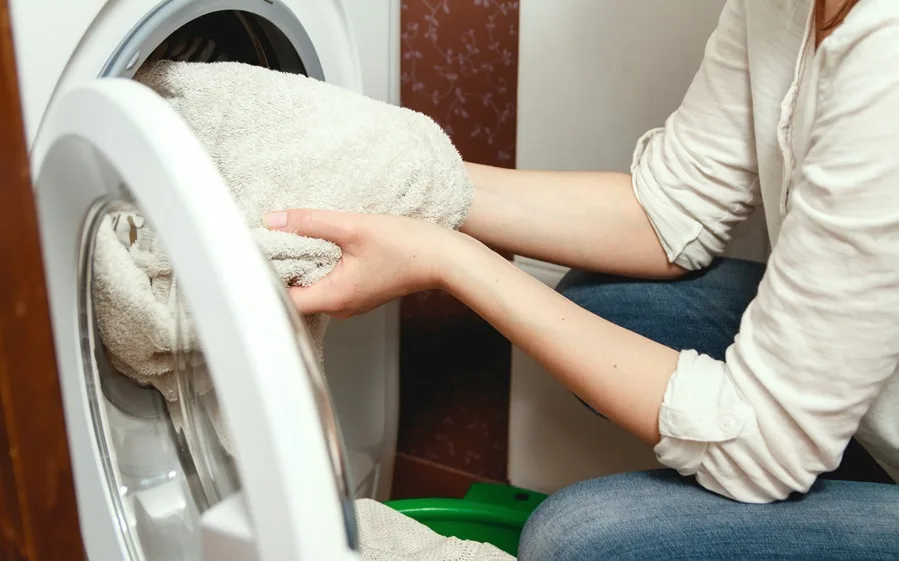
You started a load in your Whirlpool Duet washer and after a while you go to see if it’s finished, only to find “F21” flashing on the display panel.
Frustration immediately sets in, and you wonder if your laundry day is officially derailed.
Don't panic. This isn't a death sentence for your appliance. It's simply your washer's way of telling you it's facing a common, and often fixable, issue related to draining.
In this guide, we'll explain the F21 error, explore its root causes, and walk you through practical, step-by-step solutions to get your Whirlpool washer back in action. Think of this as your personal troubleshooting guide, navigating you through the repair process.
KEY TAKEAWAYS
When your Whirlpool washer flashes "F21," it's giving you a direct diagnostic message. You may also see this error code on some Maytag and Kenmore front-load washers.
The F21 error code on a Whirlpool Duet washer specifically indicates a long drain time error or a drain pump issue.
In simpler terms, your washer has detected that it's taking too long to drain the water out of the tub. It's essentially telling you, "Hey, I'm trying to get rid of this water, but something's holding me up!"
This is a built-in safety mechanism. If the water doesn't drain properly, it can lead to various problems, from incomplete wash cycles and soggy clothes to potential overflows and damage to the machine itself. So, while it's annoying, this error code is actually helping you protect your appliance and your home.
Pro tip: If your washer is displaying other codes, look up the meaning of washer error codes in our Washer Error Code Charts. We provide explanations and troubleshooting tips for error codes on all major washer brands including Whirlpool, Maytag, Kenmore, GE, Samsung, LG and more.
Now that we know what F21 means, let's dive into why your Whirlpool Duet washer might be throwing this code. Understanding the potential culprits is the first step toward a successful resolution.

Believe it or not, one of the most common reasons for an F21 error is simply too much soap.
Modern high-efficiency (HE) washers require very little detergent. When you use too much, it creates an abundance of suds. These suds can become so excessive that they interfere with the draining process. The washer struggles to pump out sudsy water, triggering the F21.
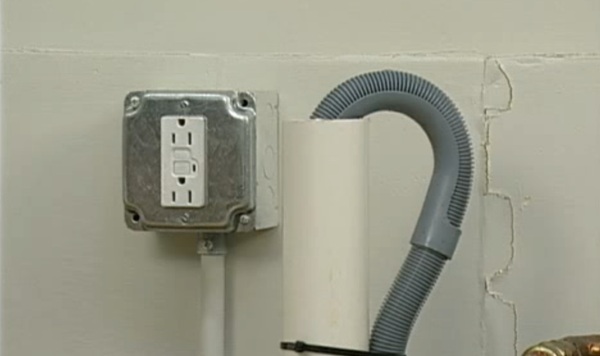
Sometimes, the F21 isn’t caused by any fault in the washer, but in the house drain for the washing machine. If the house drain is clogged, water will stay in the washer tub.
Imagine trying to drink through a straw that's bent in half or filled with gunk. That's what a clogged or kinked drain hose feels like to your washer. The drain line, which typically runs from the back of your washer to a standpipe or utility sink, can become restricted. Common culprits include lint, small articles of clothing (like socks or baby items), hair, or even a buildup of detergent residue.
A kink in the hose, often caused by pushing the washer too close to the wall, also restricts water flow.
Pro tip: Make sure that the drain hose is installed properly according to the guidelines in the owner’s manual or installation guide. An improperly installed drain line can cause water to siphon back into the washer tub during draining which will cause the F21 error code.
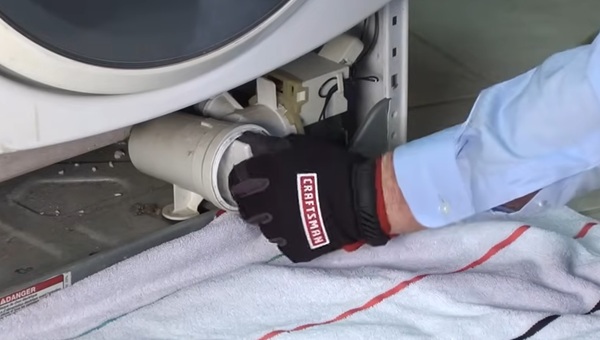
At the heart of your washer's draining system is the drain pump. This motor-driven component is responsible for forcibly expelling water from the tub.
If the pump itself is faulty, damaged, or obstructed, it won't be able to do its job effectively, leading to drainage issues such as slow draining or no draining at all. A foreign object, like a coin or a button, getting lodged in the pump's impeller is a frequent cause of this malfunction.
Whirlpool front-load washers have a debris filter in the drain pump that traps coins and other foreign items to prevent them from entering the drain pump housing and damaging or blocking the drain pump impeller. If the debris filter gets clogged, the drain pump won’t work.
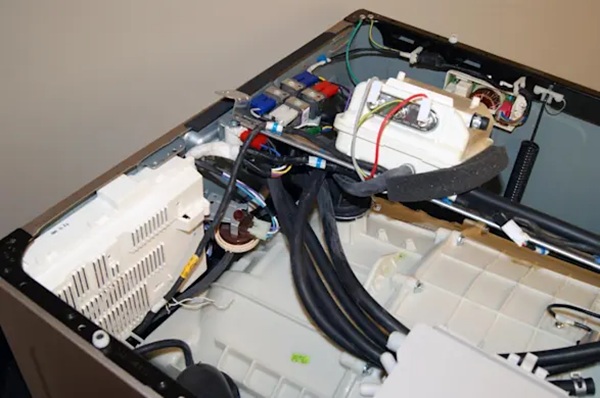
Your washer uses a pressure switch to detect the water level inside the tub. If this switch malfunctions, it might incorrectly believe there's still water in the tub even after the drain cycle has completed, or it might not signal the drain pump to activate correctly.
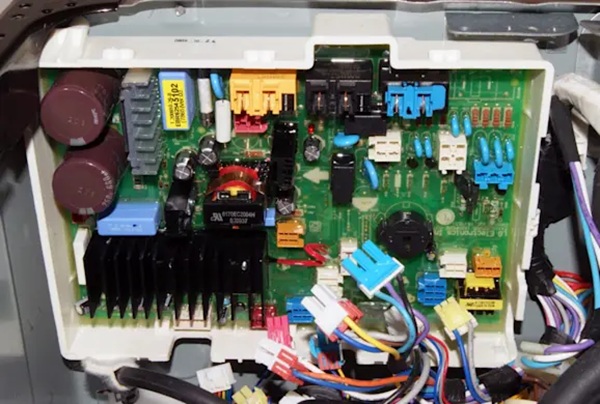
Finally, there's always the possibility that the washing machine's main control board—its "brain"—is experiencing a temporary glitch or has failed.
This board orchestrates all the washer's functions, including the drain cycle. If it doesn’t send electrical current to the drain pump or the circuit board fails to process information correctly, it can trigger various error codes, including F21, even if the mechanical components are sound.
Now that we've identified the potential villains, let's arm you with the practical solutions.
We'll start with the simplest, most common fixes and move to the more complex.
These steps require minimal effort and can often resolve the F21 error.
Sometimes, the washer control board just needs a reset. Press the "Cancel" or "Power" button to clear the cycle. Then, unplug the washer from the wall outlet for about 5 minutes. Plug it back in and try to run a "Drain & Spin" cycle to see if the error persists. This can clear minor electronic glitches in the control board.
If you see a tub full of foamy water, it's likely that excessive suds caused the F21 code.
If the quick checks didn't resolve the F21, it's time to investigate mechanical obstructions. Always unplug the washer before performing these steps to prevent electric shock.
Some Whirlpool front-load washers have a removable access panel below the washer door behind which lies the drain pump filter, also known as a coin trap. This filter is designed to catch small objects before they damage the pump.
Here’s a DIY video that shows how to clean the drain pump filter on a washer with a removable bottom front access panel:
Before you begin: Unplug the washer power cord. Drain water out of the washer tub using wet/dry shop vacuum. Wear work gloves to protect your hands.
If the filter was clear, the clog might be further down the drain hose.
This is a bit more involved and often requires getting inside the washer.
If you've gone through all the above steps and your Whirlpool washer is still flashing F21, it's time to consider professional help. Here are common reasons why you should schedule washer repair service:
An ounce of prevention is worth a pound of cure, especially when it comes to appliance repair.
Excessive suds are the enemy of proper draining.
This is arguably the most impactful preventative measure.
Pro tip: To keep your Whirlpool washer in top shape and draining properly, schedule yearly professional washer maintenance & cleaning service through Sears Home Services.

If you've diligently worked through these troubleshooting steps and your Whirlpool washer is still displaying the F21 error, it's a clear sign that the issue is beyond a simple DIY fix. Don't risk further damage to your appliance or injury to yourself by attempting complex electrical or mechanical repairs without proper training. Schedule washer repair service through Sears Home Services.
Our professional appliance technician has diagnostic tools and the experience to quickly identify whether the problem lies with the drain pump, pressure switch, control board, or another less common issue. We can provide a safe and effective solution, getting your laundry routine back on track with minimal fuss.
Your time and peace of mind are valuable, and sometimes, the smartest fix is calling in an expert.
With years of experience, our technicians possess the skills to repair your washer, regardless of the issue.
Loading scheduler options...
LG washer not draining? Learn the top causes—clogged drain pump filter, kinked hose, bad pump—and when to call a pro for fast repair.
Washer not working? Learn the most common reasons your washing machine won't start, fill, spin, or drain—plus when to DIY and when to call a pro.
Learn how to repair a Kenmore washer with step-by-step fixes for common issues like leaks, no spin, and error codes. DIY tips plus when to call a pro.

Discover top load washer troubleshooting tips for common issues like water leaks, excessive vibrations, failure to fill with water, detergent residue, and startup problems.
The drum is the core part of the washer that holds your laundry and enables the cleaning process through rotation, agitation, and rinsing.
Hard water is water that contains high levels of dissolved minerals, particularly calcium and magnesium. It contrasts with soft water, which has lower concentrations of these minerals.
A washing machine pedestal is a platform that raises the washer off the ground, providing easier access to the appliances and often includes additional storage space such as drawers.
A washer tub is the interior part of a washing machine where clothes are placed for washing, typically made of stainless steel, plastic, or porcelain-coated metal, designed to hold water and withstand the agitation or spinning during the wash cycle.
The most common reasons your LG washer is leaking from bottom are a clogged water valve assembly, broken motor or a cracked drain hose.
The most common reasons your GE washer won't start cycle are a malfunctioning electronic control board, jammed door lock assembly or a faulty user interface.
The most common reasons your Whirlpool washer is not rinsing are a faulty lid switch, a bad water-level pressure switch, or a defective timer.
The most common reasons your GE washer is not filling are a clogged water valve assembly, malfunctioning electronic control board or a bad water level pressure switch.
The most common reasons your Samsung washer top load is not filling with water are a clogged water valve, a malfunctioning PCB, or a cracked hose.
The most common reasons your Samsung washer is noisy are a damaged suspension rod, malfunctioning electronic control board or a broken motor.