 Appointment Lookup
 213-596-2538
Washer not working? Learn the most common reasons your washing machine won't start, fill, spin, or drain—plus when to DIY and when to call a pro.
Identify the General Cause: What Does 'LE' Mean?
Distinguish Between Common and Less Common Specific Causes
Initial Troubleshooting Steps for the LE Code
Address Other Causes of the LE Code
Preventing Future LE Code Occurrences
When to Seek Professional Help
Conclusion: Resolve Your Kenmore Washer’s LE Error Code by DIY Tactics or Professional Repair
Frequently Asked Questions
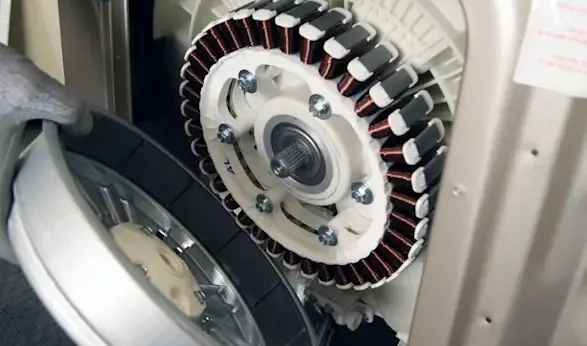
When your Kenmore washer displays the "LE" error code, it indicates a drive motor problem.
The washer won’t run at all or at the expected speed because the control detects that the drive motor has locked up or the control can’t detect motor rotation.
The cause of the LE code is often due to overloading, an unbalanced load, a drive system obstruction or an internal component failure such as a bad motor tachometer.
Address this code promptly to restore functionality.
We’ll help you understand this code and troubleshoot the common causes so you can get back to doing your laundry.
KEY TAKEAWAYS
The "LE" code on a Kenmore or Kenmore Elite washer signifies a "Locked Motor Error" condition. Essentially, the washer's motor is unable to spin the drum correctly.
This error code can occur for several reasons, all of which prevent the wash cycle from progressing. The machine detects that the motor is attempting to run but is encountering resistance or the washer control board is not receiving proper speed signals from the motor tachometer. The LE code can also be caused by a defective control board not sending proper electric current to run the drive motor.
Pro tip: This same LE error code occurs on LG washing machines for the exact same issues. Troubleshoot your LG washer in the same manner as described in this article when you encounter that code.
Common specific causes of the LE code include an unbalanced wash load, excessive suds, or a drain system failure. These are generally user-resolvable issues.
Less common, but more serious, causes involve internal component failures such as a faulty control board (also called the motor control unit or MCU), wiring failure or a defective motor tachometer (also known as the hall sensor, RPS sensor or rotor position sensor).
To fix the washer and clear the LE error code yourself, start by checking user-resolvable issues first.
Begin with simple, straightforward checks. Sometimes, LE code issues are resolved without needing specialized tools or knowledge.
First, perform a hard reset on the washer control board. This clears any control board issues caused by a power surge or electrical supply glitch that might be corrupting the circuit board and causing the LE error code.
If this simple tactic works, you’ve fixed the problem and saved the day. If the code reappears, continue with the troubleshooting described below.
An unbalanced load or overloaded washer is a frequent culprit that causes the LE code. Distribute laundry evenly and/or remove excess items.
If water is still in the washer drum during the spin cycle, a drain system failure is causing the motor to struggle. The motor can’t rotate the spin basket at high speed because of the resistance of the water in the drum.
Check the washer drain system as shown in this DIY washer repair video:
Start the “Drain & Spin” cycle to remove any water remaining in the washer. If water drains out, the washing machine may work properly.
If the water won’t drain and you see excessive suds, add a cup of white vinegar to the tub to dissipate the suds. Add the vinegar through the dispenser drawer if the washer door is still locked shut because of the water still being inside the tub. Wait a half hour and use the “Drain & Spin” cycle to remove the sudsy water.
For future loads, use less detergent. Follow the manufacturer's recommendations for your specific detergent and water hardness. Use high-efficiency (HE) detergent if your washer is an HE model.
Pro tip: For most laundry loads in your Kenmore HE front-load washer, you’ll only need about a tablespoon of HE detergent to effectively clean the laundry without causing excessive suds.
Start the “Drain & Spin” cycle to see if the washing machine drains properly.
A clogged drain pump filter will prevent the washer from draining. Follow the steps shown in the image below to drain water from the washer and check the drain pump filter in your Kenmore washer.

Pro tip: If the tub is still full of water, suck the water out of the washer through the drain hose using a wet/dry shop vacuum so you don’t have to wait for water to drain through the small drain tube on the drain pump filter.
Clear any debris and lint from the drain pump filter. Reassemble the washer and see if it drains properly.
If the washer still won’t drain properly after following these troubleshooting steps, you’ll likely need to schedule washer repair service to have a technician diagnose and repair the drain failure and clear the LE error code.
If the initial troubleshooting steps don’t help you resolve the LE code issue, investigate more specific causes.
The drive motor won’t be able to rotate the spin basket if an obstruction or bad tub bearing is causing excessive spin basket friction.
Check to see if the spin basket rotates properly:
If you don’t find an obstruction and the spin basket is still locked up, you’ll likely need to have a service technician check and repair the washer.
The MCU controls the washer's drive motor based on signals it receives from the motor tachometer through a wiring harness. A separate wiring harness carries electric current from the control board to the motor windings to spin the motor.
Loose wiring harness connections or a break in the wiring of these systems will prevent the motor from spinning, or it may attempt to spin but fail, generating the LE code.
If you’re completely confident that you can safely open the washer cabinet and check the wiring harnesses, carefully follow these steps:
Close the water supply faucets behind the washing machine.
Have someone help you move the washer away from the wall.
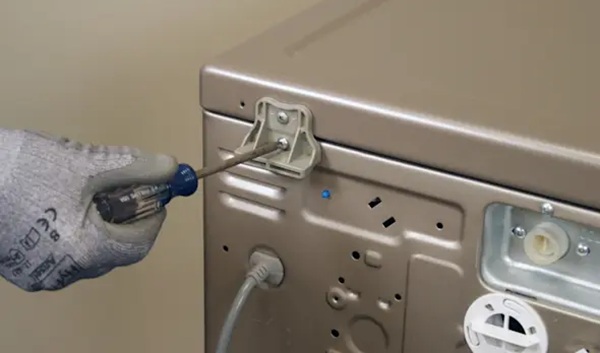
Using a Phillips screwdriver, remove the 2 screws on the back of the washer that hold the top panel.
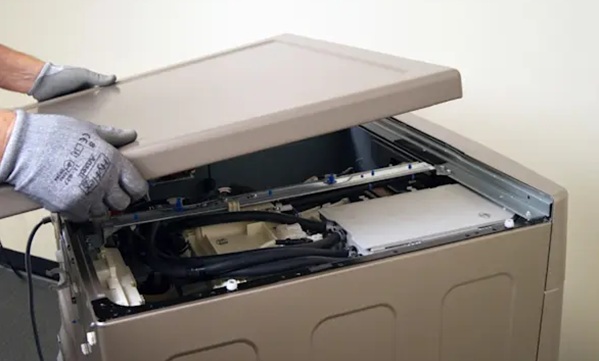
Pull the top panel toward the rear of the washer and lift it up and off.
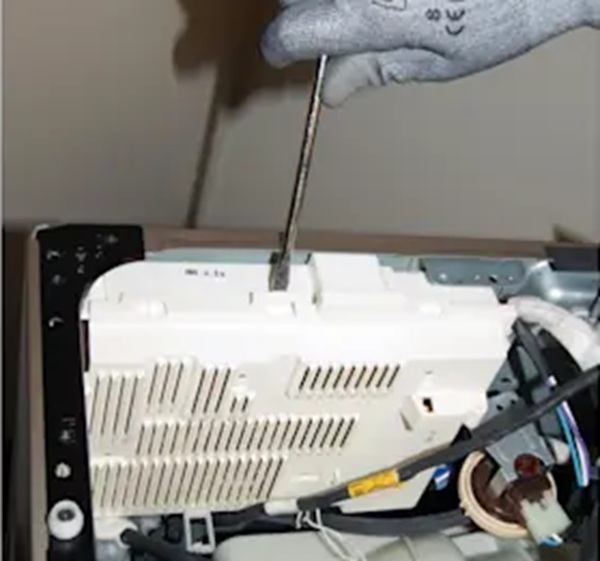
Release the tabs on the plastic cover using a slot screwdriver.
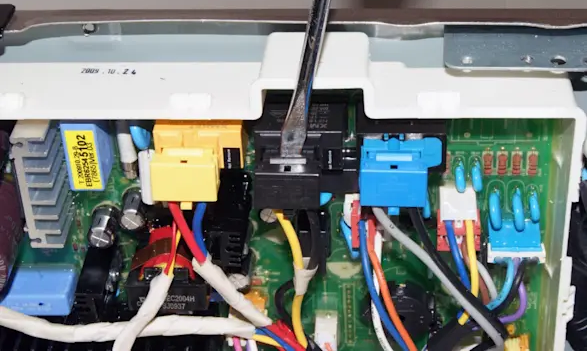
Remove the front cover of the housing to access the wires connected to the machine control board.
Make sure all wire harness plugs are secured properly on the control board. Reconnect any loose wires.
If you find damaged wires or you’re not sure how to reconnect a loose or disconnected wire harness, stop and reassemble the washer. Schedule washer repair service to have a technician fix the washing machine.
Also, if you see a burnt spot or melted components on the control board, that circuit board will need replacing. A technician will typically need to complete that task to ensure all wires are checked and connected properly to the new control board.
If everything looks okay, replace the control board cover and reassemble the top of the washer.
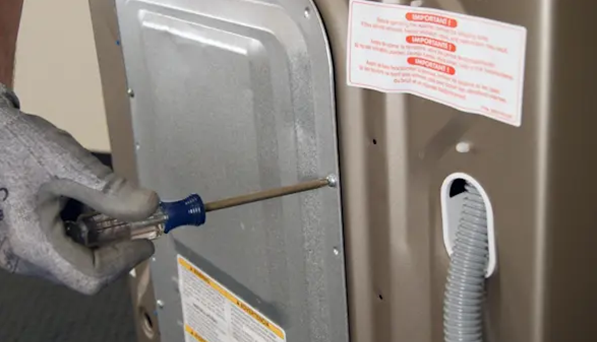
Remove the back washer panel mounting screws (with the washer power cord still unplugged).
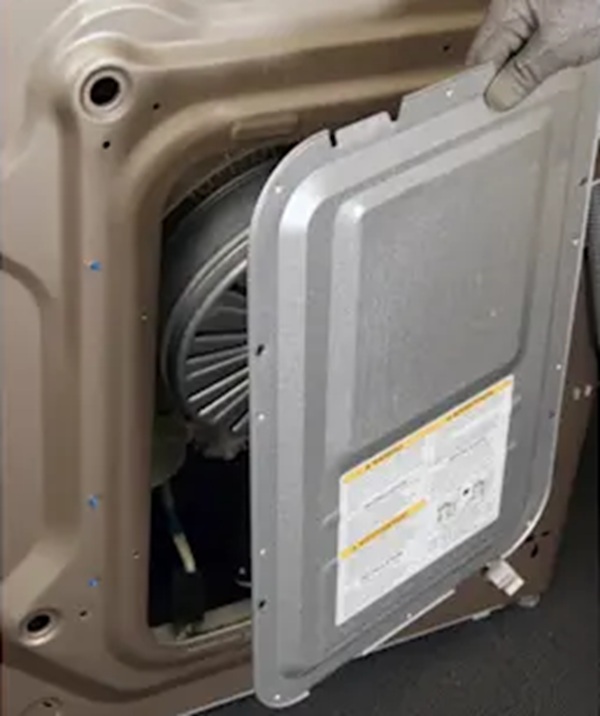
Remove the back washer panel.
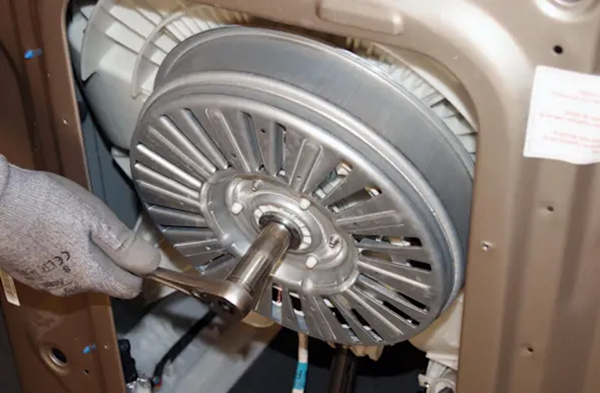
Remove the 17mm bolt on the back of the motor.
Pro tip: The rotor will turn when you try to loosen the bolt. Use an impact wrench or hold the rotor still and strike the ratchet with a sharp blow to loosen the rotor bolt. Once the bolt is loose, you’ll be able to easily remove it.
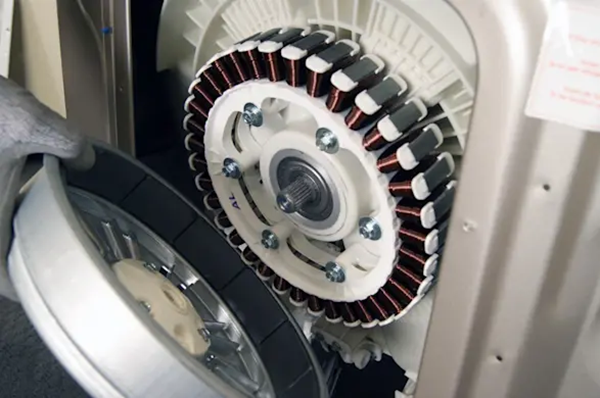
Remove the rotor from the motor.
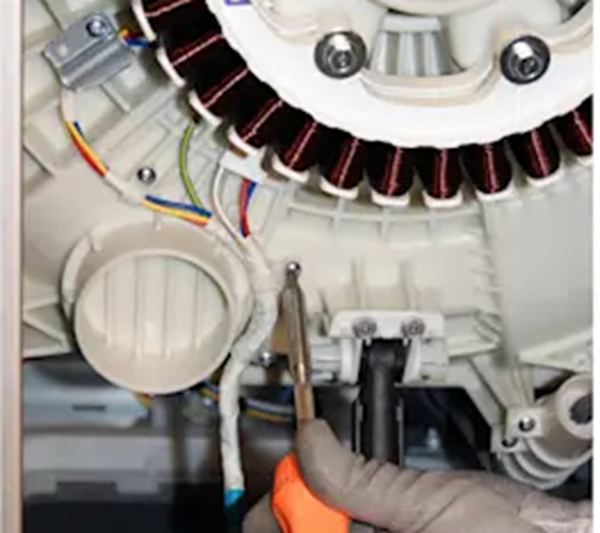
Use a Phillips screwdriver to remove the screws from the wire harness bracket and retainers on the back of the washer tub.
Remove the screw that holds the green ground wire on the back of the tub.
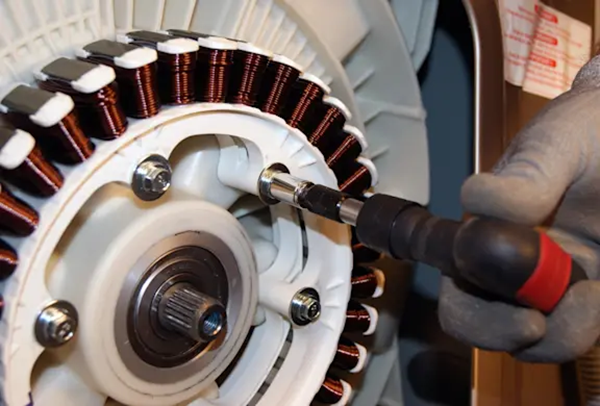
Remove the bolts that hold the stator to the tub.
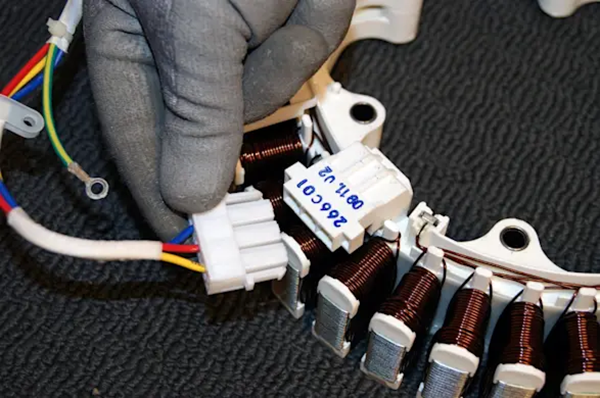
Pull the stator out slightly and check the motor wire harness connection. Reconnect the wire harness if it’s loose.
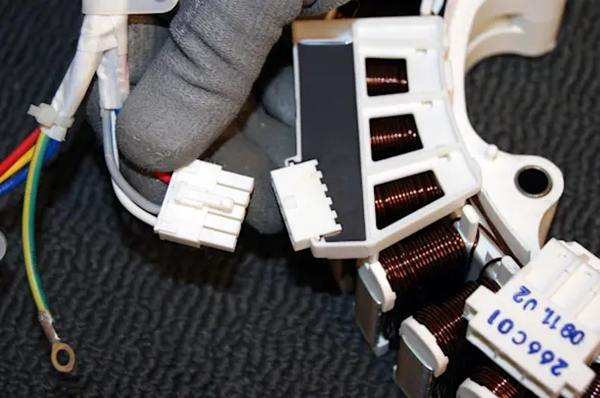
Check the tachometer wire harness connection and reconnect the harness if it’s loose.
After checking the wire harness connections, carefully reassemble to washer and check to see if the LE code still appears. If it does, you’re likely need to have a service technician repair the washer.
The tachometer monitors the speed and position of the motor. If it fails, the washer cannot detect motor operation, leading to the LE code.
Note: The tachometer is a relatively inexpensive part. If you highly suspect that the tachometer is bad, you may be able to fix the washer by replacing this part on your own if you’re completely confident in your technical ability to safely install the new tachometer. You can purchase a Genuine OEM Hall Sensor directly from Sears PartsDirect online. Ensure that you use your washer’s model number to find the correct replacement part.
The electronic control board senses motor rotation through the tachometer and sends current to the stator to run the motor.
A defective control board won’t sense the tachometer signal properly or won’t send the proper electrical current to the stator to run the motor—resulting in the LE error code.
Proactive measures significantly reduce the likelihood of encountering the LE code again.
Always adhere to detergent manufacturer guidelines.
Remember: Most laundry loads in a Kenmore HE front-load washer only need about 1 tablespoon of HE detergent to clean the load effectively without excess suds.
Evenly distribute laundry within the drum.
Pro tip: Wash extremely large and bulky items such as comforters at a laundromat instead of washing them in your Kenmore front-load washer.
Maintain your washer for optimal performance.
Recognize when a repair is beyond your skill level or capabilities.
Don’t attempt complex repairs involving electrical components or significant disassembly if you lack the necessary expertise, tools and experience. Doing so can cause further damage to the appliance or result in personal injury. Safety is paramount.
If the LE code persists after performing all troubleshooting steps described in this article, or if you suspect a component failure such as the MCU or tachometer, contact a professional. Provide the technician with a detailed description of the error and the steps you have already taken.
Pro tip: Make sure that your Kenmore washer is completely reassembled properly before scheduling washer repair so that the technician can accurately conduct diagnosis and repair from scratch.
The Kenmore washer LE code signals an interruption in the motor's operation and is a somewhat complicated error code to resolve.
By systematically following these troubleshooting and preventative steps, you can effectively diagnose and resolve most issues.
Prioritize safety during all repair attempts. If the problem remains, engage a qualified professional to ensure a correct and lasting solution.
Act decisively to get your Kenmore washer fully operational again with Sears Home Services help.
With years of experience, our technicians possess the skills to repair your washer, regardless of the issue.
Loading scheduler options...
Washer not working? Learn the most common reasons your washing machine won't start, fill, spin, or drain—plus when to DIY and when to call a pro.
Learn how to repair a Kenmore washer with step-by-step fixes for common issues like leaks, no spin, and error codes. DIY tips plus when to call a pro.

Discover top load washer troubleshooting tips for common issues like water leaks, excessive vibrations, failure to fill with water, detergent residue, and startup problems.

Overloading your washing machine can lead to various issues, including premature wear and tear on vital components such as drive parts, seals, and bearings.
The drum is the core part of the washer that holds your laundry and enables the cleaning process through rotation, agitation, and rinsing.
Hard water is water that contains high levels of dissolved minerals, particularly calcium and magnesium. It contrasts with soft water, which has lower concentrations of these minerals.
A washing machine pedestal is a platform that raises the washer off the ground, providing easier access to the appliances and often includes additional storage space such as drawers.
A washer tub is the interior part of a washing machine where clothes are placed for washing, typically made of stainless steel, plastic, or porcelain-coated metal, designed to hold water and withstand the agitation or spinning during the wash cycle.
The most common reasons your LG washer is leaking from bottom are a clogged water valve assembly, broken motor or a cracked drain hose.
The most common reasons your GE washer won't start cycle are a malfunctioning electronic control board, jammed door lock assembly or a faulty user interface.
The most common reasons your Whirlpool washer is not rinsing are a faulty lid switch, a bad water-level pressure switch, or a defective timer.
The most common reasons your GE washer is not filling are a clogged water valve assembly, malfunctioning electronic control board or a bad water level pressure switch.
The most common reasons your Samsung washer top load is not filling with water are a clogged water valve, a malfunctioning PCB, or a cracked hose.
The most common reasons your Samsung washer is noisy are a damaged suspension rod, malfunctioning electronic control board or a broken motor.