 Appointment Lookup
 213-596-2538
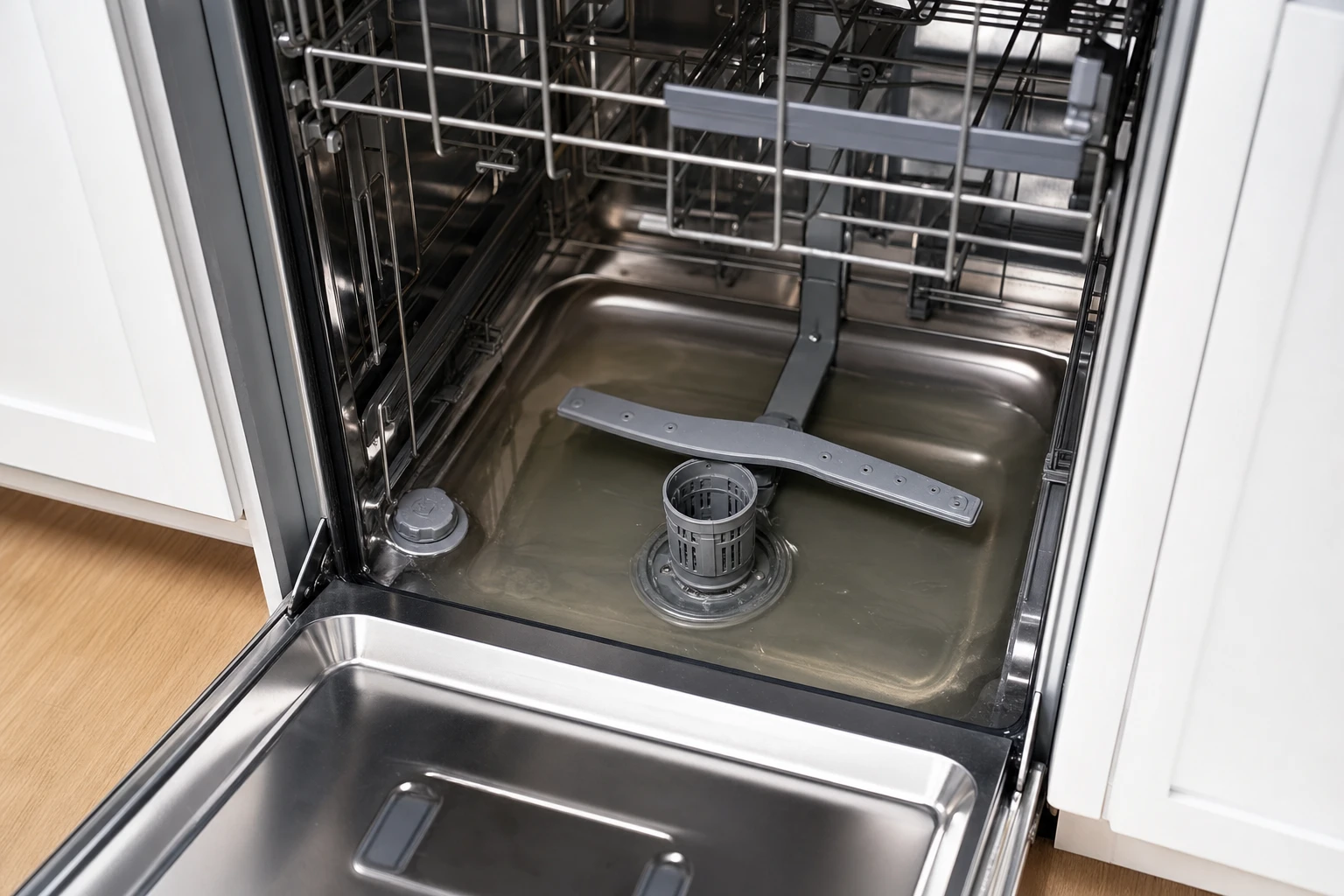
Learn how to drain a dishwasher with standing water in 6 easy steps. Fix clogs, clean the filter, and know when to call a pro for expert repair.

When your dishwasher starts acting up, you may find yourself at a crossroads: should you repair it or replace it?
The decision hinges on factors like the appliance's age, condition, and repair costs.
This guide will help you weigh these considerations, identify signs that your dishwasher needs repairs, understand the benefits of fixing it, determine when replacement makes sense, and compare the costs of both options.
KEY TAKEAWAYS
Several factors can help you decide whether fixing your dishwasher is the best move. Here's what to keep in mind:
Evaluating these factors will help you decide whether repairing your dishwasher is worth it or if investing in a new one makes more sense.
Is your dishwasher acting up? Here are common dishwasher failures and how they affect your repair/replace decision.

If dishes remain dirty or have residue after a cycle, it could indicate issues with the spray arms, filters, or other components. While some problems are fixable, persistent poor performance may warrant replacement.
To learn more about what causes poor dishwasher cleaning results and how to fix common causes of poor cleaning, view this helpful YouTube video:
As shown in the video, causes as simple as improper loading, choosing the wrong cycle, clogged filters, problems with spray arms, low water temperature or not using rinse aid could cause cleaning issues. These are problems that you can typically fix easily on your own.
When you can fix these types of simple causes for cleaning issues on your own, the question of whether it is worth it to fix your dishwasher is easy to answer. Fixing the dishwasher on you own instead of replacing the dishwasher makes common sense in this scenario.
More complicated or complex problems such as low water fill or failure of the circulation pump that you’re unable to diagnose and repair on your own may cause you to think twice about keeping your dishwasher. If you’re obviously facing a major, expensive repair when dishes aren’t getting clean, consider replacing your dishwasher if it’s older than 7 years and the repair will likely cost more than ½ the price of buying and installing a new dishwasher.

It’s easy to notice a tub full of water in the bottom of the dishwasher when unloading dishes after the cycle ends. Sometimes, resolving a draining problem can be almost as easy.
Easy fixes for a dishwasher not draining includes simple troubleshooting steps such as activating the garbage disposal to clear the kitchen sink drain path or clearing a clog in the kitchen sink air gap.
When these simple fixes don’t work, you can often fix a drain problem in your dishwasher using the systematic approach described in this DIY video:
If you’re able to resolve the dishwasher drain failure on your own, then it’s obviously worth keeping your dishwasher instead of replacing it.
If a more complicated problem such as a failed drain pump or defective electronic control board is preventing the dishwasher from draining, then you’ll need to consider replacing it if your dishwasher is older than 7 years and the repair will cost more than ½ the price of installing a new dishwasher.

Many of our Sears Home Services technicians are called out to homes to fix a problem with the dishwasher having no power when the solution to the problem is simply flipping the light switch beside the sink that controls power to the dishwasher.
That solution and other practical troubleshooting tactics are described in this popular YouTube video:
Following the systematic troubleshooting approach in that video will likely help you find the cause of the power failure in the dishwasher so you can decide whether to repair or replace the appliance.

Starting problems are often caused by a failed door switch, which is an inexpensive part that is relatively simple to replace on many dishwashers. In fact, the door switch is the most frequently replaced parts on a dishwasher because it’s constantly used to open the door for loading and unloading dishes.
Other problems can also prevent the dishwasher from starting. Of course, we have a video to walk you through troubleshooting for this problem. Follow the steps in this YouTube guide to find the cause of a starting problem in your dishwasher:
When something basic and simple like a failed door switch is preventing your dishwasher from starting, repairing the appliance rather than replacing it makes sense.
When a more complicated and expensive failure such as a bad electronic control board or defective control panel is apparent, you’ll need to decide whether the more-expensive repair is worth it. Sometimes, replacing the dishwasher will make more sense.

A problem as simple as an item being caught underneath the float switch in the dishwasher tub can prevent your dishwasher from filling. The dishwasher also won’t fill if the door switch is bad. More expensive failures include problems with the fill valve or the electronic control board.
Take the systematic approach to diagnose the cause of the fill failure described in this popular YouTube video:
When the fill failure is caused by something simple that you can fix yourself or that won’t cost that much for a technician to fix, it’s certainly worth fixing the dishwasher rather than replacing it.
When you’re facing a major repair such as replacing the electronic control board, you’ll need to consider replacing the dishwasher.
Dishwashers should run quietly. Loud or unusual noises like grinding, banging, or rattling typically indicate mechanical issues needing attention.
If you’re able to find and fix the noise on your own, the cost of resolving the problem will typically be minimal unless circulation pump replacement is the cause of the noise. Pump replacement can be expensive and it’s often not a repair that you can complete on your own because it involves handling crucial water seals that must be installed or reinstalled properly.
When the dishwasher needs a new circulation pump because the motor or pump is worn or damaged, you’ll likely need to replace the dishwasher rather than repairing it.
If you can find a minor problem causing the noise and fix this issue on your own, you won’t need to replace the dishwasher unless noises and problems begin to occur frequently.
Modern dishwashers often display error codes or flashing lights to indicate issues.
Consult the user manual or the tech sheet for your dishwasher to determine the cause of an error code or flashing lights. You can also look up the error code and get DIY troubleshooting advice for fixing the problem on our Dishwasher Error Code Chart.
If you’re able to fix the problem causing an error code on your own and the replacement part is relatively inexpensive, then you likely won’t need to replace the dishwasher.
If the error code points to a failure of the circulation pump motor, the control panel or the electronic control board and you’ll need a technician to make the repair, then you may need to replace dishwasher if the repair will be more than ½ the cost of installing a new dishwasher and your current dishwasher is over 7 years old.
When your dishwasher malfunctions, you might wonder if it's worth fixing or if you should replace it. While replacing might seem easier, repairing has several benefits:
Repairing your dishwasher can be a cost-effective and eco-friendly choice. To ensure proper repairs, seek assistance from a professional dishwasher repair service such as Sears Home Services for efficient and reliable solutions.
If your dishwasher has issues, you might wonder if it’s time to replace it. Consider these factors:
Consider these factors and discuss your concerns and situation with a professional technician who can assess your dishwasher’s condition and provide tailored advice.
You can schedule professional dishwasher maintenance and cleaning service yearly to help keep your dishwasher lasting and longer and consult with the technician performing the service when you need advice about dishwasher replacement.
Assessing whether to repair or replace your dishwasher depends on a combination of its age, repair costs, frequency of issues, energy efficiency, and performance.
By carefully evaluating these factors, you can make a decision that balances functionality, convenience, and cost-effectiveness, ensuring your kitchen remains efficient and your dishes sparkling clean.
With extensive experience, our technicians are skilled in repairing dishwashers of all makes and models, ensuring sparkling clean dishes with every cycle.
Loading scheduler options...
Learn how to drain a dishwasher with standing water in 6 easy steps. Fix clogs, clean the filter, and know when to call a pro for expert repair.
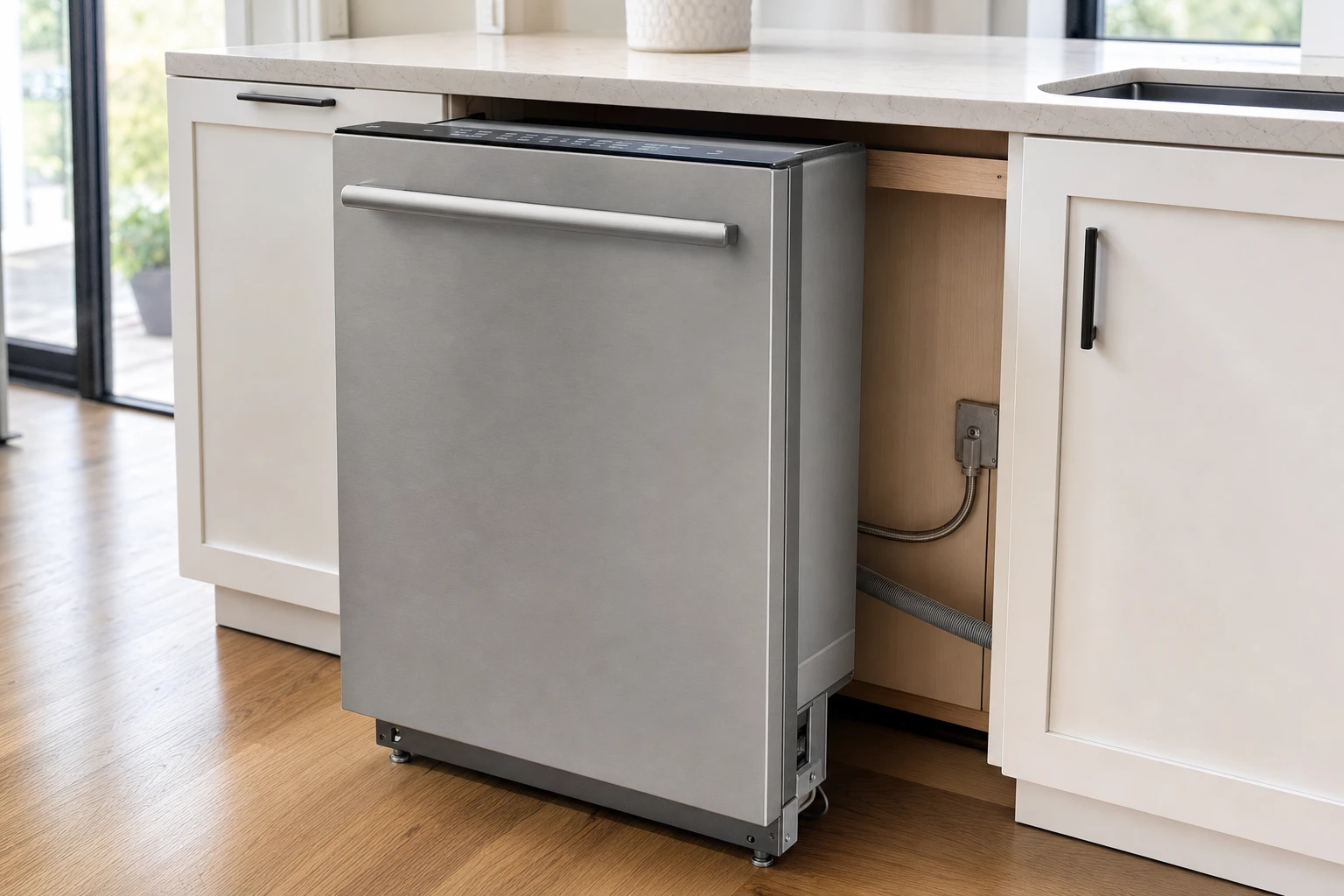
Learn how to replace a dishwasher safely in 2026. Step-by-step removal, hookup, and install tips—plus when to call a manufacturer-trained technician.

Find out why your dishwasher is stopping mid-cycle and how to fix common problems that cause this symptom.
Many common issues stem from simple dishwasher misuse. Get expert troubleshooting tips to fix the most frequent dishwasher problems.
A dishwasher basket is a removable container designed to securely hold small items like cutlery and utensils during the wash cycle, ensuring efficient cleaning without loss or damage.
A dishwasher end panel is a finishing piece installed on the exposed side of a dishwasher, primarily when it is at the end of kitchen cabinetry, to ensure a seamless and aesthetically pleasing look in the kitchen.
A dishwasher diverter motor controls the direction of water flow to different spray arms within the dishwasher, ensuring optimal water distribution during each wash cycle for thorough cleaning.
A dishwasher drawer is a compact, space-saving kitchen appliance designed to clean dishes efficiently, resembling a standard kitchen drawer that slides out for easy loading and unloading.
The most common reasons your Frigidaire dishwasher won't start a cycle are a defective electronic control board, damaged power supply board or a failed door switch.
The most common reasons your Amana dishwasher won't drain are a failed drain pump, faulty pump and motor assembly or a cracked drain hose.
The most common reasons your Bosch dishwasher has no heat are a defective electronic control board, clogged water valve or a broken detergent dispenser.
The most common reasons your Electrolux dishwasher is not heating are a defective electronic control board, faulty pump and motor assembly or a damaged user interface control.
The most common reasons your Kenmore dishwasher is not washing are a faulty pump and motor assembly, defective electronic control board or a clogged spray arm.
The most common reasons your Kenmore Elite dishwasher is not washing are a faulty pump and motor assembly, defective electronic control board or a clogged spray arm.