 Appointment Lookup
 213-596-2538
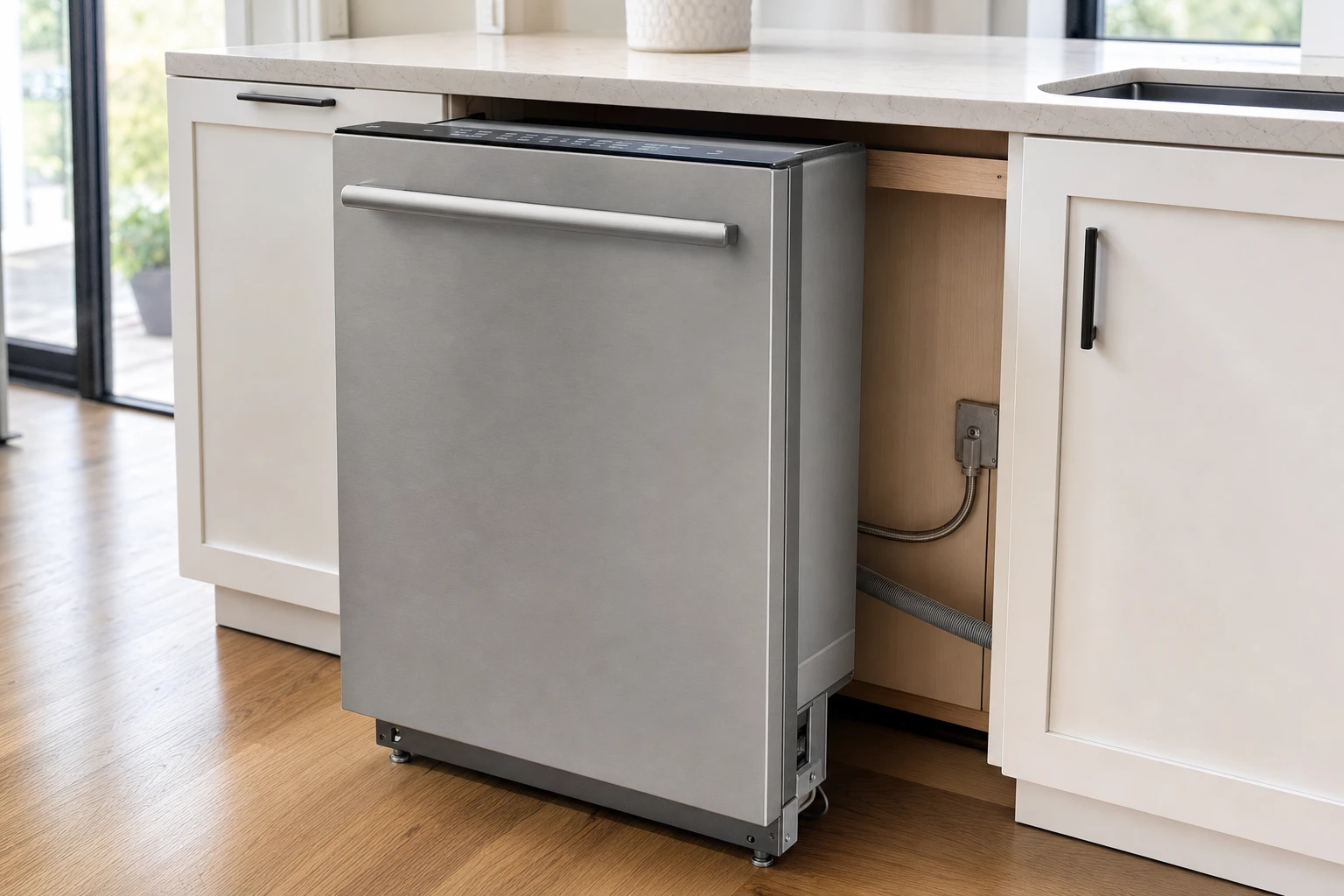
Learn how to replace a dishwasher safely in 2026. Step-by-step removal, hookup, and install tips—plus when to call a manufacturer-trained technician.
Why Is There Standing Water in My Dishwasher?
What You'll Need to Drain a Dishwasher
How Do You Drain a Dishwasher with Standing Water? (Step-by-Step)
Repair vs. Call a Pro: What's This Going to Cost?
How to Prevent Standing Water in the Future
When Should You Call a Professional for a Dishwasher That Won't Drain?
Frequently Asked Questions
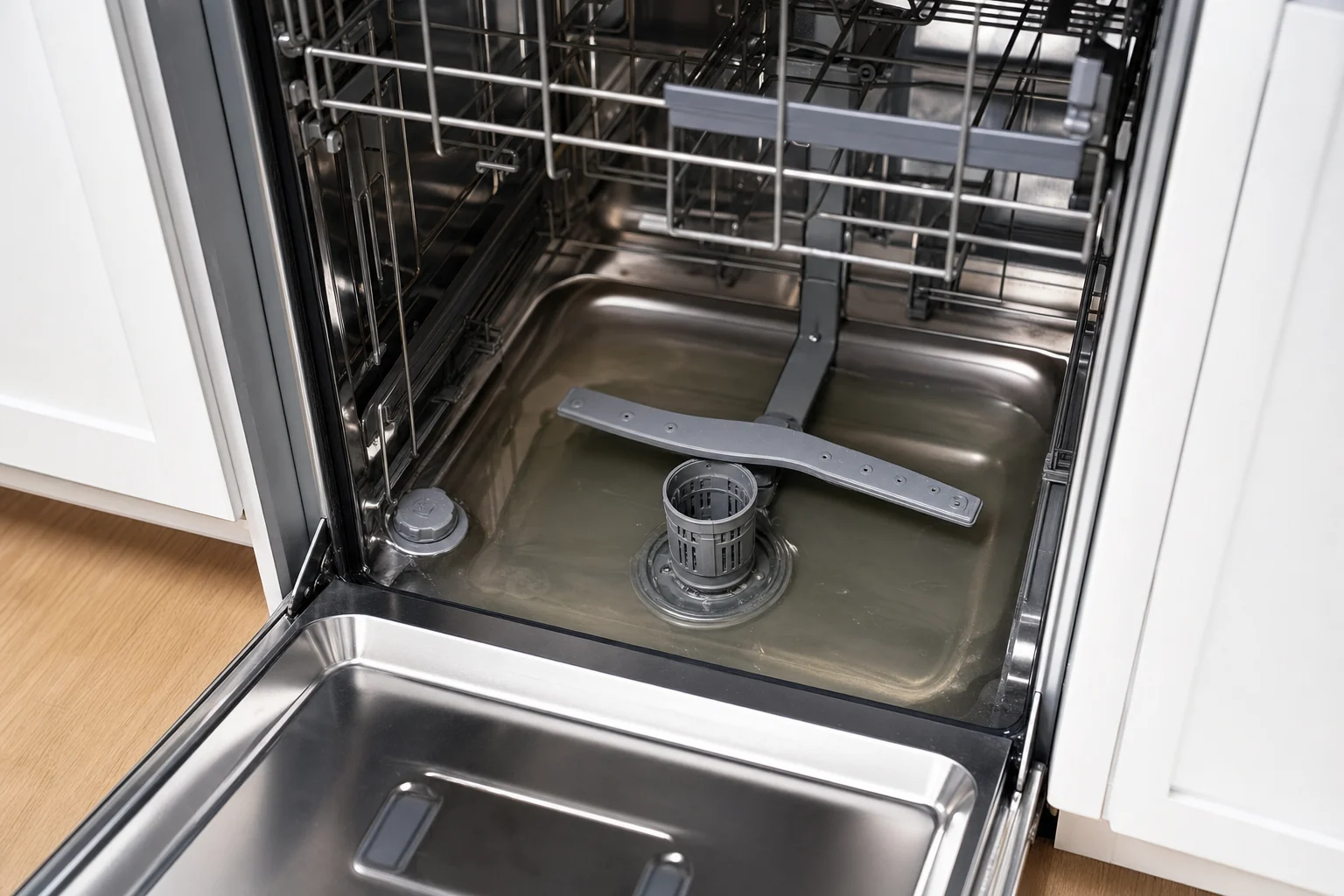
To drain a dishwasher with standing water, cut power at the breaker, scoop out the water with a cup, and towel-dry the tub. Then clean the filter, check the drain hose for kinks, and inspect the air gap and garbage disposal for clogs. Standing water at the bottom of a dishwasher almost always means something is blocking the drain path — food debris in the filter, a kinked hose, or a clogged disposal. The good news: about 80% of the time, a homeowner can clear it in under 30 minutes with basic tools. This guide walks you through the fix step by step, and tells you when to stop and call a technician.
KEY TAKEAWAYS
Standing water means the pump-out phase of your last cycle didn't finish. Something is either blocking the water from leaving or the pump can't push it out. Before you start pulling things apart, it helps to understand the four usual suspects — the fix depends on which one you're dealing with. If you want a deeper diagnostic walkthrough, our guide on why your dishwasher won't drain covers the electrical side too.
The cylindrical filter at the bottom of the tub traps food particles so they don't recirculate onto your dishes. If nobody has cleaned it in six months, it's packed. Water can't drain through a filter that's caked with grease, seeds, and label paper.
The drain hose runs from the pump under the dishwasher up to your garbage disposal or air gap. If it got pinched behind a cabinet during installation, or if grease has hardened inside it, water backs up into the tub.
If you recently ran the disposal and didn't clear it, or if you never removed the knockout plug when the dishwasher was installed, the drain hose has nowhere to send its water. This is the single most common cause we see on new-install service calls.
The drain pump is a small motor that pushes water out at the end of the cycle. When it fails — bearings worn, impeller broken, or motor burned out — you'll often hear a hum with no water movement. The check valve is a one-way flap that keeps drained water from flowing back in. If it sticks open, dirty water siphons back into the tub.
You don't need specialty tools. Everything on this list is probably already in your kitchen or garage.
⚠️ Warning: Dishwashers combine water and 120-volt electricity. Always kill power at the breaker before reaching into the tub or handling the drain hose. Don't rely on the door switch alone. If you smell burning plastic or see scorch marks near the pump, stop and book a repair — that's a failed motor, not a clog.
Work through these seven steps in order. Don't skip ahead — each one rules out a possible cause so you know exactly what fixed it.
Turn off power at the breaker. Go to your electrical panel and flip the breaker labeled "dishwasher" or "kitchen." If nothing is labeled, shut off the main. Confirm power is off by opening the dishwasher door and checking that the interior light and control panel are dead.
Remove the dishes and racks. Pull out the bottom rack completely and set it aside. Wet dishes are heavy and awkward — get them out of the way before you start scooping. If dishes are covered in standing water, rinse them in the sink; you'll rewash them after the fix.
Scoop out and towel-dry the water. Use a plastic cup to bail water into your bucket. Once you're below the point where scooping works, lay towels flat on the tub floor and let them soak. Wring them out and repeat until the bottom is nearly dry. A wet/dry vac finishes this job in about two minutes.
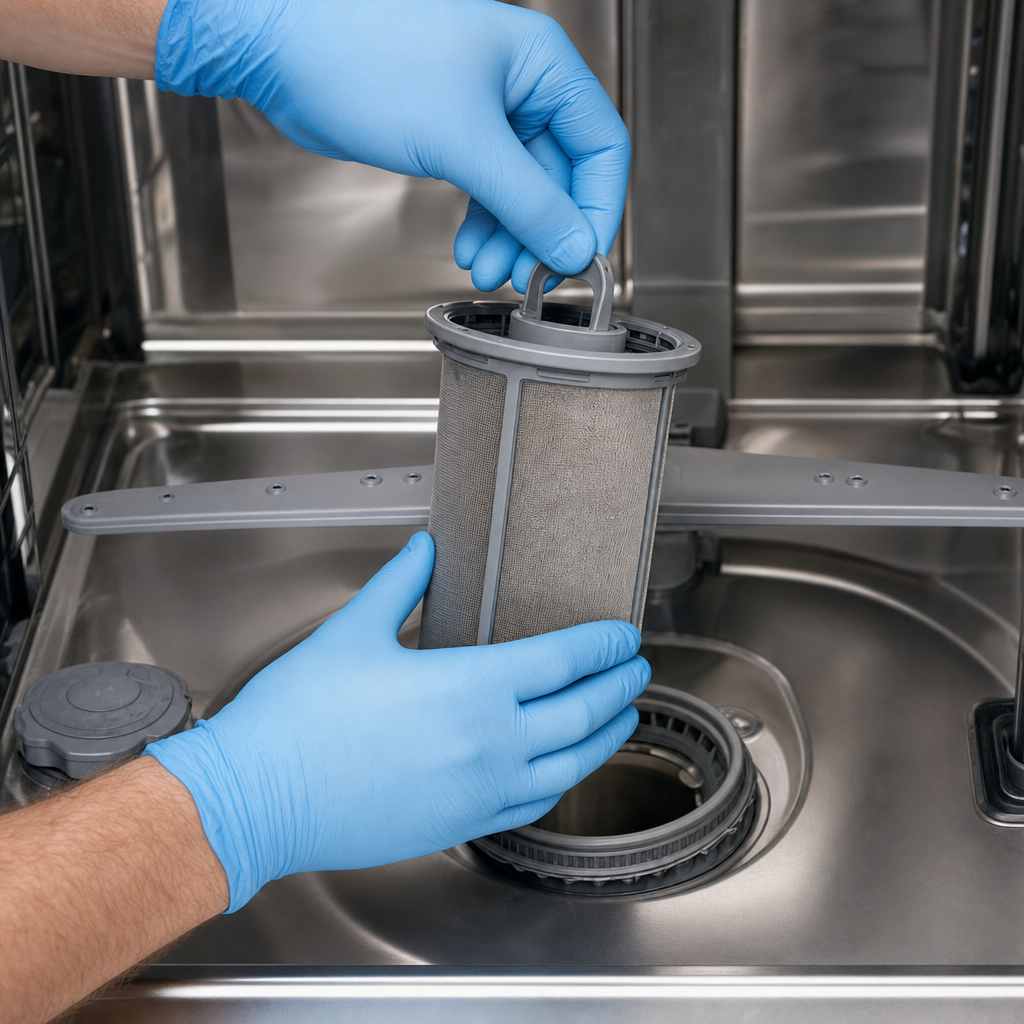
Clean the filter. Twist the cylindrical filter counterclockwise to unlock it and lift it out. Underneath, you'll usually find a flat coarse filter you can also lift free. Rinse both under hot water, scrub the mesh with a soft brush, and check the sump (the well underneath) for broken glass, chicken bones, fruit stickers, or twist ties. Reinstall and lock the filter back in place — a loose filter causes leaks and poor cleaning.
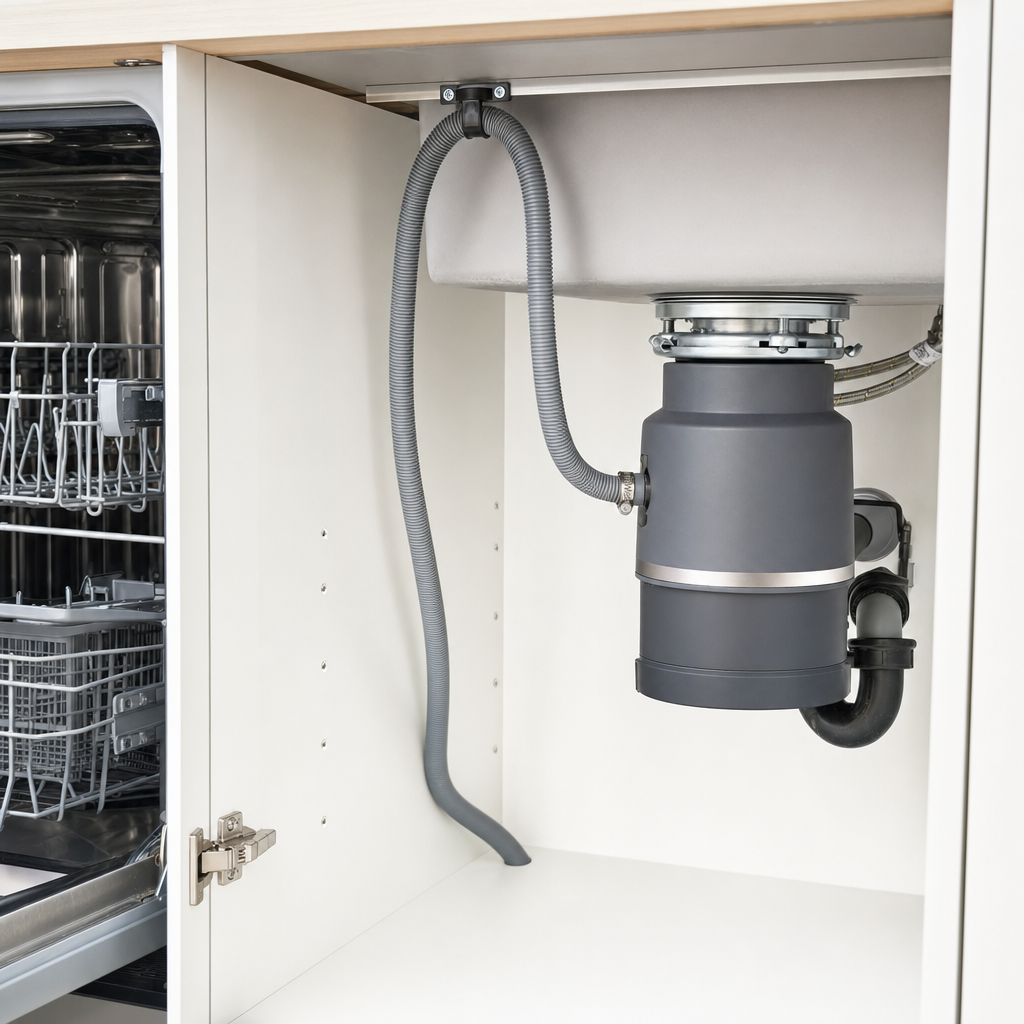
Inspect the drain hose and air gap. Pull the dishwasher out a few inches if you can, or open the cabinet under the sink. The drain hose is usually corrugated and about 5/8-inch wide. Feel along its full length for kinks or hard lumps of grease. If your sink has an air gap (the small cylindrical fitting on the countertop), pop off the cap and clean out any debris — a clogged air gap will stop drainage cold.
Check the garbage disposal. Run the disposal for 15 seconds with cold water to clear anything sitting in it. If your dishwasher was recently installed, look for the knockout plug — a small plastic disc inside the disposal's dishwasher inlet. Installers sometimes forget to knock it out, which means your dishwasher has been trying to drain into a sealed pipe. If you're not sure how to check this, our guide on dishwasher problems that need a pro explains what to look for.
Run a rinse cycle to test. Restore power at the breaker, close the door, and start a short rinse-only cycle. Listen for the drain pump about 60 seconds in — it should sound like a low, steady whir for about 90 seconds. Open the door when the cycle finishes. If the tub is dry (or has less than a cup of water around the filter), you're done.
| Approach | Typical Cost | Time | Best For |
|---|---|---|---|
| DIY filter + hose cleaning | $0-$20 (parts) | 30-60 min | Food debris, first-time clog |
| Replacement drain hose (DIY) | $25-$60 | 1-2 hours | Cracked or permanently kinked hose |
| Professional drain repair | $150-$400 typical | Same visit | Failed pump, check valve, control board |
| Full dishwasher replacement | $600-$1,500+ | Half day | Unit 10+ years old with multiple issues |
If your dishwasher is under eight years old, repair almost always wins. Past ten years, weigh the cost of the repair against a new unit — especially if the pump has already been replaced once.
Modern dishwashers don't need pre-rinsing, but they do need you to scrape off bones, seeds, rice, and pasta. Those are the four items that clog filters and sumps most often.
Pull the filter, rinse it under hot water, and put it back. It takes 90 seconds. If you run your dishwasher daily, do this every three weeks. Our full guide on how to clean a dishwasher covers the tub, spray arms, and door gasket too.
Turn on your kitchen sink and let it run until the water is hot, then start the dishwasher. This gets hot water into the fill line from the first minute of the cycle, which dissolves grease better and reduces buildup in the pump and hose.
Some problems are past the point where towels and a toothbrush will fix them. Here's when to book a technician.
If you hear a loud hum or buzz during the drain phase but no water moves, the pump motor is seized. A clicking sound with no hum usually means a failed relay on the control board. Both require replacement parts and are not user-serviceable on most modern models.
If you cleaned the filter, cleared the hose, and the water comes back within a cycle or two, something upstream is failing — a stuck check valve, a cracked sump, or a control board that isn't sending the pump-out signal at the right time. This needs diagnostics, not more cleaning.
Sears Home Services dispatches manufacturer-trained technicians who arrive with the commonly needed parts on the truck. Your technician provides an exact quote — parts and labor — that doesn't change once provided. You approve the cost before any work begins. If you decline, you pay only the diagnostic fee ($90 to $150 depending on the appliance), which is waived if you proceed with the repair. All repairs come with a service guarantee.
For coverage beyond a single repair, home warranty coverage through Sears Protect covers most brands, any age. You can book a dishwasher repair online or by phone.
With extensive experience, our technicians are skilled in repairing dishwashers of all makes and models, ensuring sparkling clean dishes with every cycle.
Loading scheduler options...
Learn how to replace a dishwasher safely in 2026. Step-by-step removal, hookup, and install tips—plus when to call a manufacturer-trained technician.
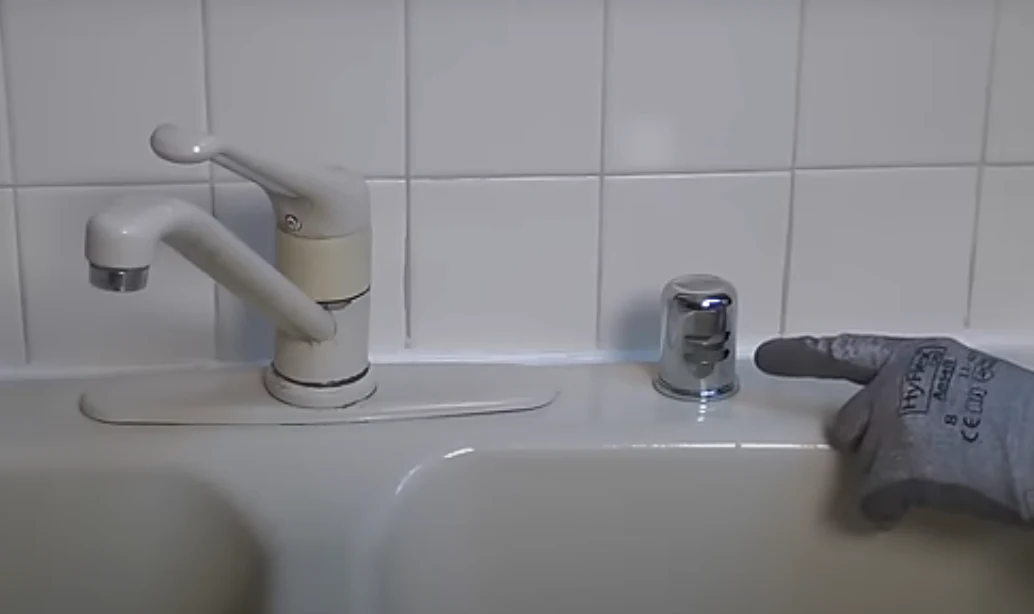
Learn how an air gap works in the drain system of a dishwasher.

Learn how a recirculation pump works in a dishwasher and how to troubleshoot pump problems.
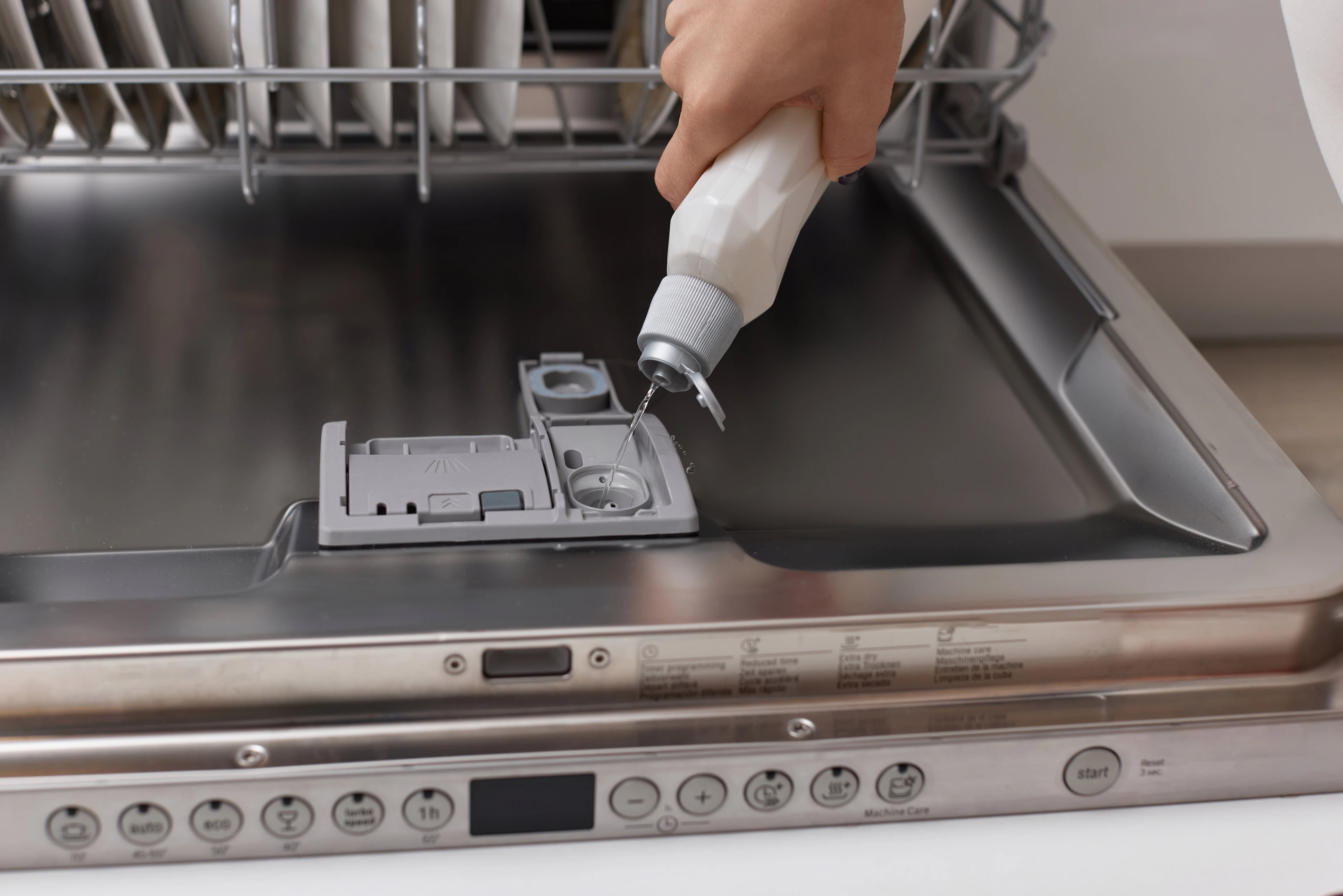
Learn how a rinse aid dispenser works in a dishwasher and how to troubleshoot problems.
A dishwasher basket is a removable container designed to securely hold small items like cutlery and utensils during the wash cycle, ensuring efficient cleaning without loss or damage.
A dishwasher end panel is a finishing piece installed on the exposed side of a dishwasher, primarily when it is at the end of kitchen cabinetry, to ensure a seamless and aesthetically pleasing look in the kitchen.
A dishwasher diverter motor controls the direction of water flow to different spray arms within the dishwasher, ensuring optimal water distribution during each wash cycle for thorough cleaning.
A dishwasher drawer is a compact, space-saving kitchen appliance designed to clean dishes efficiently, resembling a standard kitchen drawer that slides out for easy loading and unloading.
The most common reasons your Frigidaire dishwasher won't start a cycle are a defective electronic control board, damaged power supply board or a failed door switch.
The most common reasons your Amana dishwasher won't drain are a failed drain pump, faulty pump and motor assembly or a cracked drain hose.
The most common reasons your Bosch dishwasher has no heat are a defective electronic control board, clogged water valve or a broken detergent dispenser.
The most common reasons your Electrolux dishwasher is not heating are a defective electronic control board, faulty pump and motor assembly or a damaged user interface control.
The most common reasons your Kenmore dishwasher is not washing are a faulty pump and motor assembly, defective electronic control board or a clogged spray arm.
The most common reasons your Kenmore Elite dishwasher is not washing are a faulty pump and motor assembly, defective electronic control board or a clogged spray arm.