 Appointment Lookup
 213-596-2538

Learn how chest freezers work and how to troubleshoot common problems.

Frost-free freezers save you time and effort by eliminating the need to manually defrost your freezer—a tedious chore if you have a chest freezer.
Chest freezers are all manual defrost models while many manufacturers offer frost-free upright freezers.
A frost-free upright freezer will have the evaporator behind the back inner wall of the freezer compartment and the freezer will also have a fan that circulates the air through evaporator fins and then throughout the freezer compartment for even and efficient cooling.
In this article, we’ll take a close look at how a frost-free freezer works.
KEY TAKEAWAYS
To understand frost-free technology, it’s important to first understand how frost forms.

Here are the common causes of frost forming in freezers:
Note: Although a frost-free freezer will automatically defrost the evaporator fins, the defrost system won’t eliminate or prevent frost from forming on surfaces and items inside the freezer due to the first 3 issues described above.
Although frost-free upright freezers won’t eliminate or prevent all frost inside the freezer compartment, their design does inherently deter normal frost.
Frost-free freezers also periodically eliminate all frost from the evaporator fins using a defrost heater.
Here are more details about how frost-free freezers work.
The location and design of the evaporator heat exchanger in a frost-free model helps prevent frost from forming on inner liner surfaces.
Here are the reasons why frost builds up on freezer liner and shelf surfaces inside chest freezers and manual-defrost upright freezers:
In a frost-free freezer, cooling occurs in the evaporator. The evaporator fan circulates cold air throughout the freezer compartment.
Because of this design, most of the frost that forms in a frost-free freezer is concentrated on the evaporator fins. The evaporator fins are periodically defrosted automatically by a defrost heater in the automatic defrost system.
Unless a large amount of warm, moist air enters the freezer because of one or more causes discussed above, you typically won’t see much frost inside a frost-free freezer except when you fail to tightly wrap or seal up moist foods.
Frost that normally forms on the freezer evaporator fins will be periodically melted off by the automatic defrost system.
Here’s how the automatic defrost system works:
This defrost routine typically takes around 30 minutes to complete in most frost-free freezers.
The automatic defrost cycle repeats every 10 to 20 hours in most models.
When you see excessive frost in your frost-free upright freezer, check for the common causes of frost listed above and fix the cause of warm air leaking into the freezer compartment.
If the freezer door gasket is damaged, you can follow the procedure in this helpful video to replace that seal:
Note: The video shows how to replace a refrigerator door gasket. The procedure for replacing a freezer door gasket is the same as the one shown in the video for many frost-free freezers.
If you’re unable to replace the freezer door gasket on your own, schedule freezer repair service and we’ll send a Sears Home Services Technician to your home to replace the door gasket for you.
A failure in the automatic defrost system of a frost-free freezer will often result in cooling problems because the air passages between evaporator fins get clogged by frost and ice that isn’t being properly melted off by the defrost system.
You can often fix this type of cooling problem temporarily by unplugging the freezer or shutting it off for several hours and leaving the freezer door open until ice melts off the fins. You may need to safely store food that may spoil during this troubleshooting step.
The freezer may resume normal cooling after this process. If the automatic defrost system does indeed have a problem, the frost and ice will eventually build up again and inhibit cooling. When this happens, you’ll likely need to schedule freezer repair service to have the problem fixed by a technician.
If you’re confident in your DIY troubleshooting and repair skills, you may be able to find and fix an automatic defrost system failure on your own. The automatic defrost system in a frost-free freezer is often the same as the defrost system in a refrigerator. Follow the steps in this popular YouTube video to troubleshoot the defrost system in your freezer:
Now that you know practically all there is to know about a frost free freezer, you’ll be able to recognize problems with frost and cooling as well as keep the freezer running smoothly and efficiently.
Of course, you’ll also have Sears Home Services standing by as your backup in case you need any help. We know appliances and we’ll help you with anything that you need in your home.
Trust us to help you keep your entire home running smoothly.
Trust our skilled technicians to repair your freezer promptly, regardless of where you bought it.
Loading scheduler options...
Learn how chest freezers work and how to troubleshoot common problems.
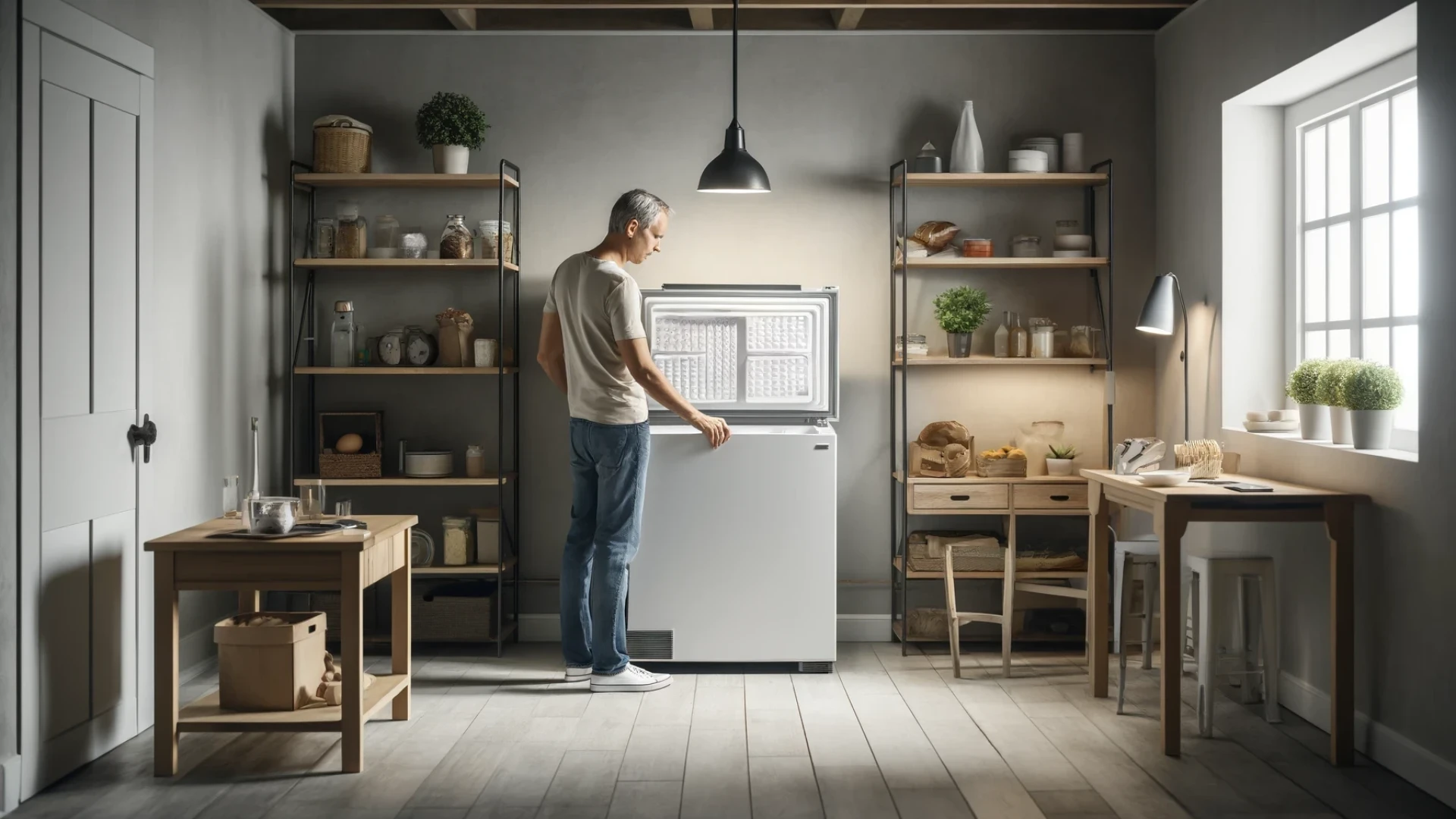
Learn how to tackle and prevent ice buildup in your freezer with our practical guide. Discover common causes, effective removal techniques, and tips for maintaining a frost-free appliance.

Is it worth repairing a freezer? Explore the pros and cons and make the right choice for your budget with Sears Home Services.

Discover why your freezer is only freezing at the bottom with Sears Home Services.
A freezer bag is a specially designed plastic bag used for the cold storage of food in the freezer, offering protection against freezer burn and preserving the food's freshness and flavor over extended periods.
A freezer compressor is a vital component of a freezer's refrigeration system, functioning as a pump to circulate refrigerant through the system, which cools the interior by absorbing and expelling heat.
A freezer door gasket is a flexible seal that outlines the edge of the freezer door, ensuring an airtight closure to maintain cold temperatures inside and prevent warm air from entering.
A manual defrost freezer is an appliance that needs to be switched off and allowed to thaw periodically to remove accumulated ice, ensuring efficient operation and storage space maximization.
The most common reasons your LG freezer is leaking water are a clogged drain tube, cracked water tubing or a bad evaporator.
The most common reasons your Maytag freezer is leaking water are a clogged drain tube, cracked water tubing or a bad evaporator.
The most common reasons your Electrolux freezer is leaking water are a clogged drain tube, cracked water tubing or a bad evaporator.
The most common reasons your Frigidaire freezer is leaking water are a clogged drain tube, cracked water tubing or a bad evaporator.
The most common reasons your Kenmore freezer compressor is not running are a failed compressor, malfunctioning electronic control board or a bad evaporator.
The most common reasons your Haier freezer is leaking water are a clogged drain tube, cracked water tubing or a bad evaporator.