 Appointment Lookup
 213-596-2538
Get your riding lawn mower ready for summer with Sears Home Services.

Whether you're a seasoned pro or a new zero-turn mower owner, this comprehensive guide is designed to help you understand the essentials of zero turn riding mower maintenance tips for optimal performance and longevity. We will cover everything from basic lawn mower maintenance tasks to effective storage practices for the off-season. Sears Home Services is best source for help in keeping your zero-turn riding mower in top shape.
KEY TAKEAWAYS
Regular lawn mower maintenance is the key to keeping your zero-turn mower in top condition and prolonging its lifespan. Without a proper maintenance routine, your mower is prone to common issues like dull blades, engine problems, and decreased fuel efficiency. These problems can lead to costly repairs and a shortened lifespan for your mower.
To maintain your mower effectively, follow the following key zero turn riding mower maintenance tips:
Regularly check and replace the cutting blades for a clean, precise cut. Follow the steps shown in this DIY video to replace blades on a rear-engine riding mower:
While you have the deck removed to replace the cutting blades, clean the underside of the mower deck thoroughly. Coat the underside of the deck with a silicone lubricant such as MO-DECK spray to help keep grass clippings from sticking to the mower deck.
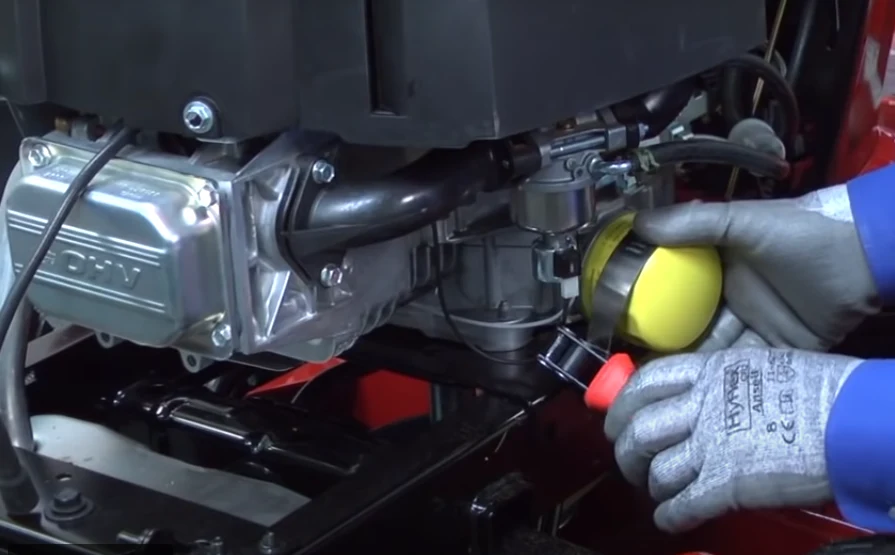
Perform a complete engine tune-up at least once per year to keep your zero-turn riding mower running smoothly. The engine tune-up includes these essential steps:
If you want a Sears Home Services technician to tune up the engine and maintain the zero-turn riding mower for you, schedule service now.
Inspect and tighten all bolts and fasteners to prevent loose parts. Lubricate your mower's spindles and bearings with high-quality grease to reduce friction and prevent wear. This is a crucial part of spring lawnmower maintenance. Follow your mower's manual for lubricating additional moving parts on the mower.
Following these lawn mower maintenance tips and adhering to a regular schedule can help keep your zero-turn mower in top condition.
To ensure your zero-turn riding mower's longevity and optimal performance, certain essential lawn mower spring maintenance tasks need to be carried out.
During winter storage, the blade belt can dry out and crack. Inspect the blade belt and replace it if it’s worn or damaged. Follow the steps in this DIY video to replace the blade belt:
Clean the top and bottom of the mower deck while you have it removed for blade belt replacement.
Keeping the ground drive belts in top shape will ensure that the mower drives smoothly. Examine the ground drive belts for wear or damage. Replace the belts if needed. Here’s a video that shows how to replace ground drive belts in a common zero-turn riding mower:
Replacing the ground drive belts is fairly advanced and complicated. If you need to have a Sears Home Services technician complete that repair on your zero-turn riding mower, schedule repair services now.
If your zero-turn riding mower creeps forward or backward when both lap bars are in the neutral position, you’ll need to adjust the neutral control. Our How to adjust the neutral control on a zero-turn riding mower guide with video shows you how to complete this task on common rear-engine mowers.
When the mowing season ends, properly storing your zero-turn mower is crucial to prevent damage and ensure it's ready for the next season. This is an essential part of your spring lawnmower maintenance routine.
Clean your mower thoroughly before storing it. We recommend changing the oil and filter to protect the engine during the off-season.
Don't leave untreated gas in the mower over the winter, because the gas deteriorates, and the mower might not start in spring.
If there is treated gas in the tank, top off the tank with more treated gas to lessen the chance of water contamination from the fuel tank sweating. The treated gas will also protect the fuel system and carburetor from gumming.
If you don’t have treated gas in the tank, follow these steps to winterize the tank and fuel system:
Remove the negative battery cable and then the positive cable. Pull the battery out of the riding mower and clean the battery terminals using battery terminal cleaner. Coat the terminals with a terminal protector.
Store the battery in a cool, dry location such as the garage or storage shed. Periodically charge the battery during the off-season to maintain its optimal charge level.
Store your mower in a dry, well-ventilated area, such as a garage or shed. By following these zero turn riding mower maintenance tips, your zero-turn mower will be ready to tackle the yard when the next mowing season arrives!
If you're experiencing problems with your riding mower, schedule [lawn repair near you] with one of our local experts to diagnose the issue and fix it fast.
Maximize the efficiency and longevity of your riding mower with our professional maintenance service, tailored to keep your lawn looking pristine all season long.
Loading scheduler options...
Get your riding lawn mower ready for summer with Sears Home Services.

Learn how to sharpen a lawn mower blade with our step-by-step guide.

Discover the Pros and Cons: Are Battery-Powered Riding Mowers Better than Gas Mowers?

Ensure your riding mower stays in peak condition with these 8 maintenance tips from lawn and garden expert Ed Rzasa.
A dishwasher basket is a removable container designed to securely hold small items like cutlery and utensils during the wash cycle, ensuring efficient cleaning without loss or damage.
A dishwasher end panel is a finishing piece installed on the exposed side of a dishwasher, primarily when it is at the end of kitchen cabinetry, to ensure a seamless and aesthetically pleasing look in the kitchen.
ENERGY STAR appliances are energy-efficient products that meet the strict energy efficiency specifications set by the U.S. Environmental Protection Agency or the U.S. Department of Energy. These appliances are designed to use less energy and water, leading to cost savings and a reduced environmental impact.
Hard water is water that contains high levels of dissolved minerals, particularly calcium and magnesium. It contrasts with soft water, which has lower concentrations of these minerals.
When your Payne central air conditioner won’t turn on or isn’t cooling, check for power problems, a failed capacitor, or a clogged condensate drain. This guide covers quick, safe troubleshooting steps and explains when to call Sears Home Services for expert central AC repair.
When your ICP central air conditioner won’t turn on or isn’t cooling, check for power problems, a failed capacitor, or a clogged condensate drain. This guide covers quick, safe troubleshooting steps and explains when to call Sears Home Services for expert central AC repair.
When your Heil central air conditioner won’t turn on or isn’t cooling, check for power problems, a failed capacitor, or a clogged condensate drain. This guide covers quick, safe troubleshooting steps and explains when to call Sears Home Services for expert central AC repair.
When your Carrier central air conditioner won’t turn on or isn’t cooling, check for power problems, a failed capacitor, or a clogged condensate drain. This guide covers quick, safe troubleshooting steps and explains when to call Sears Home Services for expert central AC repair.
When your Comfortmaker central air conditioner won’t turn on or isn’t cooling, check for power problems, a failed capacitor, or a clogged condensate drain. This guide covers quick, safe troubleshooting steps and explains when to call Sears Home Services for expert central AC repair.
When your Ruud central air conditioner won’t turn on or isn’t cooling, check for power problems, a failed capacitor, or a clogged condensate drain. This guide covers quick, safe troubleshooting steps and explains when to call Sears Home Services for expert central AC repair.