 Appointment Lookup
 213-596-2538

When tackling DIY appliance repair, safety should always be your top priority.

It’s frustrating. One minute, everything’s running smoothly, and the next, your lights flicker out, or your microwave shuts off mid-cycle.
If your breaker keeps tripping, it’s not just an annoyance; it’s a sign of an electrical issue that needs your attention. But what’s really causing this disruption?
From short circuits to overloaded circuits, several culprits could be to blame. Let’s explore the most common reasons behind a tripping breaker, how your appliances might be involved, and what you can do to keep your home running safely and efficiently.
KEY TAKEAWAYS
When you hear "short circuit," you probably imagine sparks flying. While that’s possible, short circuits often happen quietly behind the scenes. This occurs when the hot (live) wire comes into contact with a neutral or ground wire, creating an unintended path for electricity. The result? An immediate surge of electrical current that your breaker cuts off to prevent overheating, electrocution or fire.
Home appliances can contribute to short circuits when their internal wiring is damaged. For instance:
If you suspect a short circuit when the house circuit breaker keeps tripping, unplug the appliance and inspect wiring and internal components. Look for scorch marks, melted plastic, or other signs of damage. If you find damaged wiring, repair the wires as shown in this DIY video:
If the breaker keeps tripping after repairing wires, leave the appliance unplugged and stop using it. Schedule appliance repair to have a technician examine and repair the appliance.

Your breaker doesn’t just protect against shorts—it also monitors the total electrical load on each circuit. Overloading happens when you connect too many devices to the same circuit. Each one draws current, and when the combined load exceeds the breaker’s rating, it trips.
This scenario often happens in kitchens, where countertop appliances like blenders, toasters, and air fryers compete for limited outlets. Or in living rooms, where TVs, sound systems, and gaming consoles run simultaneously.
Distribute the current load more evenly across outlets. Avoid using power strips to connect multiple high-energy appliances to the same circuit. If you constantly experience overload issues, consider upgrading your electrical panel or adding dedicated circuits.
Similar to a short circuit, a ground fault happens when electricity strays from its intended path, often due to damaged or wet wiring. Ground faults are particularly dangerous because they can lead to electric shock. This risk increases in damp areas like bathrooms, kitchens, and outdoor spaces.
Modern homes use Ground Fault Circuit Interrupters (GFCIs) to detect and immediately cut off electrical power in these situations.
If your breaker trips while running an appliance near water—say, a dishwasher or a washing machine—you might have a ground fault at play.
Inspect the appliance and nearby outlets for water damage or wear. If you can’t locate the issue, call an electrician to assess your home’s wiring and ensure everything’s safe.
Sometimes, the issue lies within the appliance itself. Older appliances, especially, can draw more power than the circuit can handle. A worn-out motor in your washing machine or a faulty heating element in your oven can also cause the breaker to trip.
Watch for these warning signs:
If you notice these issues, unplug the appliance and schedule appliance repair service to have a Sears Home Services technician examine and repair the problem.
To avoid repeated trips to the breaker box, follow these tips:
Keeping your home’s electrical system in good shape ensures not only convenience but also safety. The next time your breaker trips, use these tips to pinpoint the issue and take action.
By staying proactive, you can keep your appliances running smoothly—and avoid unnecessary downtime.
From refrigerators to dishwashers, our experienced technicians are equipped to repair all your kitchen appliances, providing fast and reliable service.
Loading scheduler options...
When tackling DIY appliance repair, safety should always be your top priority.
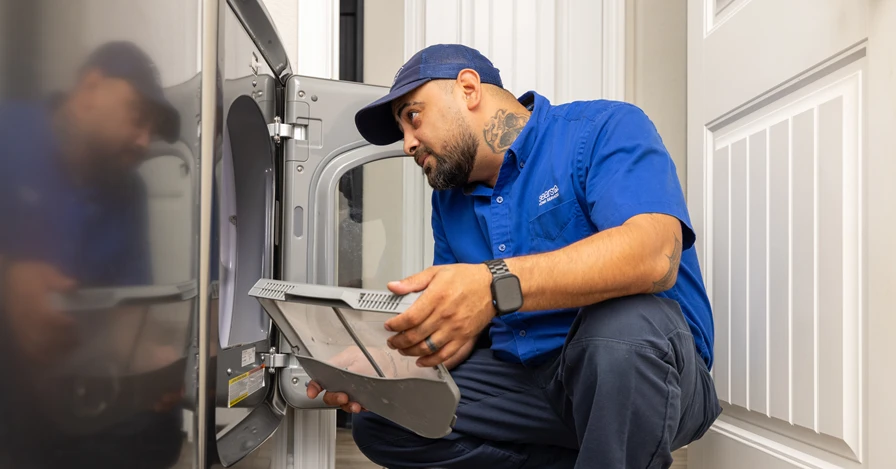
Knowing the potential appliance repair costs can be crucial for yearly planning and budgeting.

Discover the 3 factors that affect the cost to fix a garbage disposal with Sears Home Services.
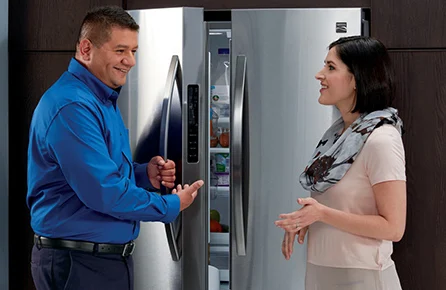
Find out how to get the most out of your appliance repair service appointment with these technician tips from Sears Home Services.
ENERGY STAR appliances are energy-efficient products that meet the strict energy efficiency specifications set by the U.S. Environmental Protection Agency or the U.S. Department of Energy. These appliances are designed to use less energy and water, leading to cost savings and a reduced environmental impact.
Wattage is the measure of electrical power expressed in watts (W), indicating the rate at which a device consumes energy.
Natural gas is a fossil fuel used primarily for heating, cooking, and electricity generation. It's a hydrocarbon gas mixture consisting mainly of methane, but it also contains smaller amounts of other hydrocarbons and sometimes sulfur compounds.
A washer screw is a fastening device that combines a screw and a washer, designed to distribute the load of a screwed fastening more evenly and to prevent the screw from loosening under vibration.
When your Payne central air conditioner won’t turn on or isn’t cooling, check for power problems, a failed capacitor, or a clogged condensate drain. This guide covers quick, safe troubleshooting steps and explains when to call Sears Home Services for expert central AC repair.
When your ICP central air conditioner won’t turn on or isn’t cooling, check for power problems, a failed capacitor, or a clogged condensate drain. This guide covers quick, safe troubleshooting steps and explains when to call Sears Home Services for expert central AC repair.
When your Heil central air conditioner won’t turn on or isn’t cooling, check for power problems, a failed capacitor, or a clogged condensate drain. This guide covers quick, safe troubleshooting steps and explains when to call Sears Home Services for expert central AC repair.
When your Carrier central air conditioner won’t turn on or isn’t cooling, check for power problems, a failed capacitor, or a clogged condensate drain. This guide covers quick, safe troubleshooting steps and explains when to call Sears Home Services for expert central AC repair.
When your Comfortmaker central air conditioner won’t turn on or isn’t cooling, check for power problems, a failed capacitor, or a clogged condensate drain. This guide covers quick, safe troubleshooting steps and explains when to call Sears Home Services for expert central AC repair.
When your Ruud central air conditioner won’t turn on or isn’t cooling, check for power problems, a failed capacitor, or a clogged condensate drain. This guide covers quick, safe troubleshooting steps and explains when to call Sears Home Services for expert central AC repair.