 Appointment Lookup
 213-596-2538

Many common issues stem from simple dishwasher misuse. Get expert troubleshooting tips to fix the most frequent dishwasher problems.
How to load dishes in the dishwasher
Choose the correct cycle
Check the filters for clogs
Check the spray arms for cracks and clogs
Make sure the dishwasher fills with the right amount of water
Check the water temperature
Troubleshoot detergent problems
Check water hardness
Use rinse aid
When to call a service technician
How to avoid dishwasher cleaning problems
Frequently Asked Questions

If you're wondering why your dishwasher isn't cleaning your dishes properly, there are a few common reasons that could be at fault. Water supply issues, loading problems and detergent dispensing failures are a few of the usual causes of poor cleaning.
By addressing these and other common cleaning issues, you can improve dishwasher performance and ensure sparkling clean dishes every time.
KEY TAKEAWAYS
When you find the dishes are still dirty after a completed dishwasher cycle, it doesn't mean you'll need to resort to dishwasher replacement or–dare we say it–hand washing. The basic troubleshooting tips in this video will likely help you resolve the problem:
Angle heavily soiled dish surfaces downward and leave enough room between the dishes to allow water to reach all sides. The key is to allow room for water to flow around the dishes and to not block the streams of water coming from the dishwasher’s spray arms. Don’t overload the dishwasher.
Make sure that spray arms spin freely after loading the dishwasher and don’t block the detergent dispenser lid.
In this video, we show you how to load dishes so they get clean and aren’t damaged. And we’ll tell you what dishes you should never wash in a dishwasher and why.
When loading your dishwasher, make sure the dirtiest part of the dish faces down so it gets direct spray from the spray arms. Place dishes with concave surfaces—like the bottoms of coffee mugs—at an angle on the dishrack to allow water to drain easier and improve drying.
Remove labels from jars and bottles before loading in the dishwasher, or hand wash these items because the labels can fall off during washing, clogging the screens and pumps inside the dishwasher.
The top rack is best suited for cups, glasses and lightweight plastic items. Place cups and glasses in the rows between tines—not over them, which can cause glasses to break.
Put all your plastic dishes and storage containers on the upper rack—some plastics can melt if they’re too close to the heating element at the bottom of the dishwasher tub.
Wedge the lids of storage containers between the tines and a glass to prevent the lids from coming loose and falling to the bottom of the tub. Or, use no-flip clips to hold lids or larger plastic items such as cups, bowls or storage containers, in place during washing. These clips fit the tines on most dishwasher model, regardless of brand. Order plenty of clips and use them to keep all your plastic items in place.
Larger cooking utensils also should go on the upper rack, with spoons facing down so they don’t collect water.
The bottom dishrack is best for plates, pots, pans and casserole dishes. Glasses and mugs that don’t fit in the top rack also should go here.
Load plates with the dirty side facing the center, with enough room between each plate to let water reach both sides. Angle pots, pans and casserole dishes with the dirty surface facing down.
If your dishwasher has TurboZone spray jets, face heavily soiled dishes toward the TurboZone jets and select the TurboZone option for the cycle.
You can load bowls in either rack, but you usually need to load larger mixing or serving bowls in the bottom rack if they're too big for the top rack.
Load taller items like cookie sheets on the outer edges of the bottom rack, making sure not to block the soap dispenser. If a cookie sheet or other item is too tall, see if you can raise the upper rack using the buttons or knobs on the side of the rack. If all else fails, you can release the rail clips and pull the upper dishrack completely out to wash multiple tall items in the lower dishrack.
The silverware basket often fits in or on the bottom dishrack but it may reside in the top rack on some models.
Use the slots in the covers to keep your silverware separated for best cleaning. Load knives and sharp utensils such as skewers into the slots facing down and all other items facing up.
If your silverware doesn't fit into the slots, flip the covers up and mix silverware types to keep them separated. Alternate the direction of spoon handles up and down so that spoons don't nest together with other spoons—the same goes for forks.
Load all knives and sharp objects with the blades and points facing down.
There also are items you shouldn't wash in your dishwasher.
Follow these loading tips to help your dishwasher get your dishes as clean as possible and keep them damage-free.
After loading the dishes, select the correct cycle for the type of dishes that you're washing. A quick or normal wash cycle cleans most dishes well, but that cycle won't clean dirty pots and pans. Choose a heavy wash or a pots and pans cycle to clean really dirty cookware.
If your dishwasher has a high-temperature setting, choose it for better cleaning. The dishwasher will heat the water to higher temperatures, and do a better job of melting grease off dishes. It will also dissolve detergent better, improving cleaning performance.
Refer to your owner's manual for information about the cycles and options on your dishwasher.

Clogged filters interfere with water flow, which can cause poor cleaning performance. Remove and inspect your dishwasher filters monthly. You can clean the filters by holding them under running tap water.
Remove dirt or hard water deposits using a soft bristle brush. Scrub the filters whenever you see soil or residue building up on the screens or if dishes feel gritty and you see food particles after the cycle finishes.
If your filter is different, check your owner's manual to learn how to clean the filter on your model.
Dishes won't get clean if the dishwasher can’t spray them thoroughly with water. First, check the spray arms for cracks or damage. A cracked spray arm won't rotate and spray correctly. Replace the spray arm if it’s damaged. If you can’t replace the spray arm yourself, schedule dishwasher repair service and we’ll send a technician to your home to replace the spray arm for you.
If the spray arm isn’t cracked, check the spray arms for clogged openings. Hard water deposits and food debris can clog these holes. You can clear the holes with toothpicks or a bamboo skewer.
For severe clogs, remove the spray arms following the instructions in the owner’s manual and clean them in the sink. Use a toothbrush and a bamboo skewer to remove clogs, and soak them in white vinegar to help remove hard water deposits. Rinse the spray arms thoroughly and reinstall them.
If hard water deposits frequently block your spray arm holes, we recommend cleaning your dishwasher once a month with Dishwasher Magic or Affresh dishwasher cleaner.
If your spray arms are okay, the next thing to check is the water level.
The water level should be close to the bottom of the mushroom-shaped float.
If your dishwasher isn’t filling, or the water level is far below the float, you’ve likely found the problem. Check out this video to see troubleshooting tips for a fill problem in your dishwasher.
The water in your dishwasher should be around 120 degrees to clean efficiently. To check the water temperature:
If the temperature is less than 120 degrees, carefully increase the temperature setting on your water heater. Make small, incremental increases and don't set your water heater temperature above 120 degrees. That should protect you from burns in the bath or shower.
If your water supply temperature is all right, let's talk about some problems with your detergent that could cause poor cleaning.
If the lid to the detergent dispenser lid is still closed after you run the dishwasher, here’s a video with troubleshooting tips to resolve that problem.
Next, check the condition of your detergent. Old or stale dishwashing powder won't clean your dishes well because the detergent loses effectiveness and may leave gritty deposits on your dishes. It doesn't take long for powdered detergent to age if you store it under the damp sink.
Toss out old, clumpy detergent and use only fresh, dry detergent for the best dishwashing results. Store powdered detergent in an upper cabinet where it stays dry and it will last longer.
It’s also important to use the right amount of detergent based on your water hardness and the dirtiness of your dishes. If you don't know your water hardness, contact your water supplier or you can look it up online.
Once you know the water hardness, follow the directions in your owner's manual to fill the dispenser with the right amount of detergent.
I you have hard water, you’ll typically need to use more detergent to get dishes clean.
Use less detergent if you have relatively soft water in your area or if you have a water softener installed in your home.
Always use rinse aid in your dishwasher.
Rinse aid reduces spots, which can make your dishes look dirty.
Even if you use detergent tablets or pods that include rinse aid, you should still use liquid rinse aid.
The rinse aid dispenser in your dishwasher dispenses the right amount during the final rinse cycle so your dishes turn out spotless. Pods and tablets may not release rinse aid at the right time.
Many rinse aid dispensers also have a setting that you should set based on your water hardness. Check your owner's manual and set the rinse aid dispenser in your dishwasher to the proper level.
These tips should help you get your dishes looking clean and spotless.
When these DIY tips don’t help you resolve a cleaning problem in your dishwasher, it’s likely time to schedule dishwasher repair service and have a Sears Home Services technician examine and repair your dishwasher.
You’ll likely see the technician repeat some the tests and check described above. The tech may also conduct more advanced testing and diagnosis to determine the cause of the cleaning problem.
After careful and thorough diagnosis, the technician will tell you what’s causing the cleaning problem and help you decide how to proceed. Parts may need replacing or the technician may simply advice you on tactics you can use to get dishes clean in your dishwasher.
Proper dishwasher maintenance is key to avoiding cleaning problems. Clean the dishwasher filters and use a dishwasher cleaner monthly to help keep your appliance working efficiently.
Schedule annual professional dishwasher maintenance and cleaning service to help avoid cleaning problems. A service technician will be able to spot issues that can lead to poor cleaning and resolve them. The tech will also discuss ways to get the most out of your dishwasher at the end of the maintenance service.
With extensive experience, our technicians are skilled in repairing dishwashers of all makes and models, ensuring sparkling clean dishes with every cycle.
Loading scheduler options...
Many common issues stem from simple dishwasher misuse. Get expert troubleshooting tips to fix the most frequent dishwasher problems.
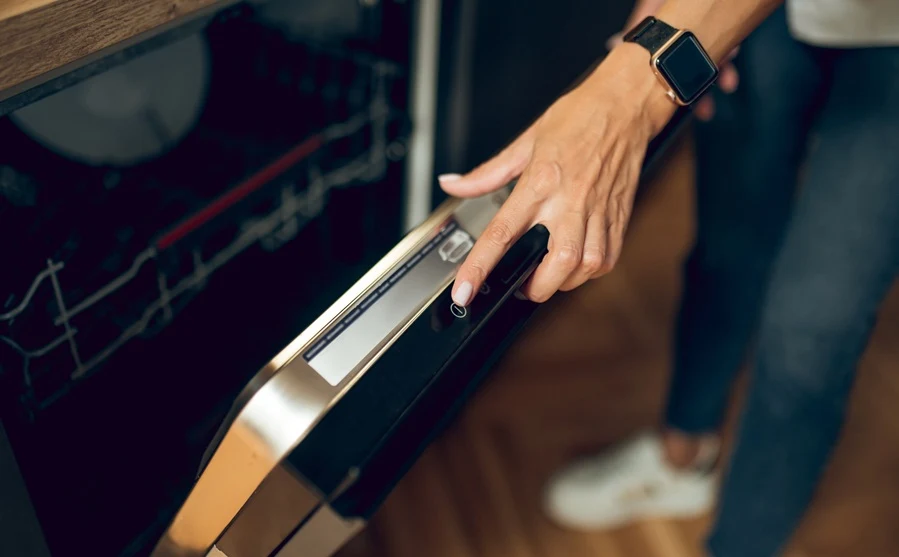
If your dishwasher has no power and won’t turn on, several issues could be responsible. This guide explains the most common causes—from tripped breakers and GFCI outlets to faulty door switches, thermal fuses, and control board problems—plus what you can check before calling for professional repair.
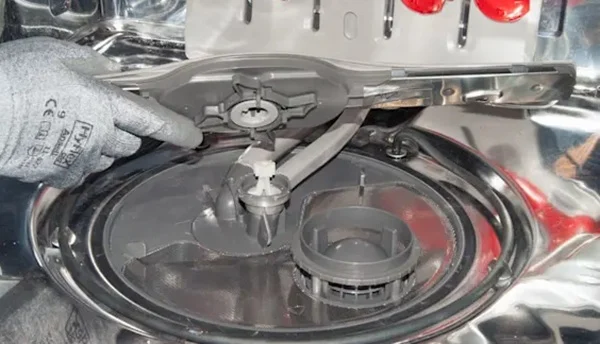
A step-by-step DIY guide explaining how to diagnose a faulty dishwasher circulation pump and replace it safely. Includes troubleshooting tips, required tools, and instructions for restoring proper spray arm water circulation.
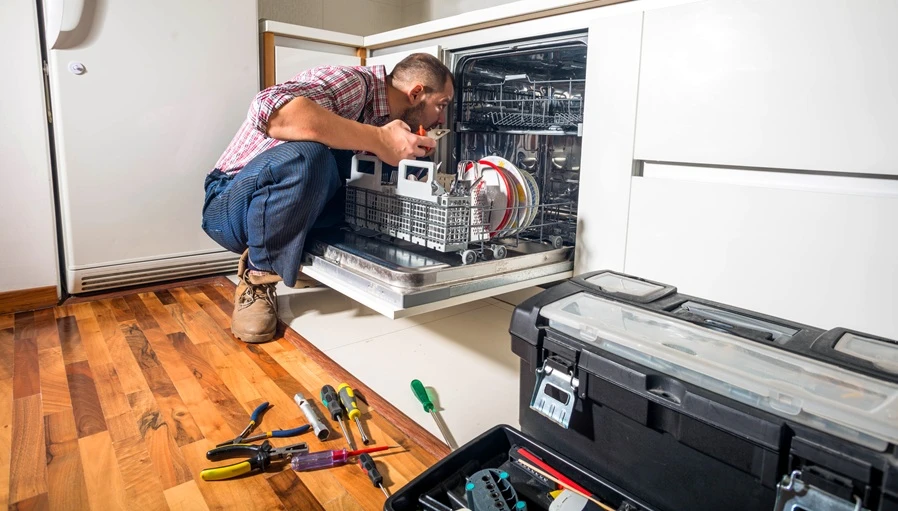
If you've noticed water seeping from your dishwasher or under the kitchen counter, immediate action is necessary to prevent damage. Learn how to fix a leaking dishwasher.
A dishwasher basket is a removable container designed to securely hold small items like cutlery and utensils during the wash cycle, ensuring efficient cleaning without loss or damage.
A dishwasher end panel is a finishing piece installed on the exposed side of a dishwasher, primarily when it is at the end of kitchen cabinetry, to ensure a seamless and aesthetically pleasing look in the kitchen.
A dishwasher diverter motor controls the direction of water flow to different spray arms within the dishwasher, ensuring optimal water distribution during each wash cycle for thorough cleaning.
A dishwasher drawer is a compact, space-saving kitchen appliance designed to clean dishes efficiently, resembling a standard kitchen drawer that slides out for easy loading and unloading.
The most common reasons your Frigidaire dishwasher won't start a cycle are a defective electronic control board, damaged power supply board or a failed door switch.
The most common reasons your Amana dishwasher won't drain are a failed drain pump, faulty pump and motor assembly or a cracked drain hose.
The most common reasons your Bosch dishwasher has no heat are a defective electronic control board, clogged water valve or a broken detergent dispenser.
The most common reasons your Electrolux dishwasher is not heating are a defective electronic control board, faulty pump and motor assembly or a damaged user interface control.
The most common reasons your Kenmore dishwasher is not washing are a faulty pump and motor assembly, defective electronic control board or a clogged spray arm.
The most common reasons your Kenmore Elite dishwasher is not washing are a faulty pump and motor assembly, defective electronic control board or a clogged spray arm.