 Appointment Lookup
 213-596-2538
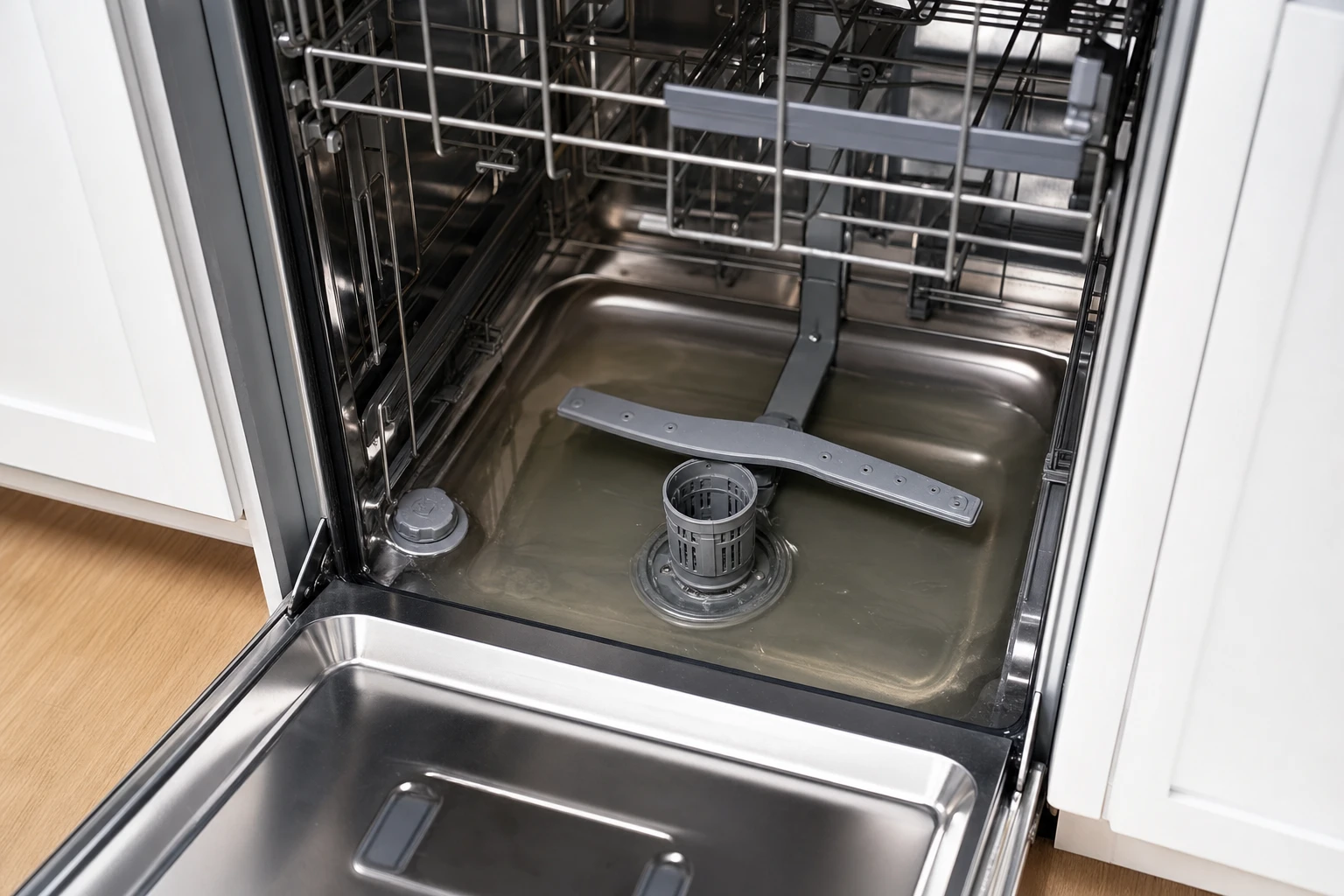
Learn how to drain a dishwasher with standing water in 6 easy steps. Fix clogs, clean the filter, and know when to call a pro for expert repair.
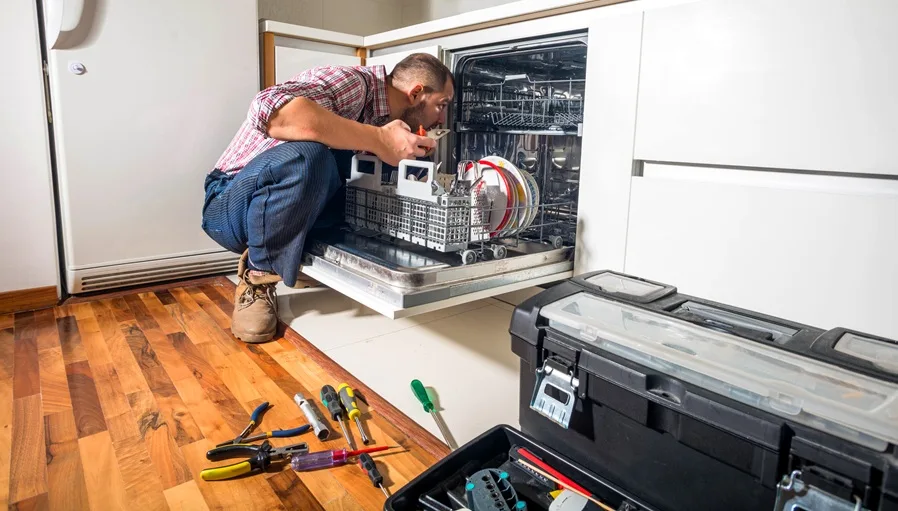
When you see water seeping out from under the dishwasher or from under the counter next to it, you’ll need to take immediate action to fix the leak and minimize damage to counters and baseboards in your kitchen.
Our comprehensive guide provides step-by-step instructions on to fix a leaking dishwasher. We'll identify and and show you how to resolve common causes of dishwasher leaks, ensuring your kitchen remains dry and your appliance functions efficiently.
KEY TAKEAWAYS
In case the leak is caused by the water supply hose, you should shut off the water supply valve going to the dishwasher. Also, shut off the house circuit breaker for the dishwasher to prevent any chance of electrical shock until you can find and fix the leak.
Leaks in dishwashers are often caused by a damaged door seal, a cracked or clogged spray arm or damaged components under the dishwasher. A loose drain hose connection can also cause a dishwasher leak.
If you don’t want to find and fix the leak yourself, you can schedule a Sears Technician to visit your home and fix the dishwasher. Same day and next day service appointments are available in many areas.
Finding the cause of a dishwasher leak can be challenging in some situations. We recommend that you follow this systematic approach to finding the leak.
Check the door seal first because it’s easy to access. Be sure to look at the bottom edges of the door seal where leaks most often occur. If you find damage such as cracks, a tear or chunks missing from the door seal, replace it. Here’s a DIY YouTube video that shows how to replace the door seal in common types of dishwashers:
If the door seal is okay, check the spray arms for cracks or damage.
This may seem like a peculiar step in finding a dishwasher leak, but a cracked or damaged spray arm can create a wave action in the water inside the dishwasher tub. The wave created by a cracked or damaged spray arm can cause water to slosh over the front lip of the dishwasher tub and leak out through the bottom of the door. This cause of a dishwasher leak is well-known by experienced service technicians.
Replace a spray arm if it’s cracked or damaged. That may fix the cause of the dishwasher leak.
If the door seal and spray arms are both okay, then you may need to have a Sears Technician find and fix the leak.
If you’re confident in your DIY appliance repair skills and you want to search further for the leak on your own, follow the advice in this YouTube video to find and fix the dishwasher leak.
Before checking the water supply line and drain hose, you’ll need to shut off electrical power if you don’t already have it disconnected as advised above. Turn off the house circuit breaker for the dishwasher or unplug the power cord to disconnect power. You’ll also need to shut off the water supply valve if you didn't close it before.
To check the water line connection to the dishwasher, remove the bottom front service panel and toe panel by removing the mounting screws and then pulling off both panels so you can see under the tub.
On some dishwasher models, you will also need to remove the front door panel and control panel to see and reach the bottom components better.
To remove the front door panel, open the dishwasher door and remove the Torx screws from the outer edges of the inner door panel. Support the outer door panel with one hand as you remove the final screws so it doesn't fall. Separate the outer door panel and control panel slightly from the inner door panel, and let the outer panel rest on the floor while you disconnect the user interface control wire harness. Pull off the outer door panel and control panel.
Check the water supply line connection at the front of the dishwasher first. If you find that connection leaking, tighten the fitting to see if that stops the leak. If not, shut off the water supply and place a towel under the water supply line connection. Disconnect the supply line and replace the connection seal.
If the water supply line connection isn't leaking, check the drain hose connection to the drain pump for drips or other evidence of leaking such as a water trail or water stains. Reconnect the drain line if it’s loose.
If the drain hose isn't leaking, use a flashlight to look under the dishwasher for evidence of leaks. You may see the water dripping or a water trail indicating the location of the leak. If you find the source of the leak, replace the leaking seal or component.
If you didn’t find the source of the leak, you’ll have to pull the dishwasher out from under the counter.
Check for water trails or other evidence of leaking from the bottom components, such as the heating element, sump or diverter motor. Replace any component that’s leaking.
If the component has a seal that you can purchase separately, replace the seal instead of the whole thing.
If you don’t see a water trail or evidence of leaks, set the dishwasher upright. Fill the tub with some water to see if you can find the source of the leak now that you have a better view of the bottom components. Pour a quart of water into the tub. Check for water dripping from any components under the tub. Continue adding water and checking for leaks until you fill the tub to the bottom of the mushroom float.
You'll likely find the source of the leak using this process. Keep a wet/dry shop vac or container handy to remove the water from the dishwasher once you find the source of the leak. Once you find the leak, remove the water and replace any leaking components or seals.
If you still can’t find the leak, then the faulty component may only leak when the pump sprays water. Have a Sears service technician find this leak because the technician will likely check for leaks with the dishwasher running and with wiring and electrical components exposed.
Only a service technician should run the dishwasher in this condition because exposed wiring and components are an electrocution risk.

Dishwasher leaks can be devastating because they can go unnoticed for days or weeks and cause irreparable damage to kitchen cabinets.
You can help prevent dishwasher leaks from occurring by having your dishwasher professionally cleaned and maintained every year by a Sears Technician. Sears Cleaning & Maintenance service won’t just help prevent leaks, it will help your dishwasher clean more efficiently and last longer. During cleaning and maintenance service, the Sears Tech will:
Trust Sears to help you keep your dishwasher in top shape and protect your kitchen cabinets and flooring from water damage. Schedule your Dishwasher Cleaning & Maintenance Service today.
With extensive experience, our technicians are skilled in repairing dishwashers of all makes and models, ensuring sparkling clean dishes with every cycle.
Loading scheduler options...
Learn how to drain a dishwasher with standing water in 6 easy steps. Fix clogs, clean the filter, and know when to call a pro for expert repair.
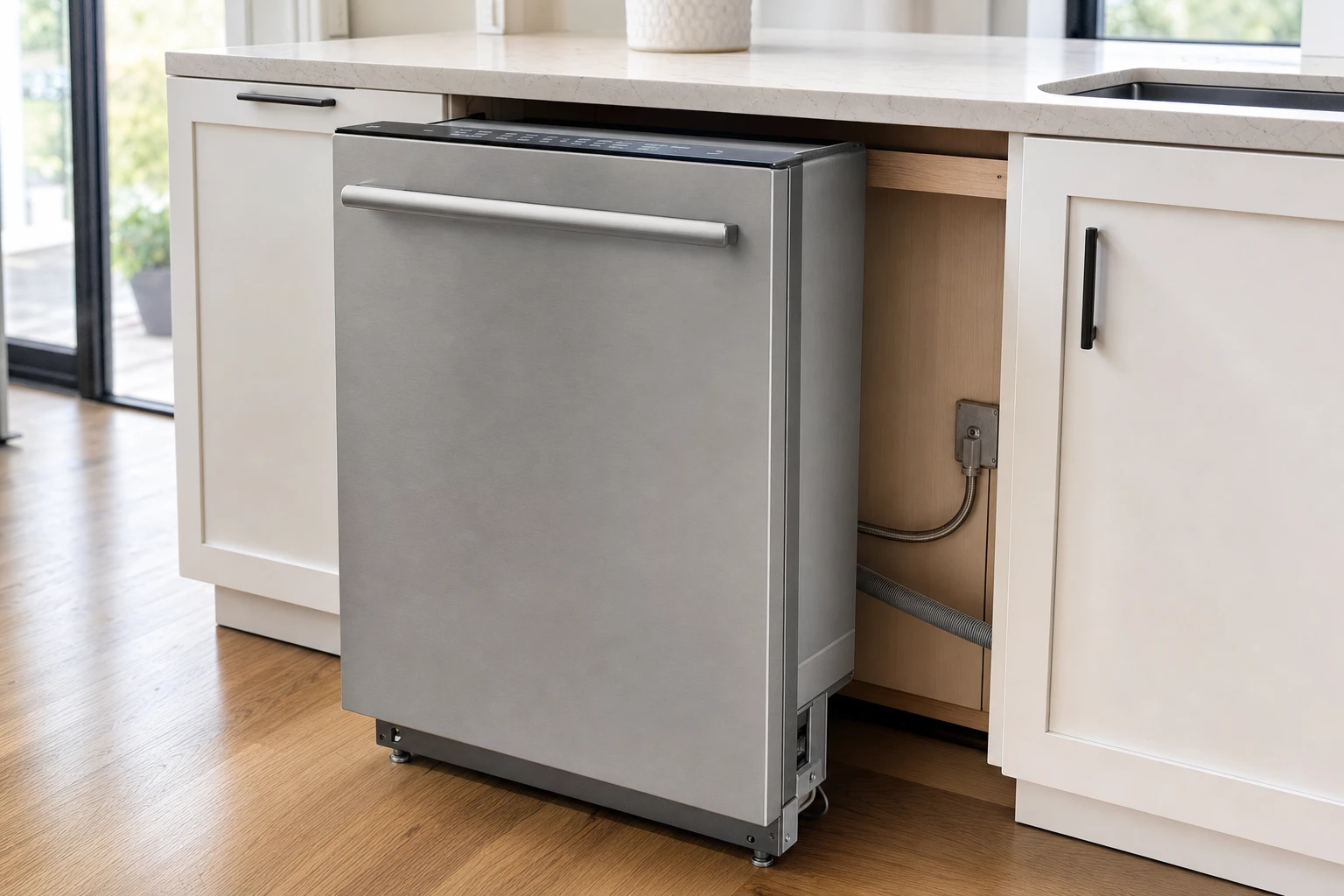
Learn how to replace a dishwasher safely in 2026. Step-by-step removal, hookup, and install tips—plus when to call a manufacturer-trained technician.
Find out why your dishwasher is stopping mid-cycle and how to fix common problems that cause this symptom.
Many common issues stem from simple dishwasher misuse. Get expert troubleshooting tips to fix the most frequent dishwasher problems.
A dishwasher basket is a removable container designed to securely hold small items like cutlery and utensils during the wash cycle, ensuring efficient cleaning without loss or damage.
A dishwasher end panel is a finishing piece installed on the exposed side of a dishwasher, primarily when it is at the end of kitchen cabinetry, to ensure a seamless and aesthetically pleasing look in the kitchen.
A dishwasher diverter motor controls the direction of water flow to different spray arms within the dishwasher, ensuring optimal water distribution during each wash cycle for thorough cleaning.
A dishwasher drawer is a compact, space-saving kitchen appliance designed to clean dishes efficiently, resembling a standard kitchen drawer that slides out for easy loading and unloading.
The most common reasons your Frigidaire dishwasher won't start a cycle are a defective electronic control board, damaged power supply board or a failed door switch.
The most common reasons your Amana dishwasher won't drain are a failed drain pump, faulty pump and motor assembly or a cracked drain hose.
The most common reasons your Bosch dishwasher has no heat are a defective electronic control board, clogged water valve or a broken detergent dispenser.
The most common reasons your Electrolux dishwasher is not heating are a defective electronic control board, faulty pump and motor assembly or a damaged user interface control.
The most common reasons your Kenmore dishwasher is not washing are a faulty pump and motor assembly, defective electronic control board or a clogged spray arm.
The most common reasons your Kenmore Elite dishwasher is not washing are a faulty pump and motor assembly, defective electronic control board or a clogged spray arm.