 Appointment Lookup
 213-596-2538
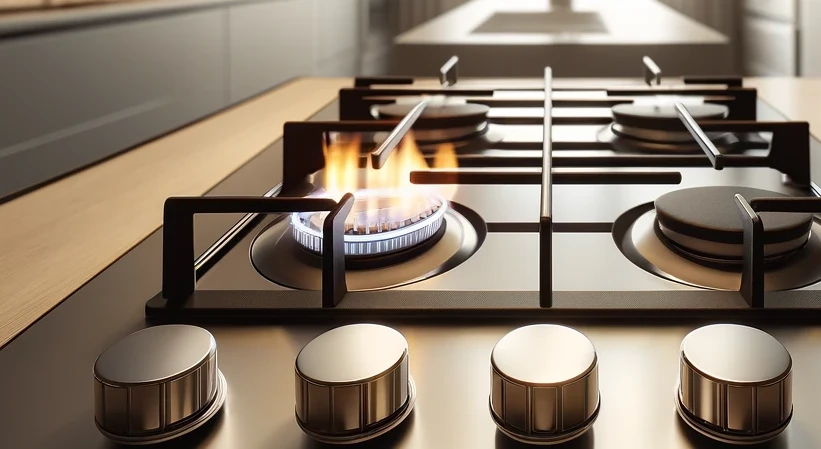
Discover 7 reasons why your cooktop burner flame is too high. Get expert tips on how to adjust the flame on a gas stove from Sears Home Services.

When you hear your gas stove clicking constantly, an igniter switch is likely stuck in the “Lite” position.
Check that all surface burner knobs are fully turned off.
If liquids spilled on the stove top and one or more burner switches got wet, the stove will click until the liquid on the switch or switches dries up (normally within a day).
If all the surface burner knobs are turned off, no spills occurred on the cooktop and the stove clicks constantly, you’ll likely need to replace a bad igniter switch. You may also need to replace a burner switch if spilled liquid permanently damaged the switch and the clicking continues for days.
Follow the tips in this article to find and fix a problem with a bad igniter switch.
KEY TAKEAWAYS
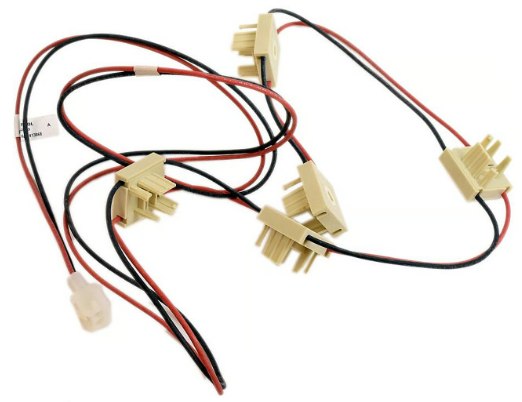
Many ranges include all burner igniter switches in one assembly that includes the wire harness. Check the parts list diagram for your range to see whether individual igniter switches are available.
If individual igniter switches are not available for your stove, you’ll likely need to replace the igniter switch assembly to fix the problem with your gas stove clicking constantly.
If individual burner igniter switches are available, then you’ll need to use the process of elimination to find and replace the faulty switch.
You know that you’ve found the faulty burner igniter switch when the stove tops ticking as you plug the power cord back in and the ignition system doesn’t click.
Follow this basic procedure to lift the cooktop and access the burner igniter switches in your gas stove.
Unplug the stove power cord to disconnect electrical power.
Close the gas supply shut-off valve.
Allow the burners and grates to cool if you’ve recently been using the stove.
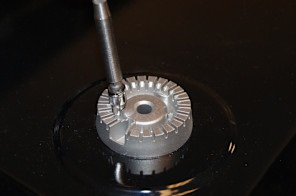
Remove all the cooktop grates and then lift the gas burner caps off the burner heads.
Using a 1/4-inch nut driver, remove the screws that secure the gas burner heads in place. Remove the burner heads from the cooktop.
__ Pro Tip:__ Mark the burner caps with a note indicating their location (Left Front, Right Front, Left Rear, Right Rear).
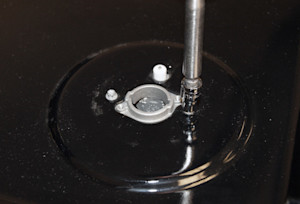
Remove the screws that secure the top of the cooktop to the top of the burner orifice holders.
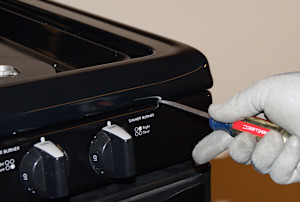
Release the front cooktop locking clips: Position a slot screwdriver or stiff putty knife between the front of the range frame and the cooktop, about 3 inches from the side of the range. Push the tool straight into the gap and lift slightly to release the clip that holds that side of the cooktop. Repeat for the other side.
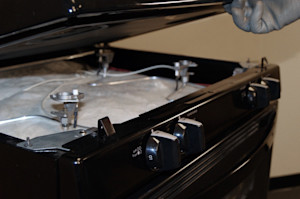
Lift the front of the cooktop and then carefully remove the cooktop without disturbing the burner orifice holders. Set the cooktop aside.
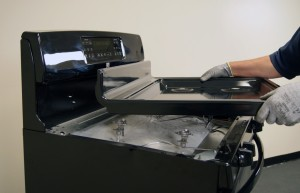
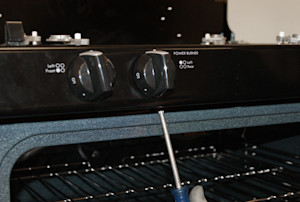
Open the oven door fully and remove the screws that are under the control manifold.
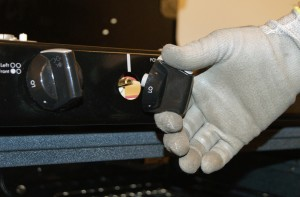
Pull the control knobs straight off the stems of the gas burner control valves on the front of the control manifold.
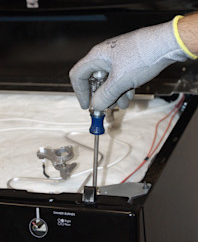
Remove the screw that's behind each clip on top of the control manifold.
Lift the control manifold off the gas range. (Take care to not lose the mounting clips, which are loosely attached to the top of the control manifold.)
You now have access to the burner switches.
If your range has individual replacement burner switches available you can test and find the bad switch causing the constant clicking with the manifold removed.
Don’t make contact with any exposed wires when plugging the stove power cord back
Replace the bad burner switch and reassemble the stove to fix the clicking problem.
If you’re not completely confident that you can safely complete this procedure on your own, schedule stove repair service and we’ll send a technician to your home to find and replace the bad burner switch.
When the replacement burner switches are only sold as a complete assembly along with the wire harness, follow these steps to replace the burner switch assembly:
Pull the spark igniter switches off the front of the burner control valve stems.
The spark module may be on the back of the stove or mounted on a side panel. Trace the wire burner switch wire harness to the spark module.
If you find the spark module on the inside of the stove side panel, disconnect the burner switch wire harness from the spark module and remove the burner switch and wire harness assembly.
If the burner switch wire harness disappears to the back of the stove, remove the rear stove panel to access the spark module.
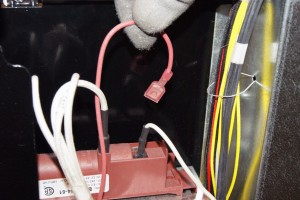
Disconnect the burner switch wire harness and remove the burner switch and wire harness assembly.
Push the new burner switches onto the burner control valve stems and connect the burner switch wire harness to the spark module.
Reassemble the stove using the reverse order of the above procedure.
Plug the stove’s power cord back in and open the gas supply shut off valve.
You shouldn’t hear the constant clicking after replacing the bad burner switch or the entire burner switch and wire harness assembly.
If you’re not confident that you can complete this procedure yourself, schedule stove repair service and we’ll send a Sears Home Services technician to your home to fix the problem for you.
Our technicians have the experience to tackle any range issue. Count on us to get you cooking again in no time.
Loading scheduler options...
Discover 7 reasons why your cooktop burner flame is too high. Get expert tips on how to adjust the flame on a gas stove from Sears Home Services.

Is it time to replace your gas stove with an induction range? Discover the benefits of upgrading your kitchen appliances with Sears Home Services.

Learn how a pressure regulator works on a gas range.

Spills and splatters can often find their way onto the inner surfaces of the oven door glass, making it challenging to keep your oven door clean.
A convection range is a kitchen appliance that features a convection oven, which uses a fan and exhaust system to circulate hot air around the food, resulting in faster, more even cooking and baking compared to conventional ovens.
A drop-in range is a type of kitchen stove that is designed to be fitted into a pre-existing space in kitchen cabinetry, mounted on a platform, flanked by cabinetry, and often featuring a custom panel at the bottom.
A dual fuel range combines the precision of an electric oven with the responsiveness of a gas cooktop, offering the best of both worlds for cooking enthusiasts.
BTU, or British Thermal Unit, measures the amount of heat required to raise the temperature of one pound of water by one degree Fahrenheit.
The most common reasons your Frigidaire range is not heating are a faulty igniter, inoperative electronic control board or a broken bake element.
The most common reasons your Whirlpool range burner is not working are a bad switch, faulty igniter or a cracked ceramic glass top.
The most common reasons your Jenn-Air range display is not working are an inoperative electronic control board, inopertive control panel or a dead power supply board.
The most common reasons your GE cooktop burner is not working are a cracked igniter switch, broken igniter or a cracked main top.
The most common reasons your Frigidaire range burner is not working are a bad switch, faulty igniter or a cracked ceramic glass top.
The most common reasons your KitchenAid range is not working are an inoperative electronic control board, faulty igniter or a bad switch.