 Appointment Lookup
 213-596-2538
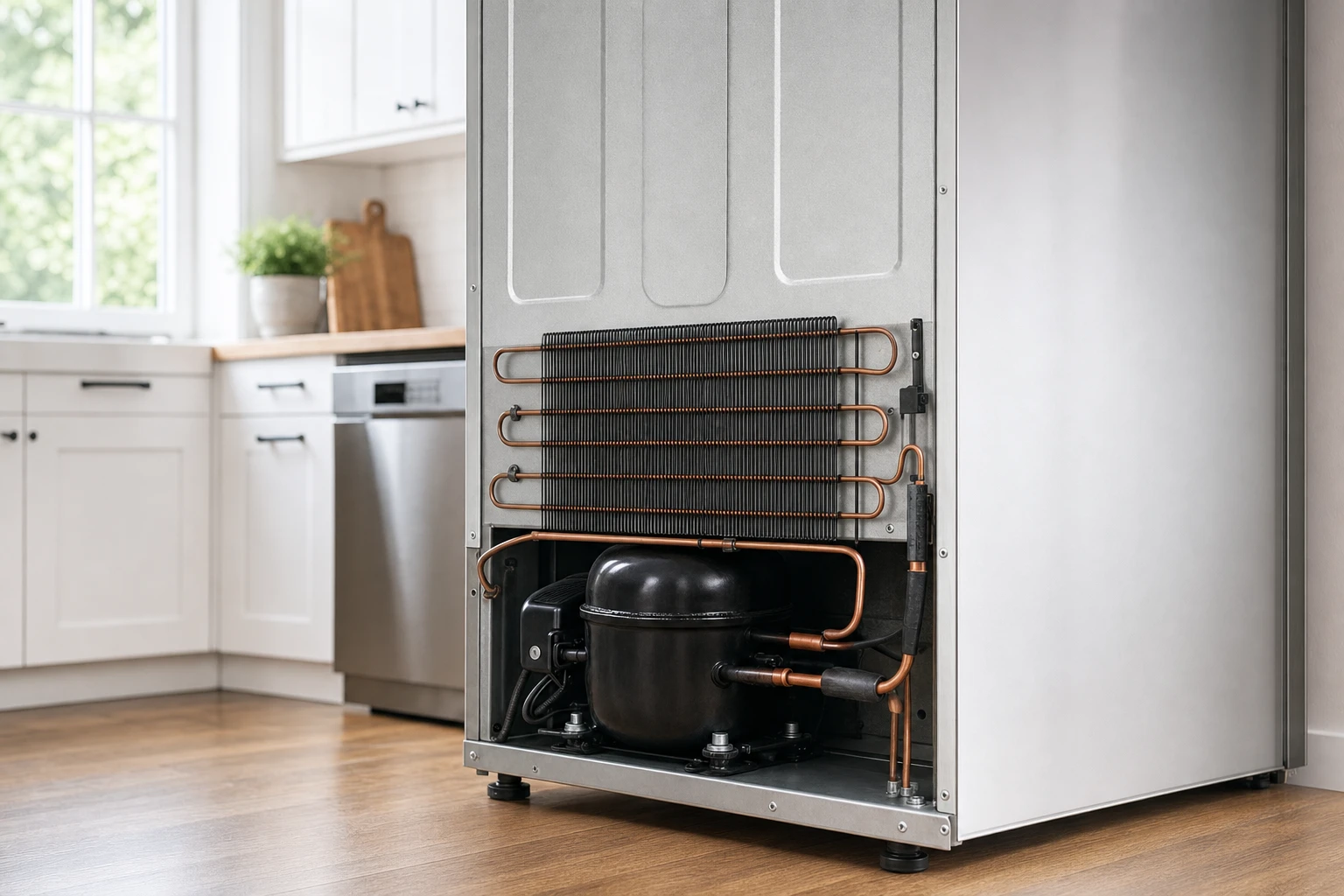
Learn what a freezer compressor is, how it works, signs it's failing, and when to repair or replace. Expert guide from Sears Home Services.

Maintaining the correct temperatures in your refrigerator and freezer is vital for keeping food safe, maximizing energy efficiency, and extending the lifespan of your fridge. However, when a Freon leak disrupts refrigerator cooling, you’ll need to take immediate action to fix the problem.
Freon, a refrigerant, plays a critical role in maintaining your fridge's cooling system. Understanding how to identify a Freon leak and what steps to take can save you time, stress, and potentially costly food spoilage.
In this guide, we’ll walk you through spotting the signs of a Freon leak and explain why a licensed technician is the only person equipped to repair and recharge your refrigerator’s sealed system.
KEY TAKEAWAYS
Freon leaks aren’t always immediately obvious, but there are clear warning signs to watch for.
If your refrigerator or freezer feels warmer than usual despite the correct settings, the cooling system might not be working effectively due to low Freon levels.

When the refrigerator’s sealed system has a Freon leak, the compressor will run constantly to attempt to cool the fridge. The compressor won’t cycle off because the refrigerant isn’t able to cool the freezer compartment and refrigerator compartment properly.
The compressor will get extremely hot when Freon charge is low because the refrigerant vapor overheats and the compressor motor windings get strained. You may hear the compressor click off when its overload switch trips. The compressor may even short cycle—run for a minute or so and then click off, repeating this process constantly.
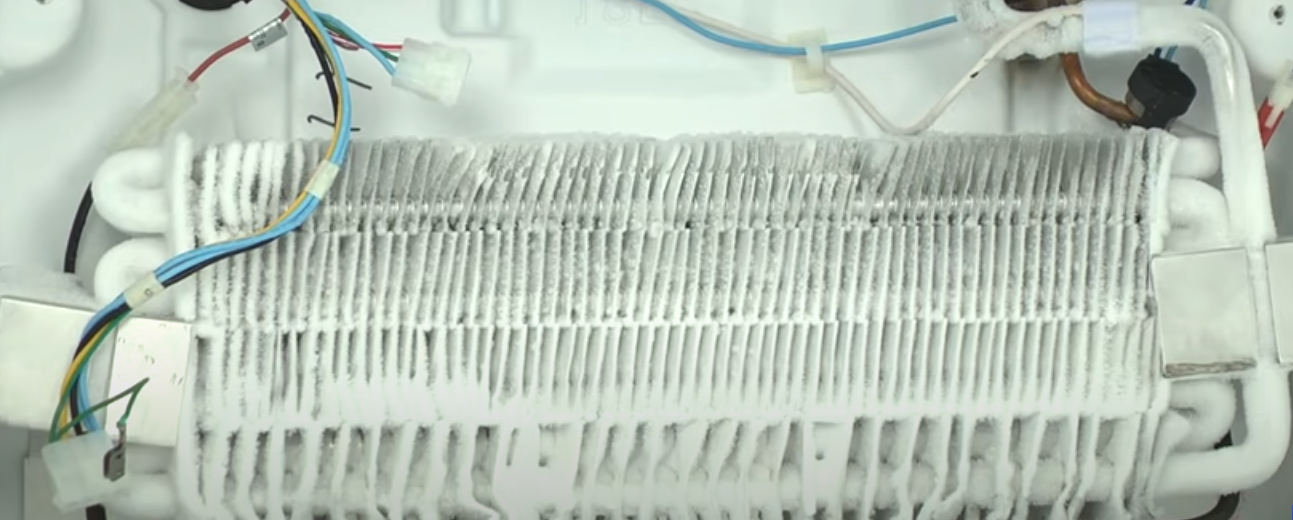
The evaporator fins behind the back wall in the freezer section will build up ice when Freon leaks out of the sealed system. The ice may build up to a point where it begins hitting the evaporator fan blades. You’ll hear a buzzing noise when that happens.
To check for ice on the evaporator and examine the evaporator fan, unplug the refrigerator and pull off the evaporator cover as shown in this video:
Freon leaks may leave behind a faint chemical odor or an oily substance near the bottom of the refrigerator or around the compressor.
If you notice any of these symptoms, it’s time to take action. Schedule refrigerator repair service. Delaying a repair can lead to further damage and potentially higher repair costs.

Fixing a Freon leak is not a DIY project. Refrigerants like Freon (R-12, R-134a, or other variations) are highly regulated due to their environmental impact.
Only a certified technician with the proper equipment can legally and safely handle refrigerants. Here’s why:
Freon is a chlorofluorocarbon (CFC) or hydrochlorofluorocarbon (HCFC), substances known for contributing to ozone layer depletion. A trained professional can properly recover and dispose of the refrigerant to prevent harmful emissions.
Federal laws, including those enforced by the EPA, mandate this step.
Repairing a sealed system requires tools like a refrigerant recovery machine, a vacuum pump, and specialized gauges. Additionally, a technician has the expertise to locate leaks, repair the damage, and recharge the system accurately.
Improper handling of a refrigerant system can worsen the problem or create new issues. Licensed technicians ensure the system functions optimally after the repair.
If you suspect a Freon leak, follow these steps:
Prevent further damage by turning off and unplugging the refrigerator until a professional can assess it.
Contact a certified appliance repair technician. Be sure to mention the symptoms you’ve noticed and ask if they specialize in sealed system repairs.
Clear the area around the refrigerator to give the technician easy access. Keep your food items stored in a backup cooler or an alternative fridge to avoid spoilage during repairs.
While not all Freon leaks can be prevented, regular maintenance can help you catch issues early. Here are some tips:
Ensure door gaskets are in good condition to reduce stress on the cooling system.
If you find that the door seal is damaged, replacing using the procedure shown in this DIY video:
If you need to have a technician replace the door gasket, schedule refrigerator repair and we’ll install a new door gasket for you.
Vacuum and clean the condenser coils every six months to maintain efficient operation.
Here’s a video that shows how to clean the condenser coils in a fridge:
Strange sounds coming from your fridge may signal mechanical problems that could lead to a refrigerant leak if left unchecked. Have your refrigerator serviced if you hear unusual noises that could be signaling a failure.
Dealing with a Freon leak requires swift action and professional help.
While it might be tempting to try a DIY solution, only a licensed technician has the tools and expertise to safely recover and recharge refrigerants in compliance with federal regulations.
By recognizing the symptoms of a leak early and scheduling a repair promptly, you can protect your appliance and the environment.
Keep your refrigerator running smoothly by prioritizing professional service when issues arise—and remember, regular maintenance is your best defense against future leaks.
Yes. A licensed refrigerator technician can find and fix a Freon link. Finding the leak is often the most challenging part of the repair. The technician will install a dye drier in the sealed system. An internal fluorescent dye pellet in that drier releases dye into refrigerant oil and the technician uses a fluorescent leak detection light and fluorescence-enhancing amber spectacles to locate the Freon leak. Once the technician finds the location of the leak, the tech will replace the leaking component.
No. Only a service technician licensed to handle CFC’s can fix a refrigerant leak. Special tools and procedures are used to recover, repair and recharge a sealed refrigerant system.
Most Freon leaks in refrigerators cost between $250 and $500 to fix. Some repairs can even cost more than $500. Special tools and expertise are needed to find and fix a refrigerant leak. This type of repair also takes more time than many other appliance repairs.
No. A refrigerator with a low refrigerant charge due to a Freon leak will not cool properly and will eventually quit cooling unless a technician finds and fixes the leak then recharges the sealed refrigerant system.
Backed by years of experience, our technicians possess the skills necessary to fix your refrigerator. And because our techs our local, they can fix it for you fast.
Loading scheduler options...
Learn what a freezer compressor is, how it works, signs it's failing, and when to repair or replace. Expert guide from Sears Home Services.

Discover the top 11 reasons why your refrigerator is not cooling. Get expert tips and solutions from Sears Home Services.

Discover the most common problems with Samsung refrigerators, including cooling issues, total cooling failure, and ice maker malfunctions. Learn how to troubleshoot these issues and find reliable repair solutions with Sears Home Services.
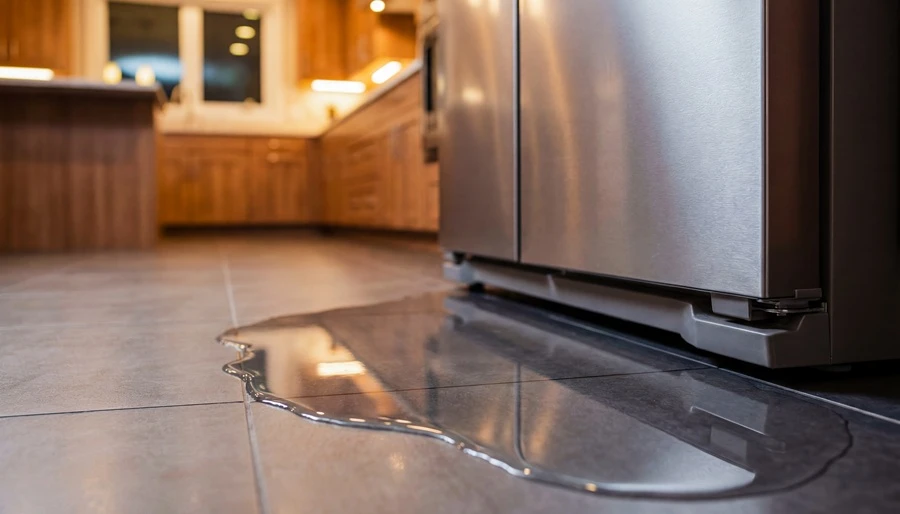
A leaking refrigerator is more than a household inconvenience—it can pose serious safety and health risks. This guide explains why refrigerators leak, the dangers involved, and the essential steps homeowners should take to protect their home, family, and appliance.
A compressor is a mechanical device that increases the pressure of a gas by reducing its volume, essential in various systems including refrigerators, air conditioners, and HVAC units for cooling and refrigeration processes.
A condenser is a component of HVAC and refrigeration systems, responsible for releasing absorbed heat from the refrigerant into the outside air or a water line, thus facilitating the cooling process.
A dual ice maker is a feature in some refrigerators that includes two separate ice makers: one in the fridge compartment and another in the freezer section. This setup doubles the appliance's ice-making capacity.
A French-door refrigerator features two doors that open side-by-side on the top section for the refrigerator compartment, with a bottom freezer drawer, combining style, efficiency, and easy access to both refrigerated and frozen goods.
The most common reasons your LG refrigerator icemaker reset button is not working are a faulty icemaker, a malfunctioning PCB, or a defective water valve.
The most common reasons your Samsung refrigerator is leaking water are a clogged defrost drain, cracked dispenser water tubing or a damaged evaporator.
The most common reasons your Kenmore Elite refrigerator stopped working are a locked compressor, damaged evaporator or a defective electronic control board.
The most common reasons your Maytag refrigerator stopped working are a locked compressor, damaged evaporator or a defective electronic control board.
The most common reasons your Kenmore refrigerator is noisy are a faulty ice maker assembly, defective electronic control board or a locked compressor.
The most common reasons your Kenmore refrigerator fan is not working are a defective electronic control board, damaged evaporator or a locked compressor.