 Appointment Lookup
 213-596-2538

Discover what the Seasonal Energy Efficiency Ratio (SEER) is and why it's crucial for assessing air conditioner efficiency.
AC Replacement Cost by Home Size
What Factors Affect AC Replacement Cost?
What Is the $5,000 Rule for AC Replacement?
Signs Your Air Conditioner Needs to Be Replaced
How Long Do AC Units Last?
Repair vs. Replace: Making the Right Decision
How Much Does an AC Compressor Cost?
Can You Replace an AC Unit Yourself?
How to Save on AC Replacement
Understanding SEER Ratings
Frequently Asked Questions

Replacing an air conditioner is one of the bigger home improvement investments most homeowners will make—and it often comes at the worst possible time, during peak summer heat. In 2026, the cost to replace an air conditioner typically ranges from $3,000 to $7,500 for most homes, including the AC unit and professional installation.
That said, your actual price depends on several factors: your home size, the type of air conditioning system you choose, energy efficiency ratings, installation complexity, and even where you live. Understanding these variables is the key to avoiding overpaying and making a confident repair-vs.-replace decision.
Sears Home Services has been installing and replacing air conditioners for decades, with factory-trained technicians and nationwide coverage. In this guide, we’ll break down real 2026 pricing, explain the $5,000 rule, and help you decide whether replacement is the right move for your home.
KEY TAKEAWAYS
Home size is one of the biggest drivers of AC replacement cost because it determines how powerful your new system needs to be.
Here’s a chart showing the approximate size and cost of the AC unit that you’ll need based on your home’s square footage:

Important notes:
AC units are sized in tons, with one ton equal to 12,000 BTUs of cooling capacity. Larger homes need larger central air conditioning units, but “bigger” is not always better. Improper sizing leads to humidity issues, uneven cooling, and higher long-term replacement costs.
SEER2 measures how efficiently an air conditioner operates over a cooling season.
Higher SEER2 systems cost more initially but can reduce monthly energy bills by 20–40%.
Costs increase if your air conditioning replacement requires ductwork changes for proper airflow, electrical upgrades, difficult access, or removal of an old HVAC unit by the installers.
The $5,000 rule is a quick way to evaluate whether repair or replacement makes more sense.
Formula:
Age of AC × Cost of repair = Decision number
Examples:
You’ll often need to ignore the rule when:
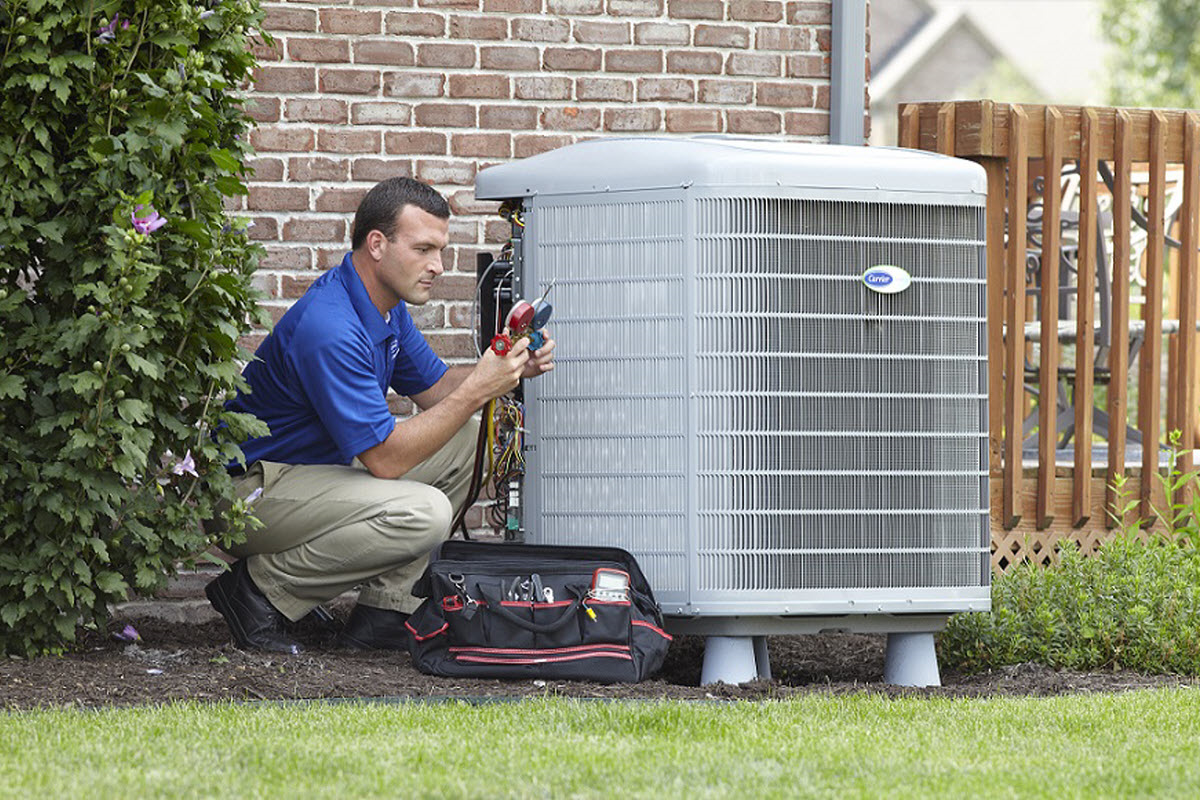
Most central air conditioners last 15–20 years. After 10 years, efficiency drops and repairs become more frequent.
If you’ve paid for multiple AC repairs in the past two to three years and your system is older than 10 years, replacement often becomes the more cost-effective option.
Older cooling systems work harder to maintain comfort. A new, energy-efficient air conditioner can significantly reduce energy bills.
Hot and cold spots, poor humidity control, or systems that can’t keep up on hot days are red flags.
Grinding, squealing, or burning smells often indicate failing components inside the HVAC system.
R-22 was phased out in 2020, and replacement refrigerant is expensive. Systems using R-22 are strong candidates for full replacement.
The average air conditioner lifespan is 15–20 years, though excellent HVAC maintenance can extend that to 25 years in mild climates. Coastal regions and extreme heat zones often shorten lifespan due to corrosion and heavy use.
What extends lifespan:
What shortens it:
Repair makes sense when:
Replacement makes sense when:
When you’re unsure, a professional HVAC system assessment can clarify your best option.
Replacing an AC compressor typically costs $1,500–$3,000, including parts and labor.
Because the compressor is the most expensive component, replacement often doesn’t make sense for older units. Learn more about how an AC compressor works to understand why this repair is so costly.
Short answer: No—DIY AC replacement is not recommended.
Professional installation is critical because:
What homeowners can do is research options, compare quotes, and prepare the installation area.

Qualifying heat pumps and high-efficiency systems may earn up to $2,000 in federal tax credits.
HEEHRA is a home electrification rebate program passed by congress in 2022 that provides instant rebates to low- and moderate-income homeowners to replace gas appliances and HVAC systems with new, energy-efficient ones. These rebates are now available in certain states. See our HEEHRA rebate article to see if you can get rebates when replacing a gas furnace/central AC system with an energy-efficient electric heat pump system. Contact your state’s energy department or commission for more information about HEEHRA rebates if you live in a participating state.
Many utility companies and providers offer $200–$500+ rebates for energy-efficient air conditioners. Use the ENERGY STAR Rebate Finder to learn more about utility provider rebates in your local area.
Seasonal promotions and rebates from HVAC system manufacturers can significantly reduce your upfront replacement cost.
Spring and fall sometimes provide better opportunities for lower pricing and more availability from HVAC contractors and manufacturers.
Many HVAC companies—including Sears Home Services—offer flexible financing to manage upfront costs.
SEER2 (Seasonal Energy Efficiency Ratio) measures cooling efficiency under updated testing standards.
Higher SEER ratings pay off fastest in hot climates with long cooling seasons.
Learn more by reading our article explaining SEER ratings in detail.
Understanding central air conditioner replacement costs will help you make an informed decision when you’re facing AC unit problems.
Using tools like the $5,000 rule, understanding SEER2 efficiency ratings, and factoring in long-term energy savings can help you make a confident decision. Professional installation is essential for performance, safety, air quality and warranty protection.
If you need central AC repair or replacement, schedule a service call to get your system evaluated and fixed or replaced. We repair all major HVAC brands such as Trane, Carrier, Lennox, Kenmore and Ruud. Our HVAC professionals can also install a new system when needed.

For added peace of mind, you can also explore a home warranty plan to help manage future HVAC repair costs.
Rely on our skilled technicians to diagnose and repair your HVAC equipment, ensuring optimal comfort in your home.
Loading scheduler options...
Discover what the Seasonal Energy Efficiency Ratio (SEER) is and why it's crucial for assessing air conditioner efficiency.

Learn how an air filter works in your HVAC system and how to choose the right filter.

Improve indoor air quality and protect your family's health with HVAC maintenance, air purifiers, and natural solutions like plants and proper ventilation.

Discover the benefits of a humidifier and learn how to choose the right one for better indoor air quality and comfort.
The 608 Certification, mandated by the Environmental Protection Agency (EPA), is required for HVAC technicians to legally handle refrigerants. It ensures technicians understand refrigerant types, environmental impact, and proper handling techniques.
A compressor is a mechanical device that increases the pressure of a gas by reducing its volume, essential in various systems including refrigerators, air conditioners, and HVAC units for cooling and refrigeration processes.
A condenser is a component of HVAC and refrigeration systems, responsible for releasing absorbed heat from the refrigerant into the outside air or a water line, thus facilitating the cooling process.
A capacitor in an AC unit is an electrical component that stores and releases electrical energy to help start the motor and stabilize the voltage during operation.
When your Payne central air conditioner won’t turn on or isn’t cooling, check for power problems, a failed capacitor, or a clogged condensate drain. This guide covers quick, safe troubleshooting steps and explains when to call Sears Home Services for expert central AC repair.
When your ICP central air conditioner won’t turn on or isn’t cooling, check for power problems, a failed capacitor, or a clogged condensate drain. This guide covers quick, safe troubleshooting steps and explains when to call Sears Home Services for expert central AC repair.
When your Heil central air conditioner won’t turn on or isn’t cooling, check for power problems, a failed capacitor, or a clogged condensate drain. This guide covers quick, safe troubleshooting steps and explains when to call Sears Home Services for expert central AC repair.
When your Carrier central air conditioner won’t turn on or isn’t cooling, check for power problems, a failed capacitor, or a clogged condensate drain. This guide covers quick, safe troubleshooting steps and explains when to call Sears Home Services for expert central AC repair.
When your Comfortmaker central air conditioner won’t turn on or isn’t cooling, check for power problems, a failed capacitor, or a clogged condensate drain. This guide covers quick, safe troubleshooting steps and explains when to call Sears Home Services for expert central AC repair.
When your Ruud central air conditioner won’t turn on or isn’t cooling, check for power problems, a failed capacitor, or a clogged condensate drain. This guide covers quick, safe troubleshooting steps and explains when to call Sears Home Services for expert central AC repair.