 Appointment Lookup
 213-596-2538

Discover how thermostats work to control your home's comfort and energy use. Learn about types, programming tips, and maintenance for a more efficient home.
When you think about staying cool in the summer or warm in the winter, your HVAC system likely comes to mind. But have you ever wondered what makes this system tick?
At the heart of your HVAC system is the compressor—a crucial component that keeps your home comfortable year-round. Understanding how it works not only helps you appreciate your HVAC system but can also guide you in maintaining it properly.
KEY TAKEAWAYS
The compressor is often referred to as the "heart" of the HVAC system, and for good reason. Just like a heart pumps blood through your body, the compressor circulates refrigerant through the HVAC system.
Refrigerant is a special fluid that absorbs and releases heat as it changes states (from gas to liquid and back again). The compressor ensures this process keeps happening efficiently.

The compressor operates as part of a larger refrigeration cycle, which consists of four main stages: compression, condensation, expansion, and evaporation. Here's a step-by-step breakdown of what happens inside the compressor:
The cycle begins with the compressor drawing in low-pressure, low-temperature refrigerant in its gaseous form from the evaporator. This gas is loaded with heat absorbed from your indoor air.
Using mechanical energy, the compressor squeezes the refrigerant gas, significantly increasing its pressure. As the pressure rises, so does its temperature. The result? The refrigerant becomes a high-pressure, high-temperature gas.
The high-pressure, high-temperature gas is then sent to the condenser coil (usually located outside your home). Here, the refrigerant releases the heat it absorbed earlier, allowing it to cool down and change into a liquid state.
After leaving the condenser, the refrigerant moves through the expansion valve and evaporator coil, repeating the process of heat absorption and release. The compressor keeps this cycle going, ensuring your HVAC system maintains the desired indoor temperature.
Not all compressors are the same. Depending on your HVAC system, you might encounter one of the following types:
Like any mechanical component, compressors can wear out over time. Watch for these warning signs:
If you notice any of these issues, it’s best to schedule HVAC repair service to have a Sears Home Services technician check your system and repair the problem.
To keep your compressor running smoothly:
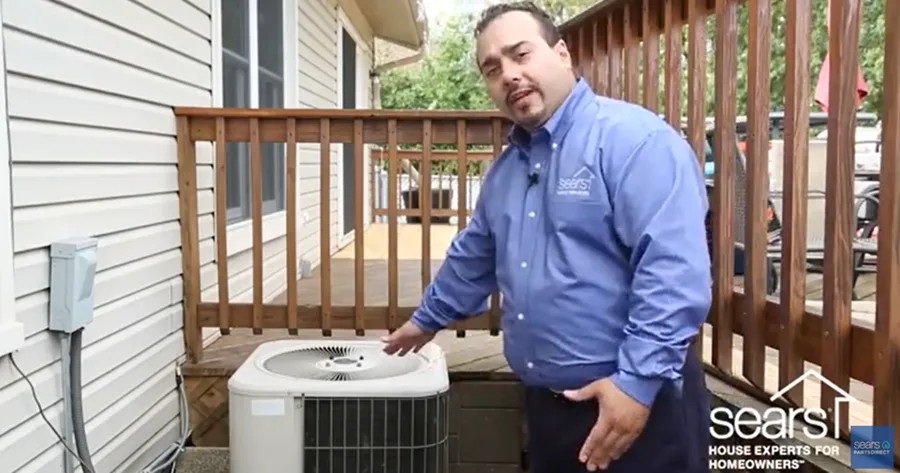
Here’s a YouTube video that shows how our Sears Home Services technicians complete HVAC maintenance:
Annual HVAC preventive maintenance will also help keep your compressor and entire heating and cooling system lasting longer.
Sears Home Services is always ready to help you keep your HVAC system in top shape. We have the best qualified and most experienced technicians in the industry.
Trust Sears Home Services will all of your heating and cooling system needs.
HVAC checkups from Sears Home Services help keep your heating and cooling system running at its best. Prevent costly repairs and can make your HVAC system more energy efficient with routine maintenance.
Loading scheduler options...
Discover how thermostats work to control your home's comfort and energy use. Learn about types, programming tips, and maintenance for a more efficient home.

Learn how HEPA filters work and how they can help improve your home’s indoor air quality.

Learn how a heat pump works to efficiently heat and cool your home while saving energy and money year-round. Discover their benefits, types, and maintenance tips.

Discover how the condenser works in a central air conditioner system and how to maintain it.
The 608 Certification, mandated by the Environmental Protection Agency (EPA), is required for HVAC technicians to legally handle refrigerants. It ensures technicians understand refrigerant types, environmental impact, and proper handling techniques.
A compressor is a mechanical device that increases the pressure of a gas by reducing its volume, essential in various systems including refrigerators, air conditioners, and HVAC units for cooling and refrigeration processes.
A condenser is a component of HVAC and refrigeration systems, responsible for releasing absorbed heat from the refrigerant into the outside air or a water line, thus facilitating the cooling process.
A capacitor in an AC unit is an electrical component that stores and releases electrical energy to help start the motor and stabilize the voltage during operation.
When your Payne central air conditioner won’t turn on or isn’t cooling, check for power problems, a failed capacitor, or a clogged condensate drain. This guide covers quick, safe troubleshooting steps and explains when to call Sears Home Services for expert central AC repair.
When your ICP central air conditioner won’t turn on or isn’t cooling, check for power problems, a failed capacitor, or a clogged condensate drain. This guide covers quick, safe troubleshooting steps and explains when to call Sears Home Services for expert central AC repair.
When your Heil central air conditioner won’t turn on or isn’t cooling, check for power problems, a failed capacitor, or a clogged condensate drain. This guide covers quick, safe troubleshooting steps and explains when to call Sears Home Services for expert central AC repair.
When your Carrier central air conditioner won’t turn on or isn’t cooling, check for power problems, a failed capacitor, or a clogged condensate drain. This guide covers quick, safe troubleshooting steps and explains when to call Sears Home Services for expert central AC repair.
When your Comfortmaker central air conditioner won’t turn on or isn’t cooling, check for power problems, a failed capacitor, or a clogged condensate drain. This guide covers quick, safe troubleshooting steps and explains when to call Sears Home Services for expert central AC repair.
When your Ruud central air conditioner won’t turn on or isn’t cooling, check for power problems, a failed capacitor, or a clogged condensate drain. This guide covers quick, safe troubleshooting steps and explains when to call Sears Home Services for expert central AC repair.