 Appointment Lookup
 213-596-2538

Learn how a mini refrigerator works and how to keep it in top shape.
Why Do You Need a Refrigerator Water Filter?
The Basics: How a Refrigerator Water Filter Works
What Contaminants Are Removed by a Refrigerator Water Filter?
How Often Should You Replace Your Refrigerator Water Filter?
What Happens If You Don’t Replace Your Refrigerator Water Filter?
Choosing the Right Filter for Your Refrigerator
How to Replace Your Refrigerator Water Filter
Frequently Asked Questions
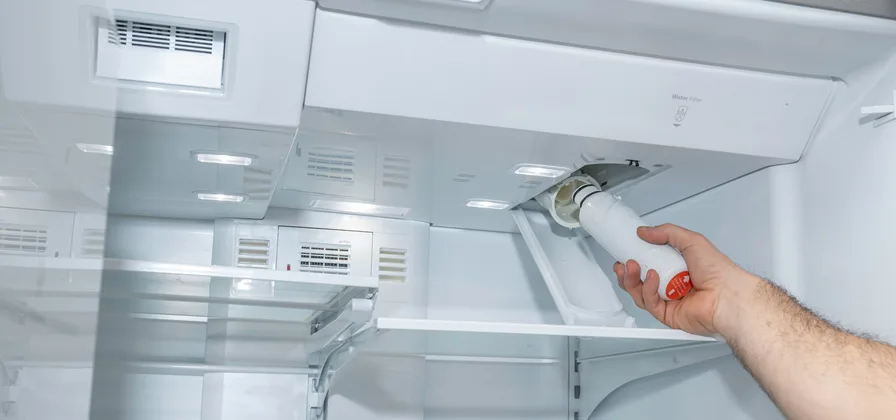
Refrigerators have come a long way from simply cooling and preserving food. Today, many models come equipped with water dispensers and ice makers, which offer clean water and ice cubes at the touch of a button.
But how does this water stay clean and safe to drink? Enter the refrigerator water filter. These small but powerful devices play a crucial role in removing contaminants from your water, ensuring it’s safe, refreshing, and great-tasting. In this article, we’ll break down how refrigerator water filters work, why they’re essential, and how to maintain them for optimal performance.
KEY TAKEAWAYS
Municipal water often contain contaminants like chlorine, lead, sediment, and even traces of agricultural chemicals. These can affect the taste and odor of water and pose potential health risks over time. Refrigerator water filters provide an extra layer of purification, catching impurities and delivering clean water straight to your glass.
Refrigerator water filters use a combination of materials and technologies to remove contaminants from water. Here’s how the process typically works:

Different filters remove different types of contaminants, but most refrigerator filters are designed to handle:
It’s worth noting that not all filters are created equal. Check the certifications on your refrigerator filter to see which contaminants it’s designed to remove. Look for NSF/ANSI Standard 42 certification for chlorine reduction and Standard 53 for heavy metals and health-related contaminants.
Regular replacement is key to maintaining effective filtration. Most refrigerator manufacturers recommend changing the filter every six months. However, the frequency can vary depending on:
A good rule of thumb: if the water starts tasting different, smelling odd, or if the water flow slows down, it’s likely time to change the filter.
Skipping filter replacements can lead to several issues:
When replacing your refrigerator water filter, check the model number and specifications recommended by your fridge’s manufacturer. Using the correct filter ensures compatibility and maintains warranty coverage. Some filters are compatible with multiple brands, but it’s best to stick to approved or certified filters to ensure proper function.
Visit our Sears PartsDirect website to find and order the right filter for your refrigerator. Set up a subscription to have a new filter shipped to your home every 6 months for your convenience.
Replacing a refrigerator filter is usually a straightforward process:
Here’s a video that shows you how to remove one of the most common refrigerator water filters:
Refrigerator water filters are a simple yet powerful tool for ensuring clean, safe drinking water. By understanding how they work and maintaining a regular replacement schedule, you can enjoy refreshing water and ice that’s free from many of the common contaminants found in municipal water supplies.

In addition to replacing your refrigerator water filter regularly, keep your refrigerator and its water system in top shape by scheduling annual refrigerator maintenance by a professional technician. Our technicians will visit your home to clean, inspect and maintain every part of your fridge to keep it working safely and smoothly all year long.
Extend the lifespan of your refrigerator and prevent unexpected and costly breakdowns with our routine maintenance service.
Loading scheduler options...
Learn how a mini refrigerator works and how to keep it in top shape.

Learn how a condenser works to help keep the refrigerator cool.

Learn how carbon filtration works to eliminate contaminants, bad taste and odor from water going through your refrigerator water filter.

Learn how a wine cooler works so you can properly maintain it and troubleshoot common problems.
A compressor is a mechanical device that increases the pressure of a gas by reducing its volume, essential in various systems including refrigerators, air conditioners, and HVAC units for cooling and refrigeration processes.
A condenser is a component of HVAC and refrigeration systems, responsible for releasing absorbed heat from the refrigerant into the outside air or a water line, thus facilitating the cooling process.
A dual ice maker is a feature in some refrigerators that includes two separate ice makers: one in the fridge compartment and another in the freezer section. This setup doubles the appliance's ice-making capacity.
A French-door refrigerator features two doors that open side-by-side on the top section for the refrigerator compartment, with a bottom freezer drawer, combining style, efficiency, and easy access to both refrigerated and frozen goods.
The most common reasons your LG refrigerator icemaker reset button is not working are a faulty icemaker, a malfunctioning PCB, or a defective water valve.
The most common reasons your Samsung refrigerator is leaking water are a clogged defrost drain, cracked dispenser water tubing or a damaged evaporator.
The most common reasons your Kenmore Elite refrigerator stopped working are a locked compressor, damaged evaporator or a defective electronic control board.
The most common reasons your Maytag refrigerator stopped working are a locked compressor, damaged evaporator or a defective electronic control board.
The most common reasons your Kenmore refrigerator is noisy are a faulty ice maker assembly, defective electronic control board or a locked compressor.
The most common reasons your Kenmore refrigerator fan is not working are a defective electronic control board, damaged evaporator or a locked compressor.