 Appointment Lookup
 213-596-2538

Learn about 5 new glass cooktop cleaning tips to keep your cooktop looking brand new.
If you’re in the market for a new range, you’ve likely encountered two popular options: freestanding and slide-in ranges. Understanding the differences between slide-in and freestanding ranges can help you make an informed decision.
While they may perform the same essential function—cooking your meals—their design, installation, and features differ significantly.
Choosing between them depends on your kitchen setup, cooking habits, and personal preferences.
Let’s look at the key distinctions between freestanding and slide-in ranges, and explore their applications, advantages, and disadvantages to help you make the right choice.
KEY TAKEAWAYS
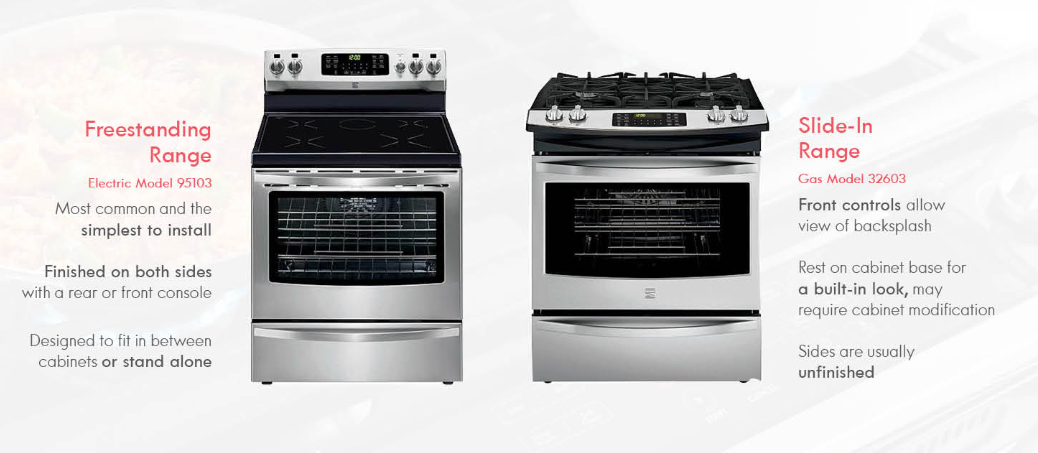
A freestanding range is a versatile and traditional appliance with finished sides, a built-in backguard, and adjustable feet. These features make it a stand-alone option that fits seamlessly into most kitchens, even without custom cabinetry.
Slide-in ranges are designed to fit flush with your countertops for a seamless, built-in appearance. They have no backguard, as controls are located on the front, creating a more integrated look in your kitchen.

If you're considering upgrading your kitchen appliances, it's important to understand the compatibility and installation requirements of a slide-in range versus a freestanding range.
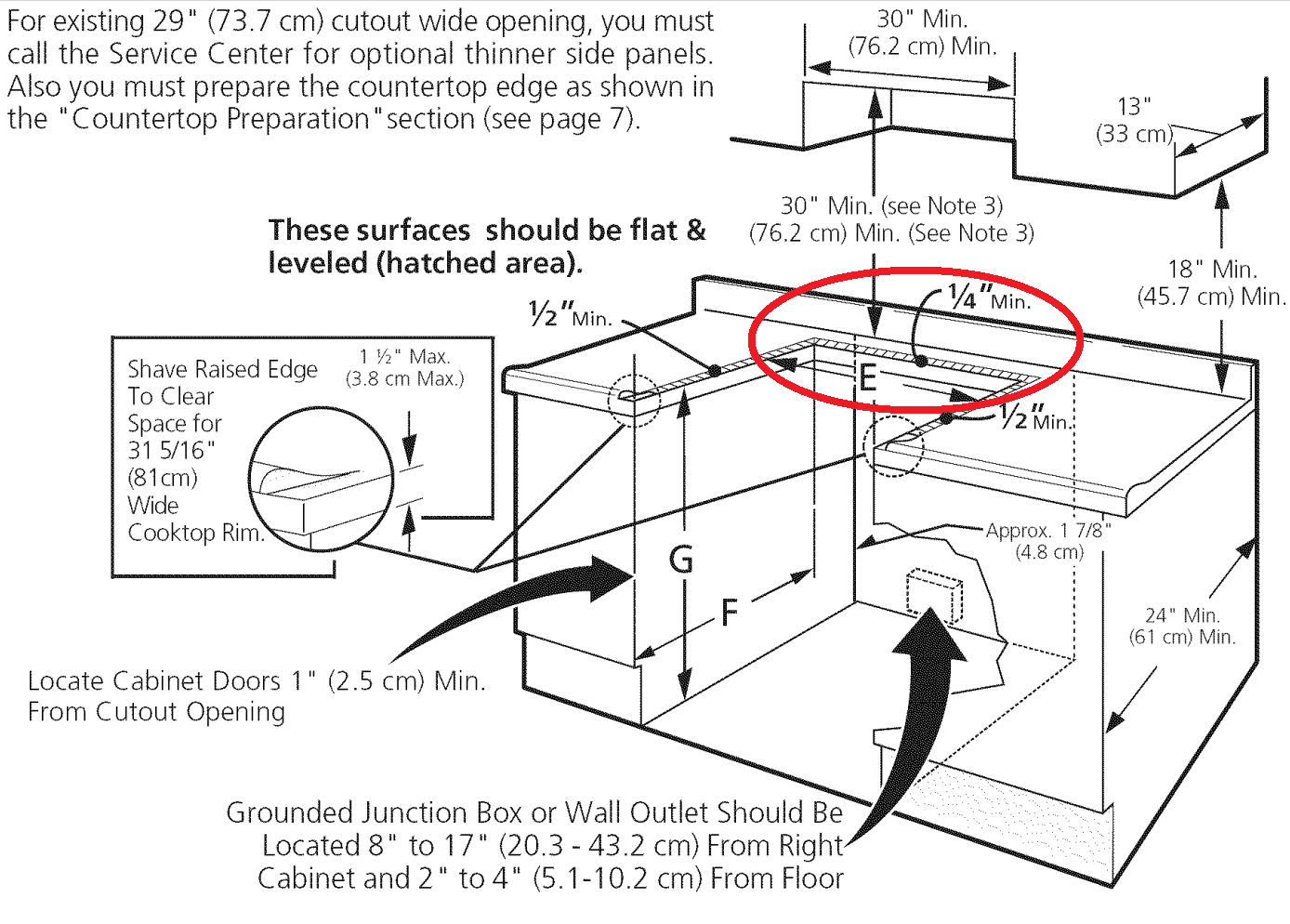
A slide-in range fits seamlessly between kitchen cabinets, often requiring a custom-sized cutout in the countertop.
You’ll need to carefully measure your existing countertop cut-out to determine whether you’ll be able to fit without modifications or replacing the countertop.
While the width of countertop cut-outs for slide-in and freestanding ranges are typically a standard 30-inches, many slide-in ranges require a countertop cut-out depth of about 23-inches. The standard depth of many countertops for freestanding ranges is 25-inches. You’ll need to modify or replace the countertop to fill in that 2-inches of space behind many slide-in ranges.
Replacing cabinets to accommodate a slide-in range is often expensive.
When you’re considering replacing a freestanding range with a slide-in range, make careful measurements of your existing countertop cut-out. Refer to the installation guide for the slide-in range that you’re considering buying to understand any countertop modifications (or replacement) that you’ll need to accommodate a slide-in model.
Professional installation is highly recommended when replacing a freestanding range with a slide-in range. This ensures correct and safe installation, proper alignment with existing cabinetry, and handling of electrical and gas connections.
Consider the extra cost of installation and the higher price of the slide-in range when deciding whether to replace your freestanding range with a slide-in range.
Your decision boils down to your priorities and kitchen setup:
Choose a Freestanding Range if you value affordability, flexibility, and straightforward installation. It’s an excellent choice for functional kitchens where design isn’t the top priority.
Opt for a Slide-In Range if you’re designing a custom kitchen or want a high-end, integrated look. The upfront cost and installation effort pay off with enhanced style and convenience.
Freestanding and slide-in ranges both serve their purpose well, but their differences make them suited to different needs.
By considering your kitchen’s layout, your budget, and how you use your range, you can select the perfect model to enhance your cooking experience and elevate your space.
Regular range maintenance can help prevent costly breakdowns, reduce energy costs and extend the life of your appliances. Keep your range operating safely with professional maintenance by Sears Home Services.
Loading scheduler options...
Learn about 5 new glass cooktop cleaning tips to keep your cooktop looking brand new.

Efficiently cleaning gas stove burners requires specific tools and techniques to tackle their intricate design and burned-on spills.

Discovering effective stove top cleaning hacks can be a game-changer for maintaining a spotless kitchen effortlessly.

Get expert range maintenance tips for the holidays from Sears Home Services.
A convection range is a kitchen appliance that features a convection oven, which uses a fan and exhaust system to circulate hot air around the food, resulting in faster, more even cooking and baking compared to conventional ovens.
A drop-in range is a type of kitchen stove that is designed to be fitted into a pre-existing space in kitchen cabinetry, mounted on a platform, flanked by cabinetry, and often featuring a custom panel at the bottom.
A dual fuel range combines the precision of an electric oven with the responsiveness of a gas cooktop, offering the best of both worlds for cooking enthusiasts.
BTU, or British Thermal Unit, measures the amount of heat required to raise the temperature of one pound of water by one degree Fahrenheit.
The most common reasons your Frigidaire range is not heating are a faulty igniter, inoperative electronic control board or a broken bake element.
The most common reasons your Whirlpool range burner is not working are a bad switch, faulty igniter or a cracked ceramic glass top.
The most common reasons your Jenn-Air range display is not working are an inoperative electronic control board, inopertive control panel or a dead power supply board.
The most common reasons your GE cooktop burner is not working are a cracked igniter switch, broken igniter or a cracked main top.
The most common reasons your Frigidaire range burner is not working are a bad switch, faulty igniter or a cracked ceramic glass top.
The most common reasons your KitchenAid range is not working are an inoperative electronic control board, faulty igniter or a bad switch.