 Appointment Lookup
 213-596-2538
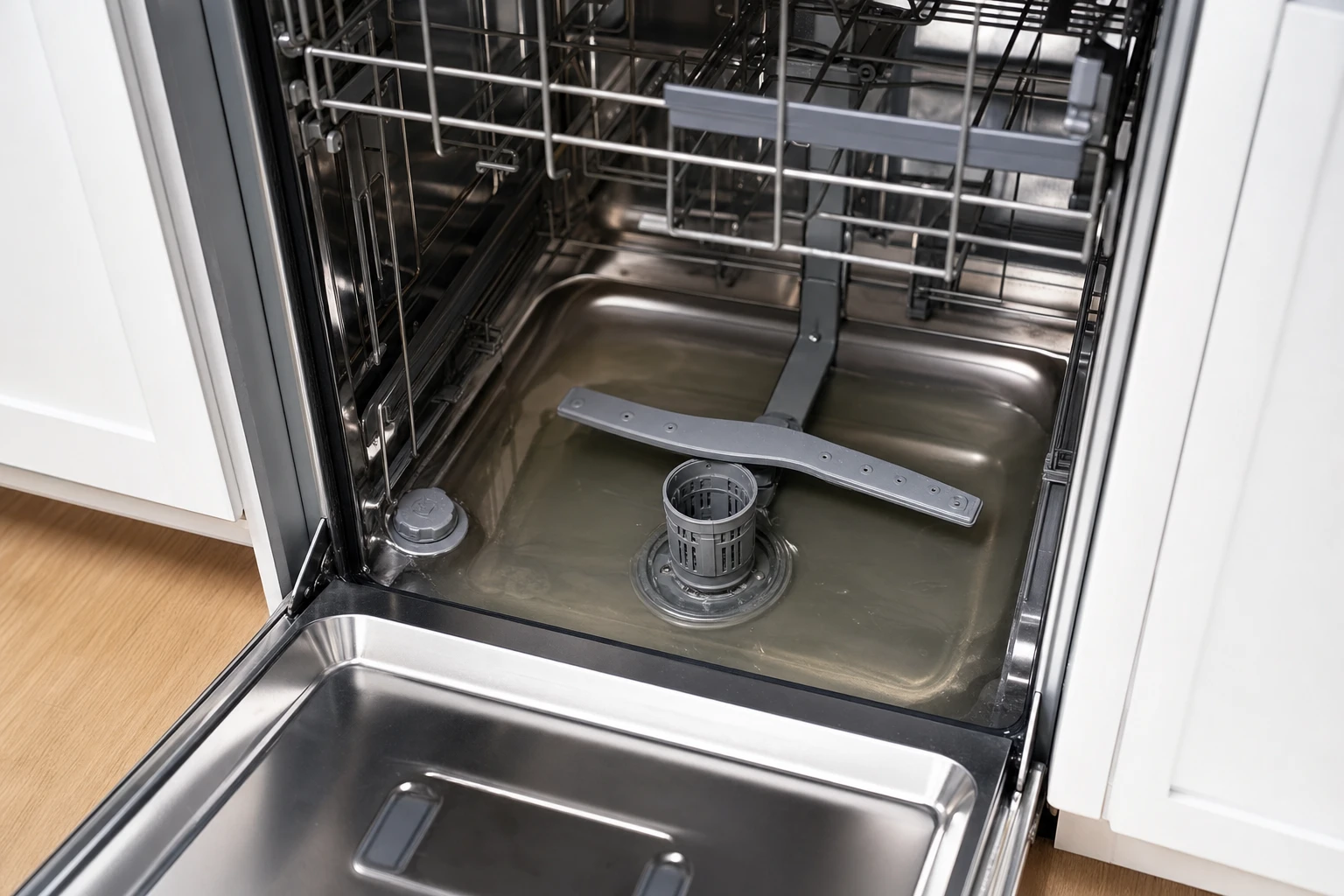
Learn how to drain a dishwasher with standing water in 6 easy steps. Fix clogs, clean the filter, and know when to call a pro for expert repair.

Nothing throws off your kitchen routine like a dishwasher that suddenly won't start. Before calling for professional help or resigning yourself to hand-washing dishes, let's explore common reasons why your dishwasher might not be turning on—and easy steps you can take to fix the issue yourself. We'll also provide advanced DIY steps to fix the problem if you're confident in your appliance repair capabilities.
KEY TAKEAWAYS
The most basic reason a dishwasher won’t start is a power supply problem. When the control panel doesn’t light up at all, follow these initial troubleshooting steps to restore power.

Often, dishwashers are connected to switches near the kitchen sink—which can accidentally get turned off. Make sure the switch is flipped to the "on" position.

Look under your kitchen sink to confirm the dishwasher is securely plugged into the electrical outlet. Plug the power cord back in if you find it partially or fully unplugged.

A tripped house circuit breaker for the dishwasher outlet will render the outlet plug useless. Reset the house circuit breaker if it’s tripped.

Check the outlet by plugging in a different item, such as a nightlight, to see if it’s getting power. If the outlet is dead, reset the circuit breaker again to see if the nightlight works. If not, you’ll need to have an electrician repair the electrical outlet.
These simple steps can save you from an unnecessary service call.
When the basic troubleshooting steps described above don’t restore power to your dishwasher, follow the advanced troubleshooting steps described in this video:
Finding and fixing a power supply wiring failure in your dishwasher can restore power.
If you’re not completely confident that you can complete the advanced troubleshooting steps described in the video, schedule dishwasher repair service to have a technician fix the power supply problem.
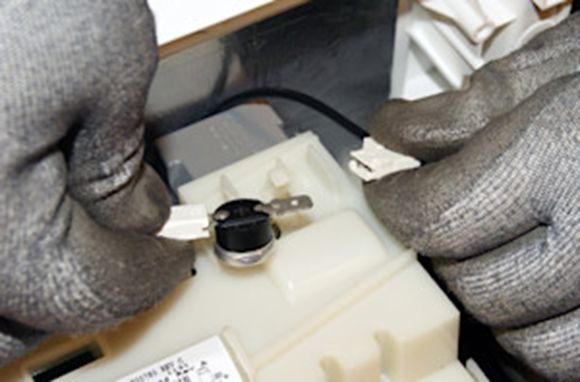
Some dishwashers have a thermal fuse that will prevent the dishwasher from working when the fuse is blown. This safety device blows if there's a short circuit in the wire harness. The fuse can also blow or trip due to a failure of a major component such as the heating element or pump.
Replacing the thermal fuse can restore power to your dishwasher but the fuse may blow again if there’s an unresolved short in wiring or a failed component.
If you want to resolve this problem on your own, unplug the dishwasher or shut off the house circuit breaker and check the heating element, pump and wiring for any problems.
If you find and resolve a wiring or component problem that likely caused the thermal fuse to blow, you can then replace the fuse using the steps in this illustrated repair guide: How to replace a dishwasher thermal fuse.
If the fuse continues to blow or you’re not confident that you can resolve this problem on your own, schedule appliance repair to have a service technician fix the dishwasher.
When the dishwasher powers up but the controls are unresponsive, follow these troubleshooting steps to fix the dishwasher:
Dishwasher control panels feature touch pads or buttons, which, over time, can malfunction or fail to respond. If buttons aren’t lighting up or activating the cycle you select, you may have a faulty control panel. Have a service technician check the control panel and replace it if it isn’t working properly.
The dishwasher won’t start if the door isn’t fully shut. Press in firmly on the door to make sure it’s shut properly.
If the dishwasher still doesn’t start, a faulty door latch or problems with the door strike could be preventing the cycle from starting.
Check your dishwasher door latch carefully. Look closely for damage or obstructions such as food particles, utensils, or debris that could interfere with the latch mechanism.
If the latch appears intact but isn't engaging properly, a quick clean-up might resolve the issue.
If you find that the door latch is physically damaged or won’t close completely, you’ll likely need to replace it. Door latch replacement is typically an affordable and straightforward repair. Here’s a video that shows how to replace the door latch in a common dishwasher:
If you’re not confident that you can replace the door latch on your own, schedule service to have a repair technician fix the dishwasher.
Dishwashers typically have a lifespan of 7 to 12 years, but minor issues can happen even to newer units. Checking simple things like power supply, door latch mechanisms, and performing basic resets often resolve the issue quickly. For more complicated problems involving electronic components like control panels and boards, contacting a professional service technician is advisable.
A timely repair not only restores convenience but also extends your dishwasher’s life, keeping your kitchen running smoothly.
With extensive experience, our technicians are skilled in repairing dishwashers of all makes and models, ensuring sparkling clean dishes with every cycle.
Loading scheduler options...
Learn how to drain a dishwasher with standing water in 6 easy steps. Fix clogs, clean the filter, and know when to call a pro for expert repair.
Learn how to replace a dishwasher safely in 2026. Step-by-step removal, hookup, and install tips—plus when to call a manufacturer-trained technician.
Find out why your dishwasher is stopping mid-cycle and how to fix common problems that cause this symptom.
Many common issues stem from simple dishwasher misuse. Get expert troubleshooting tips to fix the most frequent dishwasher problems.
A dishwasher basket is a removable container designed to securely hold small items like cutlery and utensils during the wash cycle, ensuring efficient cleaning without loss or damage.
A dishwasher end panel is a finishing piece installed on the exposed side of a dishwasher, primarily when it is at the end of kitchen cabinetry, to ensure a seamless and aesthetically pleasing look in the kitchen.
A dishwasher diverter motor controls the direction of water flow to different spray arms within the dishwasher, ensuring optimal water distribution during each wash cycle for thorough cleaning.
A dishwasher drawer is a compact, space-saving kitchen appliance designed to clean dishes efficiently, resembling a standard kitchen drawer that slides out for easy loading and unloading.
The most common reasons your Frigidaire dishwasher won't start a cycle are a defective electronic control board, damaged power supply board or a failed door switch.
The most common reasons your Amana dishwasher won't drain are a failed drain pump, faulty pump and motor assembly or a cracked drain hose.
The most common reasons your Bosch dishwasher has no heat are a defective electronic control board, clogged water valve or a broken detergent dispenser.
The most common reasons your Electrolux dishwasher is not heating are a defective electronic control board, faulty pump and motor assembly or a damaged user interface control.
The most common reasons your Kenmore dishwasher is not washing are a faulty pump and motor assembly, defective electronic control board or a clogged spray arm.
The most common reasons your Kenmore Elite dishwasher is not washing are a faulty pump and motor assembly, defective electronic control board or a clogged spray arm.