 Appointment Lookup
 213-596-2538
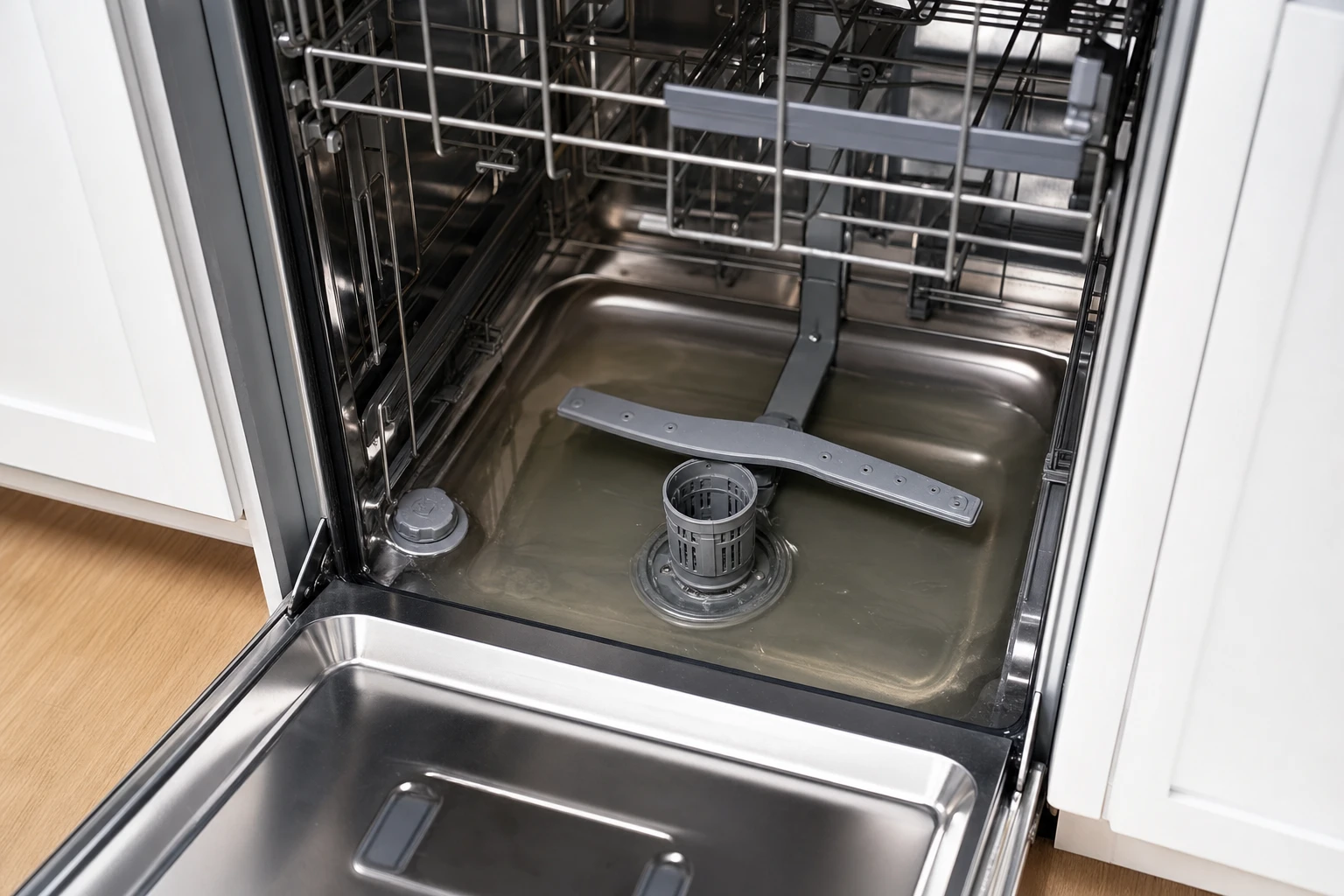
Learn how to drain a dishwasher with standing water in 6 easy steps. Fix clogs, clean the filter, and know when to call a pro for expert repair.

Finding your dishwasher's soap dispenser shut tight can be a frustrating hiccup in your kitchen routine, leaving you with a sink full of dirty dishes and a lot of questions. We'll uncover the top culprits behind this mystery, from simple obstructions to more complex mechanical failures, empowering you to tackle the Case of the Dastardly Dishwasher like a seasoned detective.
KEY TAKEAWAYS
You’ve got a mystery on your hands: When you do the dishes, your dishwasher’s soap dispenser doesn’t open up — and you’ve wasted an entire wash cycle of hot water without having cleaned your dishes.
Well, it’s time to channel your inner Nancy Drew and solve the Case of the Dastardly Dishwasher.
If you find the dispenser door isn’t opening in your dishwasher, a good place to start is learning what could be behind the failure. Some problems are easily fixed, while others may require more investigation.
The most common reason for a detergent dispenser not opening is obstruction. Tall items like cookie sheets and cutting boards placed in the lower rack can block the dispenser, preventing the detergent from dispensing when you close the dishwasher door. The handles of pots and pans might also block the spray arm, so water from the spray arm can’t reach the dispenser. Try rearranging the dishes and run the load again.
Damage to the dispenser door such as twisting or cracks could cause the door to not open. In most cases you should replace the dispenser assembly, as most dispenser doors are not offered separately.
Many dispenser doors are hinged on a pin with a quick-release spring. If the pin is bent or the spring is damaged, the door won’t open. As with a dispenser door, the pin and spring or dispenser assembly should be replaced if there is damage.
Some dishwashers use a wax motor to release the dispenser door catch. The wax motor is typically concealed under the door panel. If the wax motor fails, the door won’t open. A service technician can check the wax motor and replace it if it’s not working.
Some dishwasher models use a timer to control when the dispenser door opens during the dishwashing cycle. When the timer isn’t working, the door won’t open and dispense the detergent. Because the timer is usually located in the control panel, a repair tech should replace the timer if it’s defective.
Now that you know what might be preventing the dispenser door from opening, take a look at what you can check for, what you might be able to resolve yourself, and when to call in a technician.
Start by performing a visual inspection of the complete dispenser assembly. Soap and residue build-up around the dispenser and door can sometimes prevent the door from opening. Manually open and close the dispenser door to see if it sticks. If it does, give the dispenser and door a good cleaning by wiping away the residue. Obvious cracks and signs of heat damage and warping along the dispenser and dispenser door mean the dispenser assembly needs to be replaced.
Dispensers use an actuator to open the dispenser door. If you’re comfortable checking the actuator with a multi-meter, this DIY troubleshooting video can walk you through it.
The dispenser door has a spring that helps the door open to dispense the soap. You can check the spring by opening the dispenser door and locating the spring. If the spring is warped and damaged, you should replace the spring.
If you’re not able to solve the problem with the dispenser door, Sears Home Services is your trusted source for dishwasher repair. Schedule an appointment with a dishwasher expert to fix the issue. If you’re experiencing other dishwasher issues Sears Home Services can help. Our experts also offer tips to help your dishwasher run more effieciently.
With extensive experience, our technicians are skilled in repairing dishwashers of all makes and models, ensuring sparkling clean dishes with every cycle.
Loading scheduler options...
Learn how to drain a dishwasher with standing water in 6 easy steps. Fix clogs, clean the filter, and know when to call a pro for expert repair.
Learn how to replace a dishwasher safely in 2026. Step-by-step removal, hookup, and install tips—plus when to call a manufacturer-trained technician.
Find out why your dishwasher is stopping mid-cycle and how to fix common problems that cause this symptom.

Many common issues stem from simple dishwasher misuse. Get expert troubleshooting tips to fix the most frequent dishwasher problems.
A dishwasher basket is a removable container designed to securely hold small items like cutlery and utensils during the wash cycle, ensuring efficient cleaning without loss or damage.
A dishwasher end panel is a finishing piece installed on the exposed side of a dishwasher, primarily when it is at the end of kitchen cabinetry, to ensure a seamless and aesthetically pleasing look in the kitchen.
A dishwasher diverter motor controls the direction of water flow to different spray arms within the dishwasher, ensuring optimal water distribution during each wash cycle for thorough cleaning.
A dishwasher drawer is a compact, space-saving kitchen appliance designed to clean dishes efficiently, resembling a standard kitchen drawer that slides out for easy loading and unloading.
The most common reasons your Frigidaire dishwasher won't start a cycle are a defective electronic control board, damaged power supply board or a failed door switch.
The most common reasons your Amana dishwasher won't drain are a failed drain pump, faulty pump and motor assembly or a cracked drain hose.
The most common reasons your Bosch dishwasher has no heat are a defective electronic control board, clogged water valve or a broken detergent dispenser.
The most common reasons your Electrolux dishwasher is not heating are a defective electronic control board, faulty pump and motor assembly or a damaged user interface control.
The most common reasons your Kenmore dishwasher is not washing are a faulty pump and motor assembly, defective electronic control board or a clogged spray arm.
The most common reasons your Kenmore Elite dishwasher is not washing are a faulty pump and motor assembly, defective electronic control board or a clogged spray arm.