 Appointment Lookup
 213-596-2538

Want to cut your water bill and help the environment? Discover 4 practical tips to reduce water usage in your household appliances, including washing machines, dishwashers, and refrigerators.

Once the hurricane has passed and officials have said it’s safe to return home, assessing the damage and restoring order can feel overwhelming. Following a clear plan can help you safely inspect your home and effectively tackle any issues you find.
KEY TAKEAWAYS
The hurricane is over, your family is safe, and officials have given the all-clear to go home. But where do you start? Here are some steps to help you assess the damage, including checking your roof, siding, appliances, gas lines, and HVAC system, and get your home running smoothly again.
As much as you want to get back to your home, wait until daylight, especially if the power is out, recommends the Centers for Disease Control and Prevention. This will help you see and avoid any dangers.
Bring a camera or use your phone to document any damage for insurance purposes.
Wear protective clothing — electrical hazard boots, heavy-duty waterproof gloves and a hard hat if there’s danger of falling debris — and go with a partner to check out your house and yard, suggests Ready.gov. Use caution around standing water, which may contain hidden debris or be electrically charged from downed or underground power lines. Report any hazards to the utility company.
Look for damage to the roof, siding, windows, and doors. Missing flashing, gutters and shingles will all need to be replaced.
If you boarded up windows and doors before the storm, good for you. But be careful removing plywood sheets. Take note of nail holes left behind; these could lead to water damage later on.
If your home experienced flooding, you can be pretty certain there’s some level of water damage. Check to see if water has seeped behind your siding and into your insulation. Water can lead to mold and rot.
When power is restored, avoid the urge to immediately test your appliances. Take it slow. Turn on major appliances one at a time to help avoid overloading circuits.
If you smell gas or suspect a leak, avoid using lights, matches, or anything that could cause a spark. Leave the house immediately, and move a safe distance away before calling the utility company, as even cellphones can produce sparks.
If your electrical or gas appliances have gotten wet, don’t use them, and don’t turn on damaged appliances — in both cases there’s a risk of electric shock or fire.
For example, if you didn’t unplug your washer and dryer and your laundry room is flooded high enough that the water covered the electrical outlets and cords, the standing water could be electrically charged and lethal.
Even if your appliances aren’t submerged, it’s possible that water could have damaged their motors. Floodwater often contains dirt that can corrode parts of the equipment.
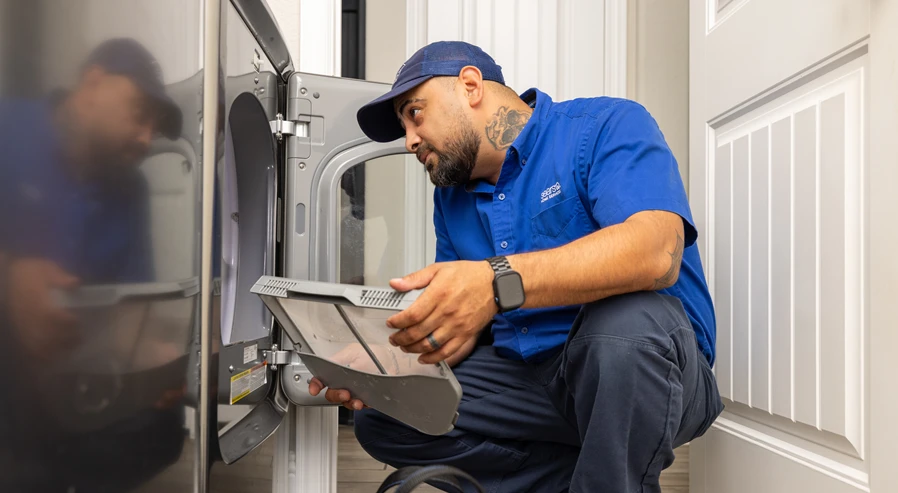
If there’s a lot of water, “don’t plug in or turn on any appliance, large or small, that has been flooded,” says Sears Home Services appliance expert Dusty Jolly. “Wet appliances must be dried, cleaned and inspected by a professional before they can safely be used again. Only some appliances can be reused after a flood, while others will need to be replaced. The extent of the damage depends on factors such as the depth of the water and the amount of time the appliance was exposed to the water.”
An appliance repair professional technician can help you make the repair-or-replace determination.
Your furnace, water heater, and AC system may also be affected by water, leading to corrosion or, worse, mold and bacteria growth. These contaminants could pose health risks. Jolly recommends replacing any HVAC equipment that’s been exposed to flooding, as it may impact indoor air quality. A qualified technician can assess whether repairs are feasible.
Hurricane-force winds and flooding can cause extensive damage to both the exterior and interior of your home. If you’re unsure about any part of the inspection process, prioritize safety and call in professionals.
Regular kitchen appliance maintenance can help prevent costly breakdowns, reduce energy costs and extend the life of your appliances. We'll help you keep your refrigerator, dishwasher and range in top shape.
Loading scheduler options...
Want to cut your water bill and help the environment? Discover 4 practical tips to reduce water usage in your household appliances, including washing machines, dishwashers, and refrigerators.

Learn how and why mice can invade your house even though it’s clean. Find out how to prevent rodents from entering your clean and well-kept home.
Discover essential tips to extend the life of your appliances on Sears Home Services.

Get expert tips and tricks on how to clean stainless steel appliances from Sears Home Services. Keep your kitchen shining with our 2026 guide.
ENERGY STAR appliances are energy-efficient products that meet the strict energy efficiency specifications set by the U.S. Environmental Protection Agency or the U.S. Department of Energy. These appliances are designed to use less energy and water, leading to cost savings and a reduced environmental impact.
Wattage is the measure of electrical power expressed in watts (W), indicating the rate at which a device consumes energy.
Natural gas is a fossil fuel used primarily for heating, cooking, and electricity generation. It's a hydrocarbon gas mixture consisting mainly of methane, but it also contains smaller amounts of other hydrocarbons and sometimes sulfur compounds.
A washer screw is a fastening device that combines a screw and a washer, designed to distribute the load of a screwed fastening more evenly and to prevent the screw from loosening under vibration.
When your Payne central air conditioner won’t turn on or isn’t cooling, check for power problems, a failed capacitor, or a clogged condensate drain. This guide covers quick, safe troubleshooting steps and explains when to call Sears Home Services for expert central AC repair.
When your ICP central air conditioner won’t turn on or isn’t cooling, check for power problems, a failed capacitor, or a clogged condensate drain. This guide covers quick, safe troubleshooting steps and explains when to call Sears Home Services for expert central AC repair.
When your Heil central air conditioner won’t turn on or isn’t cooling, check for power problems, a failed capacitor, or a clogged condensate drain. This guide covers quick, safe troubleshooting steps and explains when to call Sears Home Services for expert central AC repair.
When your Carrier central air conditioner won’t turn on or isn’t cooling, check for power problems, a failed capacitor, or a clogged condensate drain. This guide covers quick, safe troubleshooting steps and explains when to call Sears Home Services for expert central AC repair.
When your Comfortmaker central air conditioner won’t turn on or isn’t cooling, check for power problems, a failed capacitor, or a clogged condensate drain. This guide covers quick, safe troubleshooting steps and explains when to call Sears Home Services for expert central AC repair.
When your Ruud central air conditioner won’t turn on or isn’t cooling, check for power problems, a failed capacitor, or a clogged condensate drain. This guide covers quick, safe troubleshooting steps and explains when to call Sears Home Services for expert central AC repair.