 Appointment Lookup
 213-596-2538

Unpleasant odors in the laundry room can disrupt the tranquility of your home, signaling underlying issues that demand attention.
Using a Washing Machine Cleaner
Running an Empty Wash Cycle with Liquid Chlorine Bleach Added
Cleaning the Front-Load Washer Drain Pump Filter
Cleaning the Door Boot on a Front-Load Washer
Cleaning the Detergent Dispenser
Using Laundry Detergent Wisely
Leaving the Washer Door or Lid Open When Not In Use
Yearly Washer Maintenance Will Help Prevent a Smelly Washer
Frequently Asked Questions

Banishing unpleasant odors emanating from your washer is a common household challenge. Fortunately, tackling this issue doesn't have to be complicated. In this comprehensive guide, we outline simple and effective solutions to rid your washer of unwanted smells, ensuring a fresh and clean laundry space.
KEY TAKEAWAYS
Simple solutions are always good, especially when you’re getting rid of odors in your laundry room – which are almost always caused by a smelly washer. When you tire of wrinkling your nose at that rancid smell wafting out of your laundry space, use these simple solutions to eliminate the odor.
Read on for more details about how these simple strategies can help eliminate washer smells.
Cleaning the inside of the washer with a tablet such as Affresh will help eliminate residue, mold and mildew that cause odors. This cleaner reaches deep down inside the pump, tub, spin basket, agitator or impeller, drain pump filter and hoses.
The main ingredients in Affresh washer tablets are sodium carbonate (washing soda) and sodium percarbonate (oxygen-based bleach). These septic-safe ingredients cut through grime, remove residues that cause odors, and rinse away as oxygen and water. Fragrance added to the Affresh tablet leaves a pleasant scent in your washer.
Use a washing machine cleaner monthly to help keep your washer smelling fresh.
Add 1 cup of liquid chlorine bleach to the washer tub and run a wash cycle with no clothes in the washer. The bleach will clean out the washer tub. Alternatively, you can add 1 cup of white vinegar to the detergent tray and 1/3 cup of baking soda to the drum of the washer and run a cycle using the hot water setting. After the cycle ends, run one more empty wash cycle with nothing added. The plain water will rinse all bleach or vinegar/baking soda out of the tub.
If your washing machine has a Clean Washer cycle, you can use that setting to clean and rinse the washer.
Repeat these steps every 2 months or whenever you detect the musty smell coming from your washing machine.
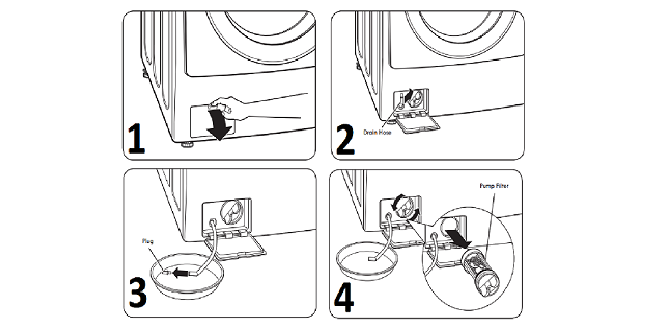
For LG, Samsung and Kenmore 795-Series front-load washers, the drain pump filter is behind an opening at the bottom left corner of the front panel. Follow the instructions in the owner’s manual. Be prepared to encounter a horrific stink when removing that drain pump filter if you haven’t pulled it out within the last year and your washer is smelling moldy.
For older Whirlpool and Kenmore HE2, HE3, HE4 and HE5 front-load washing machines, follow the steps in this video to clean the drain pump large item filter.
If you prefer to have a Sears Home Services Technician clean the washer drain pump filter for your, schedule Washer Clean & Maintain Service and we’ll send one of our experts to perform this unsavory task.
Follow these steps to clean the rubber door boot of a front-load washer:
Repeat this cleaning routine monthly or when you begin smelling odors as mold and mildew builds up again on the door boot.
Every few months, you’ll need to clean detergent residue out of the dispenser to help prevent odors.
If you have a front load washer, pull the dispenser drawer completely out of the washer and remove all of the inserts. Clean the entire drawer and all inserts under running water.
If you have a top-load washer with dispenser drawers, remove the drawers and clean them under running water. For a top load washer with dispensers around the top of the tub opening, remove inserts from the dispensers and wipe out detergent residue.
Using too much detergent or the wrong type of laundry detergent can quickly cause odors to start coming from your washer.
If you have a high-efficiency washer, you’ll need to only use specially formulated HE detergent. Using normal detergent in your HE washer will cause excessive suds and residue that will quickly form mold, mildew and strong odors.
No matter what type of washer you have, you’ll always need to use the right amount of detergent. Overdosing the washer with detergent will cause excessive suds and residue that will form mold and mildew that will stink up the washer.
Follow the guidelines in your washer owner’s manual to use the right type and amount of laundry detergent.
For HE washers, you’ll typically only need about 1 tablespoon of detergent to clean most loads of laundry.
Leaving the washer door or lid open when you’re not using the washer will allow air to circulate through the washer. The air ventilation will help prevent mildew, mold and odors from forming.
If you have young children that love to play hide & seek, it may not be plausible to follow this tip for a front-load washer. An open washer is a tempting place for young ones to climb into. You may consider upgrading to a new top-load washer or a front-load washer with a ventilation fan.

One final tip – have your washing machine professionally cleaned and maintained yearly to help prevent odors.
The technician will thoroughly clean the drain pump filter, door boot and other areas of your washer to help prevent odors. After the comprehensive washer check-up and cleaning, the technician will advise you on ways to help keep your washer in top shape and smelling fresh.
Take advantage of special pricing on our Kitchen & Laundry Cleaning and Maintenance Bundle to have all of your home appliances serviced in one convenient visit.
Keeping your appliances in top shape will help prevent unexpected breakdowns and they'll last longer when professionally maintained every year.
Trust Sears Home Services to help you manage your home so it runs smoothly all year long.
A smelly washer can often be remedied by running a hot cycle with a washing machine cleaner or a mixture of vinegar and baking soda. Leaving the door or lid open between loads allows moisture to evaporate, preventing mildew growth. Cleaning the seal or gasket regularly helps remove trapped residue that can cause bad odors. However, if these measures fall short and your washer continues to produce unpleasant smells, there could be a deeper mechanical or drainage issue at play. In that event, searching for washer repair near me is the best way to ensure a professional diagnoses and fixes the root cause.
Increase the lifespan and performance of your washer with our comprehensive maintenance service, ensuring reliable laundry care and continued peace of mind.
Loading scheduler options...
Unpleasant odors in the laundry room can disrupt the tranquility of your home, signaling underlying issues that demand attention.

Find answers to 'how long do washing machines last?' at Sears Home Services.

Discover the 6 benefits of regular washing machine maintenance in 2026 and keep your appliance running smoothly.

Learn how to prevent the frustration of finding lint on your freshly washed clothes by following our expert advice.
The drum is the core part of the washer that holds your laundry and enables the cleaning process through rotation, agitation, and rinsing.
Hard water is water that contains high levels of dissolved minerals, particularly calcium and magnesium. It contrasts with soft water, which has lower concentrations of these minerals.
A washing machine pedestal is a platform that raises the washer off the ground, providing easier access to the appliances and often includes additional storage space such as drawers.
A washer tub is the interior part of a washing machine where clothes are placed for washing, typically made of stainless steel, plastic, or porcelain-coated metal, designed to hold water and withstand the agitation or spinning during the wash cycle.
The most common reasons your LG washer is leaking from bottom are a clogged water valve assembly, broken motor or a cracked drain hose.
The most common reasons your GE washer won't start cycle are a malfunctioning electronic control board, jammed door lock assembly or a faulty user interface.
The most common reasons your Whirlpool washer is not rinsing are a faulty lid switch, a bad water-level pressure switch, or a defective timer.
The most common reasons your GE washer is not filling are a clogged water valve assembly, malfunctioning electronic control board or a bad water level pressure switch.
The most common reasons your Samsung washer top load is not filling with water are a clogged water valve, a malfunctioning PCB, or a cracked hose.
The most common reasons your Samsung washer is noisy are a damaged suspension rod, malfunctioning electronic control board or a broken motor.