 Appointment Lookup
 213-596-2538

Discover the top 5 furnace problems and solutions in 2026. Trust Sears Home Services for expert help and reliable solutions.
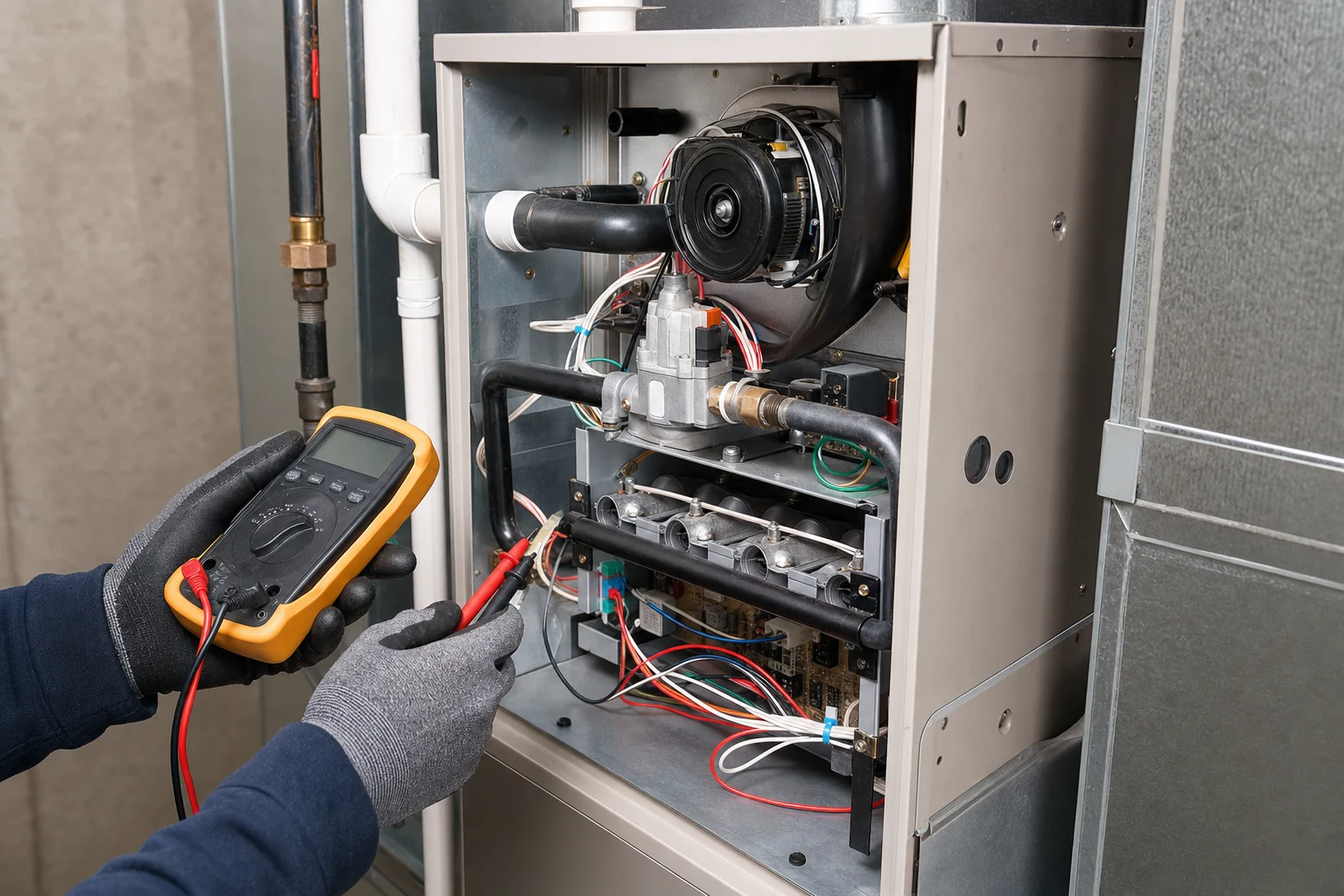
Fixing a 15-year-old furnace is usually worth it if the repair costs less than 50% of a new furnace, the system is still reasonably efficient, and it has no safety issues like a cracked heat exchanger. Beyond that threshold, replacement typically wins on total cost of ownership. A 15-year-old furnace sits at a decision point: gas furnaces generally last 15 to 20 years, so yours is entering the tail end of its expected life. This guide walks through the math, the warning signs, and how a professional diagnostic clarifies the call.
KEY TAKEAWAYS
Before you decide anything, it helps to know where your unit stands on the lifespan curve. Fifteen years isn't automatically old — but it's not young either.
Most gas furnaces last 15 to 20 years with regular maintenance. Electric furnaces tend to last a bit longer — often 20 to 30 years — because they have fewer combustion-related parts that wear out. Modern high-efficiency condensing furnaces (90%+ AFUE) fall in the same 15-to-20-year window as older 80% units, though components like secondary heat exchangers and condensate systems add wear points.
A few things swing the number up or down:
At 15, you're past the manufacturer's typical warranty window (usually 10 years on parts, with the heat exchanger sometimes covered longer). Repair parts are still available for most makes, but the clock is ticking. This is the age where a single big repair — say, a heat exchanger or a control board plus a blower motor — starts to look like it isn't worth throwing at the old system.
Here's the framework technicians actually use.
The 50% rule is the standard shortcut: if a single repair costs more than half the price of a comparable new furnace, replacement is usually the smarter move. Some HVAC pros use a slightly more refined version — the $5,000 rule — where you multiply the repair cost by the furnace's age in years. If the result exceeds roughly $4,500–$5,500, replace it. Either way, the logic is the same: don't put a $1,200–$1,800 repair into a system that's 3 years from the scrap yard.
Repair generally makes sense when:
Replacement wins when:
Some symptoms shift the math hard toward replacement.
A furnace loses efficiency as it ages — burners get dirty, heat exchangers corrode, blower motors draw more amps. If your gas bill has climbed 15–25% over the last two or three winters without a corresponding price hike from the utility, the furnace itself is likely the culprit. New high-efficiency units run at 95–98% AFUE, compared to 80% or lower on many 15-year-old systems. That efficiency gap shows up on every bill.
If you've paid for three service calls in two seasons, you're on the wrong side of the curve. Older furnaces also hit a parts-availability wall — control boards, inducer motors, and proprietary sensors for 15-year-old models can be backordered for weeks in the middle of winter. That's a bad position to be in when it's 12° outside.
⚠️ Warning: These are non-negotiable replacement triggers, not repair items.
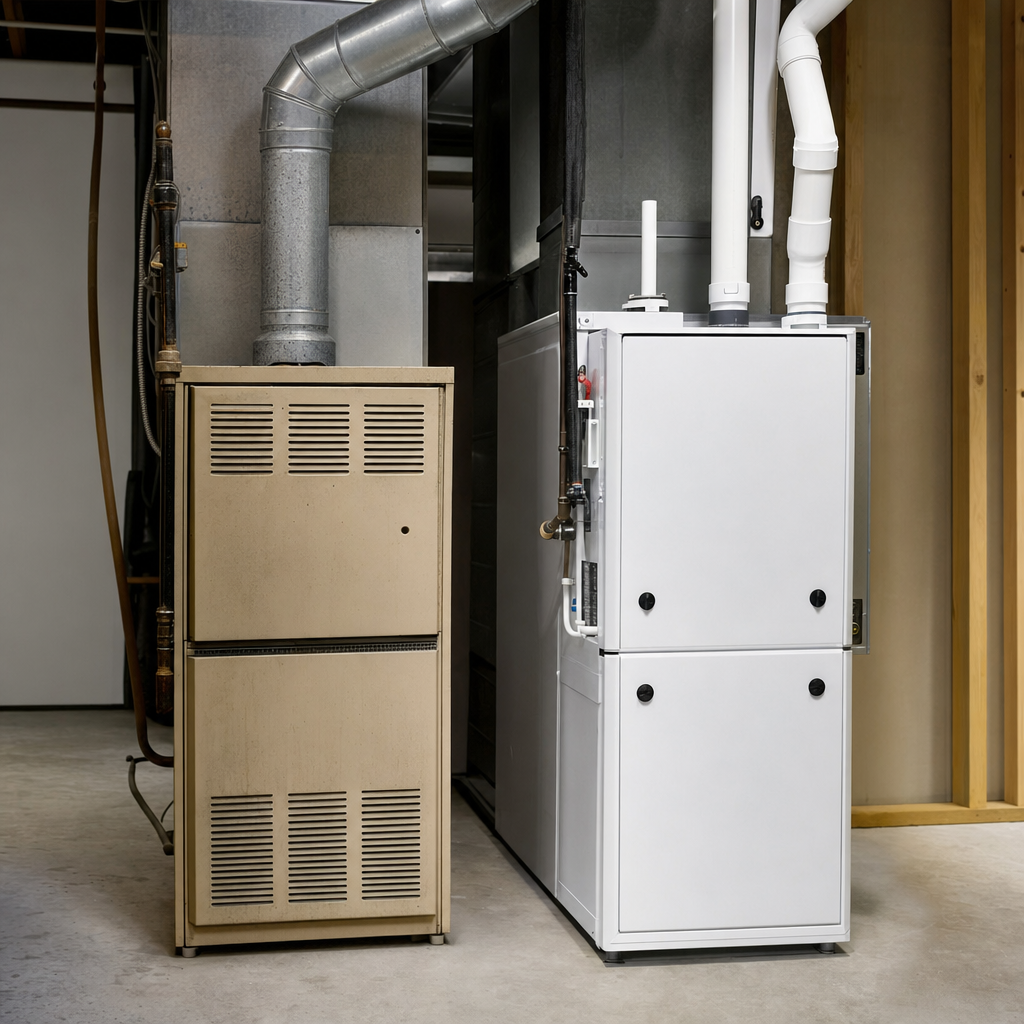
Here's where the numbers get real. All ranges are typical U.S. averages for 2026 — your quote will vary by region, brand, and complexity.
| Repair | Typical Cost Range |
|---|---|
| Flame sensor / thermocouple | $100–$300 |
| Ignitor replacement | $150–$400 |
| Capacitor / pressure switch | $150–$450 |
| Blower motor | $450–$1,200 |
| Inducer motor | $500–$1,300 |
| Control board | $400–$1,000 |
| Gas valve | $500–$1,000 |
| Heat exchanger | $1,500–$3,500+ |
A new gas furnace installation typically runs $3,500 to $8,500, depending on efficiency rating, size, brand, and complexity of the install (venting changes, gas line updates, thermostat wiring). High-efficiency 95%+ AFUE units sit at the top of that range. If you're bundling with a new AC or heat pump, expect a higher total but often a better per-unit price.
Jumping from an 80% AFUE furnace to a 96% AFUE model means roughly 16 cents of every heating dollar stops going up the flue. In cold climates that can translate to $200–$500 in annual gas savings. Federal tax credits and utility rebates for high-efficiency equipment (documented at energy.gov) can trim another several hundred to a couple thousand dollars off the install cost. Pair that with a home warranty plan and you've protected the investment against surprise breakdowns.
For a broader look at how heating and cooling systems fit together, this primer on what HVAC actually includes is a useful read.
Don't guess. The 50% rule only works with real numbers.
Schedule a diagnostic with a manufacturer-trained technician. At Sears Home Services, the diagnostic fee typically runs in the $90–$150 range depending on the appliance and is waived if you proceed with the repair. Your technician provides an exact quote — parts and labor — that doesn't change once provided. You approve the cost before any work begins. That gives you a hard number to plug into the 50% calculation instead of a rough guess. Common questions about the process are answered in our repair FAQ.

If the tech recommends replacement, ask about AFUE options, available utility rebates, and federal tax credits. A 95%+ AFUE unit costs more up front but pays back over its lifetime. Some homeowners also weigh a heat pump conversion at this stage — worth exploring if your electricity costs are competitive with natural gas. Related reading: repair and troubleshooting for cooling systems, since AC and furnace share the same blower and ductwork.
If you're selling within 2 years, a $500–$800 repair beats a $5,000–$7,000 replacement — buyers rarely credit you full replacement value on the inspection. If you're staying 5+ years, a new high-efficiency furnace pays back through lower bills and higher reliability. And if the furnace has already given you two winters of trouble, don't gamble on a third.
Backed by years of experience, our technicians possess the skills necessary to fix your furnace. And because our techs our local, they can fix it for you fast.
Loading scheduler options...
Discover the top 5 furnace problems and solutions in 2026. Trust Sears Home Services for expert help and reliable solutions.

Discover the factors that influence the average lifespan of a furnace, signs it needs replacement, and how to prolong its life with tips from Sears Home Services.

Discover how an electric furnace works and get expert maintenance and repair tips.

Learn about blower motor replacement costs, factors influencing prices, and the benefits of professional installation with Sears Home Services.
A furnace condensate pump is a device installed in HVAC systems, particularly high-efficiency furnaces, to collect and automatically remove the water (condensate) produced during the heating process.
A furnace is a major appliance that heats air distributed throughout a home or building via a ductwork system.
A furnace blower motor is a crucial component of a home heating system that drives the fan responsible for circulating air throughout the HVAC system and into the living spaces of the home.
A furnace door is a crucial component of a home heating system, providing access to the interior of the furnace for maintenance, repairs, and inspections. It helps in maintaining the system's efficiency and safety.
When your Payne central air conditioner won’t turn on or isn’t cooling, check for power problems, a failed capacitor, or a clogged condensate drain. This guide covers quick, safe troubleshooting steps and explains when to call Sears Home Services for expert central AC repair.
When your ICP central air conditioner won’t turn on or isn’t cooling, check for power problems, a failed capacitor, or a clogged condensate drain. This guide covers quick, safe troubleshooting steps and explains when to call Sears Home Services for expert central AC repair.
When your Heil central air conditioner won’t turn on or isn’t cooling, check for power problems, a failed capacitor, or a clogged condensate drain. This guide covers quick, safe troubleshooting steps and explains when to call Sears Home Services for expert central AC repair.
When your Carrier central air conditioner won’t turn on or isn’t cooling, check for power problems, a failed capacitor, or a clogged condensate drain. This guide covers quick, safe troubleshooting steps and explains when to call Sears Home Services for expert central AC repair.
When your Comfortmaker central air conditioner won’t turn on or isn’t cooling, check for power problems, a failed capacitor, or a clogged condensate drain. This guide covers quick, safe troubleshooting steps and explains when to call Sears Home Services for expert central AC repair.
When your Ruud central air conditioner won’t turn on or isn’t cooling, check for power problems, a failed capacitor, or a clogged condensate drain. This guide covers quick, safe troubleshooting steps and explains when to call Sears Home Services for expert central AC repair.