 Appointment Lookup
 213-596-2538

Discover effective stain removal hacks tested with common household ingredients to tackle grease, grass, and ink stains.

Front-load washing machines have revolutionized laundry day, offering high efficiency and exceptional cleaning performance. However, their design makes them more susceptible to mold and mildew compared to traditional top-loaders.
That unwelcome odor wafting from your washer door? It’s a telltale sign that mold has taken hold. Let’s dive into why mold forms, how to clean it, and—most importantly—how to stop it from coming back.
KEY TAKEAWAYS

Mold thrives in warm, damp environments. The tight seal on a front-loader’s door, while excellent for preventing leaks, also traps moisture inside the drum. Add detergent residue, fabric softener, and lint into the mix, and you have the perfect breeding ground for mold and mildew.
Factors that encourage mold growth include:
If you’ve noticed dark patches on the door boot or an unpleasant smell coming from your washer, it’s time to clean your machine thoroughly.
Here’s a helpful video with general washer cleaning tips:
When your washing machine suffers from a more severe case of mold infestation, follow these steps to thoroughly clean the washer and get rid of mold:
You’ll need these supplies:
The rubber gasket around the door is mold’s favorite hiding spot and the starting point for cleaning front-load washer mold.
Remove the detergent dispenser drawer and soak it in warm, soapy water in the kitchen sink. Scrub away any buildup, particularly in crevices, where detergent residue often hides. Use a pipe cleaner to clear residue out of dispenser stand pipes. Rinse the detergent drawer thoroughly with hot tap water.
Wipe down the detergent drawer housing to remove detergent residue and scum.
Reinstall the detergent dispenser.
The drain pump filter in a front-load washer is designed to catch lint, coins, buttons, infant socks and other debris before they reach the pump. Unfortunately, this filter and its housing are another prime breeding ground for mold and mildew in the washer.
The location of the drain pump filter is behind a small access door at the bottom of the front washer panel on many front-load washing machines. Here’s an image that shows that location:
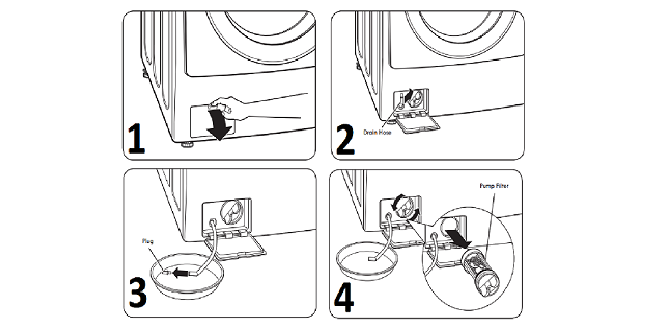
Here’s how to clean this type of drain pump filter in common front-load washers:
In some front-load washers, the drain pump filter is located behind the bottom front service panel on the front of the washer. Here’s a video that shows how to clean the drain pump filter on older Kenmore and Whirlpool HE front-load washers:
Have a service technician visit your home and perform washer maintenance and cleaning service if you’re unable to find or access the drain pump filter on your own.
Not that you’ve thoroughly cleaned all of the areas where mold typically resides inside the washer, run a cleaning cycle with no clothes added to rinse bleach and cleaning residue out of the machine.
You can use a washing machine clean such as Affresh or Washer Magic. To clear out a severe mold infestation, run an empty wash cycle using 1 cup of liquid chlorine bleach added through the prewash dispenser in the detergent drawer. This will help kill off and clear out any mold in the detergent dispenser hose and washer outer tub. Use the Bulky Cycle so the washer fills with the maximum amount of water during the cleaning cycle. If your washer has a “Cleaning Cycle” available, use that cycle when cleaning your washer.
If you use bleach instead of a washer cleaner, run a second empty cycle to rinse all bleach residue completely out of the washer.
Cleaning your washer is only half the battle. Keeping mold away requires consistent maintenance and smart habits.
Here’s how to ensure mold doesn’t make a comeback:
After every wash, leave the door slightly ajar to allow moisture to escape. This simple step dramatically reduces mold risk. Note: You may not be able to use this tactic if you children who would be tempted to climb inside the washer during a game of hide-and-seek.
Opt for high-efficiency (HE) detergents, which produce fewer suds and rinse more easily. Stick to the manufacturer’s recommended amount to avoid residue buildup.
For most front-load washers, you’ll only need about a tablespoon of laundry detergent to clean most loads.
At least once a week, wipe down the door boot gasket, drum, and door with a damp cloth.
Check and clean the detergent dispenser monthly if needed.
Set a reminder to run a cleaning cycle once a month. Use a washer cleaner or a homemade mixture of vinegar and baking soda to keep the interior fresh and mold-free.
Overloading your washer prevents water from circulating properly, leaving some areas damp and dirty. Follow load size recommendations to improve cleaning performance and prevent mold.
Having your washing machine professionally cleaned and maintained yearly will help prevent odors.
During washer maintenance, the technician will thoroughly clean the drain pump filter, door boot and other areas of your washer to help prevent odors. After the comprehensive washer check-up and cleaning, the technician will advise you on ways to help keep your washer in top shape and smelling fresh.
A moldy washing machine doesn’t have to become the norm. By understanding what causes mold and committing to a regular cleaning routine, you can keep your front-loader smelling fresh and performing at its best. Stay proactive, and you’ll avoid the hassle of dealing with mold altogether.
Bleach and vinegar typically perform equally well in killing mold, but some manufacturers recommend not using vinegar in your washing machine because the acidic nature of white vinegar can corrode some washer parts over time – especially water seals.
While you can remove black mold using hydrogen peroxide, this cleaner won’t kill the mold or the toxins that are associated with black mold. Using liquid chlorine bleach does a better job at killing and removing mold from a washing machine.
Liquid chlorine bleach can damage the rubber seal if used undiluted and/or too frequently. Manufacturers recommend diluting 1 cup of liquid in a gallon of water to prevent harming the door boot seal. Adding 1 cup of chlorine bleach to the washer during an empty cleaning cycle will also dilute bleach so it won’t harm the rubber door boot or other seals and components in the washer.
Yes. Rinse the washing machine by running an empty cycle after cleaning your washer using bleach. Choose the Bulky cycle so the washer will fill with more water to rinse the machine thoroughly.
Increase the lifespan and performance of your washer with our comprehensive maintenance service, ensuring reliable laundry care and continued peace of mind.
Loading scheduler options...
Discover effective stain removal hacks tested with common household ingredients to tackle grease, grass, and ink stains.

Learn how to make any washer an energy efficient washer, and save money on your energy bills by using it the right way.

Discover simple solutions to eliminate detergent residue and ensure your laundry comes out clean and residue-free from your top-load washer.

Unpleasant odors in the laundry room can disrupt the tranquility of your home, signaling underlying issues that demand attention.
The drum is the core part of the washer that holds your laundry and enables the cleaning process through rotation, agitation, and rinsing.
Hard water is water that contains high levels of dissolved minerals, particularly calcium and magnesium. It contrasts with soft water, which has lower concentrations of these minerals.
A washing machine pedestal is a platform that raises the washer off the ground, providing easier access to the appliances and often includes additional storage space such as drawers.
A washer tub is the interior part of a washing machine where clothes are placed for washing, typically made of stainless steel, plastic, or porcelain-coated metal, designed to hold water and withstand the agitation or spinning during the wash cycle.
The most common reasons your LG washer is leaking from bottom are a clogged water valve assembly, broken motor or a cracked drain hose.
The most common reasons your GE washer won't start cycle are a malfunctioning electronic control board, jammed door lock assembly or a faulty user interface.
The most common reasons your Whirlpool washer is not rinsing are a faulty lid switch, a bad water-level pressure switch, or a defective timer.
The most common reasons your GE washer is not filling are a clogged water valve assembly, malfunctioning electronic control board or a bad water level pressure switch.
The most common reasons your Samsung washer top load is not filling with water are a clogged water valve, a malfunctioning PCB, or a cracked hose.
The most common reasons your Samsung washer is noisy are a damaged suspension rod, malfunctioning electronic control board or a broken motor.