 Appointment Lookup
 213-596-2538

Learn how portable washing machines work. Also, find out how to use a portable washing machine and how to maintain it properly.
High-efficiency (HE) washers have revolutionized how we do laundry by delivering exceptional cleaning performance while conserving water and energy. Whether you're considering upgrading your washing machine or simply curious about how these innovative appliances work, understanding the mechanics and benefits of HE washers can help you make the most of their efficiency and longevity.
KEY TAKEAWAYS
One of the standout features of HE washers is their ability to clean clothes effectively using significantly less water than traditional washers. Unlike older models that fill the entire drum with water, HE washers use sensors to determine the optimal amount of water needed for each load.
Many HE washers spray fill water over the clothes to saturate the garments before tumbling or impeller agitation begins. This method of water delivery helps clean the clothes effectively using less water.
This efficient water usage has several benefits:
By tumbling the clothes through shallow pools of water, HE washers maximize cleaning power without wasting resources.
HE washers use specially formulated HE detergents. Unlike standard detergents, HE detergents produce fewer suds, which is critical for effective washing in low-water environments. Excessive suds can trap soil and redeposit it onto clothes or even damage the washer. HE detergents are engineered to:
When using an HE washer, always look for the “HE” symbol on detergent packaging to ensure compatibility.

To keep your HE washer running smoothly, regular maintenance is essential.
Both top-load and front-load models require specific care to prevent odors, mold, and operational issues.
Front-load washers are known for their energy efficiency and compact design but are more prone to moisture-related problems.
Here’s a video that shows how to maintain them followed by a written procedure to help you care for your font-load washer:
The rubber gasket around the door can trap water and soap residue, leading to mold and mildew. Wipe it down after each use and leave the door open to allow the interior to air dry. Every few months, you’ll need to don some gloves and wipe it down with a liquid chlorine bleach and water solution to eliminate and prevent mold and mildew.
Use a washer cleaner or a mixture of vinegar and baking soda to run an empty cleaning cycle every month. This helps remove soap buildup and keeps the drum fresh.
Remove the dispenser drawer as shown in the above video and thoroughly clean all of its compartments to detergent and additives such as bleach and fabric softener flow smoothly into the washer tub.
Repeat this process monthly or more often if needed to keep the dispenser clean and working properly.
Lint, coins, and other debris can clog the drain pump filter. Check and clean it regularly according to the manufacturer’s instructions.
Here’s an image that shows how to clean the drain pump filter in common front-load washers:
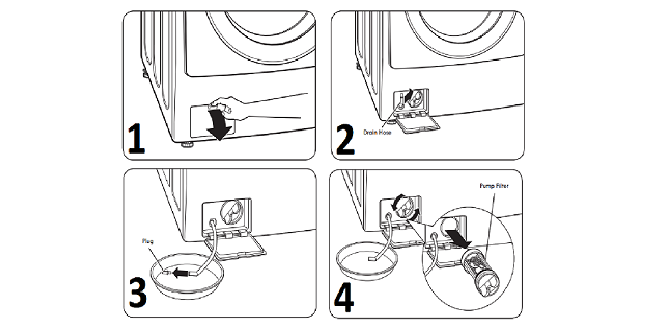
If your washer doesn’t have an access door for the drain pump filter as shown in the above image, you may need to schedule washer maintenance to have a service technician clean the drain pump filter in your machine.
Having a service technician perform washer maintenance and cleaning on your machine every year will help your HE washer continue to perform smoothly and efficiently. Regular professional maintenance will also help keep your machine lasting longer.
Top-load HE washers are easier to load and generally less prone to mold issues but still benefit from routine care. Follow these expert tips to keep your top-load washing machine in top shape:
Tom Charland, a Sears Home Services technician, provides additional tips for using and maintaining your washing machine in this helpful video:
Keeping your top-load HE washer well-maintained will help it continue to operate smoothly and efficiently for many years to come.
Investing in an HE washer is a smart choice for environmentally conscious consumers and those looking to save on utility bills. Here’s a quick summary of their benefits:
By understanding how HE washers work and maintaining them properly, you can enjoy years of reliable service while contributing to a greener planet.
Whether you're a seasoned laundry expert or just getting started with an HE washer, these appliances are a win for your wallet and the environment. With regular care and the right detergent, you’ll keep your washer—and your clothes—in top-notch condition.
High-efficiency (HE) washers are designed to use less water and energy per load, thanks to optimized wash cycles and faster spin speeds that extract more moisture from clothing. They typically require HE-specific detergent, which is formulated to produce fewer suds and rinse out more efficiently. While HE washers can help you save on utility bills, they may occasionally encounter issues like slow draining or leftover residue if not maintained properly. If your HE washer isn’t performing up to standard—even after regular cleanings—a specialist can service washing machine parts such as the drain pump or filter, ensuring you continue to reap the full benefits of your appliance.
Increase the lifespan and performance of your washer with our comprehensive maintenance service, ensuring reliable laundry care and continued peace of mind.
Loading scheduler options...
Learn how portable washing machines work. Also, find out how to use a portable washing machine and how to maintain it properly.

Discover how a front load washer works and get expert advice from Sears Home Services.

Learn how a washer works and how to keep it working efficiently.

Learn how a washing machine drains and get troubleshooting tips to fix drain problems.
The drum is the core part of the washer that holds your laundry and enables the cleaning process through rotation, agitation, and rinsing.
Hard water is water that contains high levels of dissolved minerals, particularly calcium and magnesium. It contrasts with soft water, which has lower concentrations of these minerals.
A washing machine pedestal is a platform that raises the washer off the ground, providing easier access to the appliances and often includes additional storage space such as drawers.
A washer tub is the interior part of a washing machine where clothes are placed for washing, typically made of stainless steel, plastic, or porcelain-coated metal, designed to hold water and withstand the agitation or spinning during the wash cycle.
The most common reasons your LG washer is leaking from bottom are a clogged water valve assembly, broken motor or a cracked drain hose.
The most common reasons your GE washer won't start cycle are a malfunctioning electronic control board, jammed door lock assembly or a faulty user interface.
The most common reasons your Whirlpool washer is not rinsing are a faulty lid switch, a bad water-level pressure switch, or a defective timer.
The most common reasons your GE washer is not filling are a clogged water valve assembly, malfunctioning electronic control board or a bad water level pressure switch.
The most common reasons your Samsung washer top load is not filling with water are a clogged water valve, a malfunctioning PCB, or a cracked hose.
The most common reasons your Samsung washer is noisy are a damaged suspension rod, malfunctioning electronic control board or a broken motor.