 Appointment Lookup
 213-596-2538

Discover how an electric furnace works and get expert maintenance and repair tips.

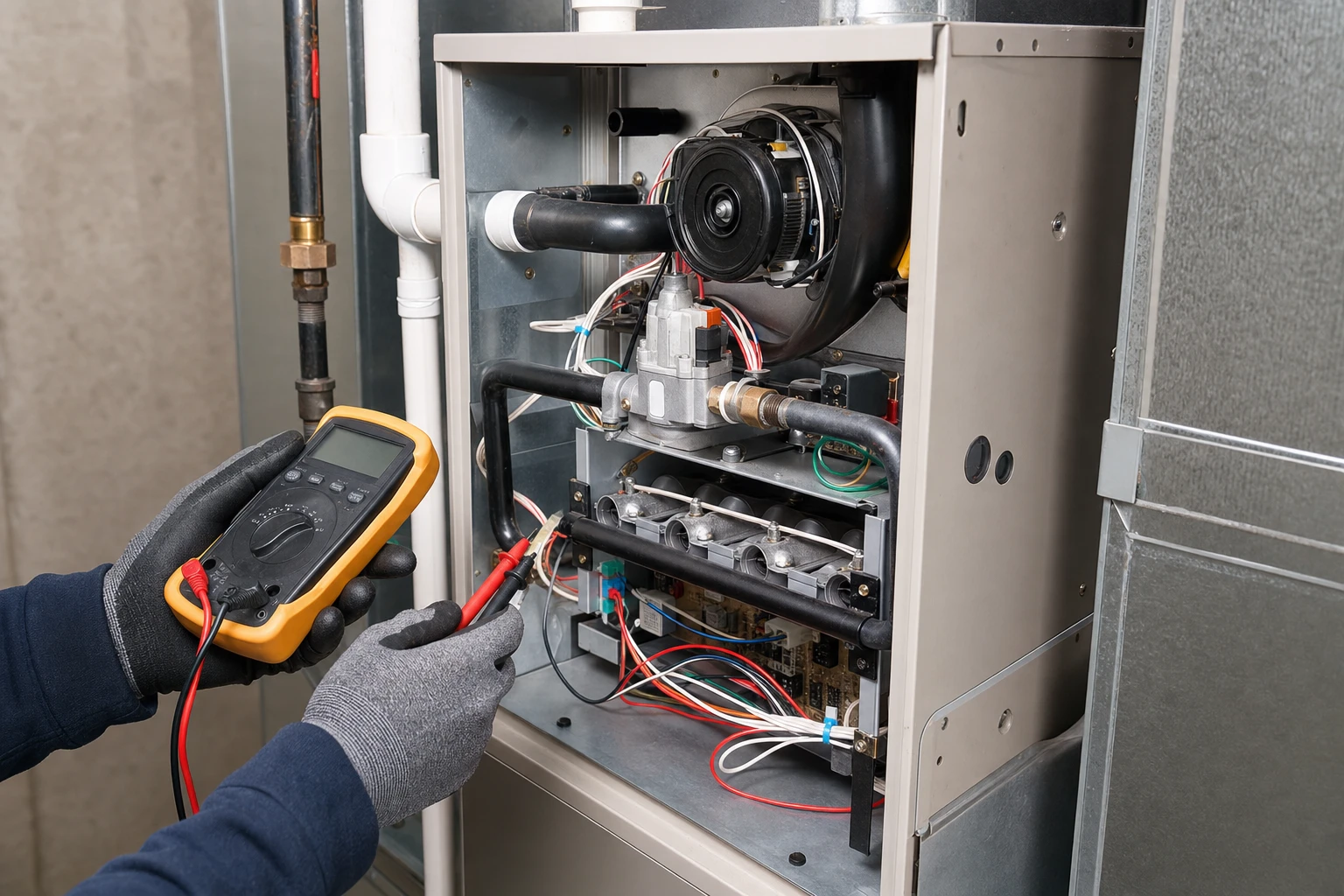
Are you wondering how a gas furnace works? Understanding the basics of gas furnace operation can help you maintain your heating system and ensure its efficient performance.
Knowing the different parts of a furnace and how to maintain them can help extend the lifespan of your system and prevent potential safety hazards.
In this article, we will explore the heating cycle, the various parts of a furnace, and important maintenance tips to keep your furnace running smoothly.
KEY TAKEAWAYS
Understanding the basic heating cycle of a furnace is essential for homeowners who want to ensure their heating system is working efficiently.
Let's take a closer look at how a furnace works, step by step.
The heating process begins with the thermostat, which acts as the control center for your furnace.
When indoor temperature drops below the thermostat setting, the thermostat sends a signal to the furnace to start the heating cycle.
The draft inducer fan pulls air into the combustion chamber for ignition. Without an adequate air supply, the furnace burners won’t light.
When all safety interlock switches and controls indicate that the furnace is ready for safe ignition, the burner valve opens to supply gas to the burner tubes.
For models with a pilot light, a small flame constantly burns and ignites the gas flowing through burners.
Most current-day gas furnaces use an electronic igniter to light the burner.
Once the burner ignites, it quickly creates heat by burning the gas.
The heat exchanger captures the heat produced by the burning gas and transfers it to the air that gets blown over the heat exchanger tubes by the indoor circulation fan.
The warm air goes up and out of the heat exchanger and into the rooms of the house through air ducts.
Combustion also produces byproducts like carbon dioxide and water vapor. A flue or vent expels combustion byproducts safely outside, ensuring the air inside remains clean. The draft inducer fan helps blow combustion gasses up through the flue.
Once the thermostat reaches the desired temperature, the control shuts the gas supply off, stopping the heating process. The ignition and heating cycle repeats as the thermostat detects decreases in room temperature.
Understanding the heating cycle of a furnace helps you identify potential issues and ensure their system is running smoothly.
Regular furnace maintenance and inspections by professionals can also help extend the lifespan of your furnace and improve its efficiency.

Knowing about the different parts of a furnace can help you maintain it properly and troubleshoot any issues that may arise.
Follow these expert tips to maintain your furnace and operate it safely.
Regular furnace maintenance is crucial for smooth heating performance and to ensure the safety of your home.
By following these essential tasks, you can keep your gas furnace running smoothly and efficiently.
It’s important to regularly replace the furnace air filter.
A clogged or dirty filter can restrict airflow and strain the system, leading to reduced efficiency and potential breakdowns.
Check the filter monthly and replace it every as recommended by the manufacturer.
Another vital maintenance task is to clean the furnace's blower assembly.
Over time, dust and debris can accumulate on the blower wheel and motor, affecting airflow and causing excessive noise.
Carefully remove the blower assembly cover and use a soft brush or vacuum cleaner to remove any buildup.
If you prefer to have a professional perform this task, schedule furnace maintenance service and we’ll send a Sears Home Services HVAC technician to your home to complete this procedure for you.
Inspecting and cleaning the gas furnace's ductwork is also essential.
Dust, pet dander, and other particles can accumulate in the ducts, reducing airflow and indoor air quality.
Scheduling professional duct cleaning every few years to maintain a clean and efficient system.
While performing maintenance tasks, it is essential to be aware of signs that indicate a malfunctioning furnace.
These signs may include strange noises, uneven heating, frequent cycling, or an increase in energy bills.
If you notice any of these issues, schedule furnace repair service to have a Sears Home Services professional HVAC technician diagnose and repair the problem.

For safety, schedule professional furnace maintenance every fall to prepare the unit for winter.
A fall furnace tune-up by a certified technician will help prevent malfunctions and unexpected breakdowns. It will also improve efficiency and help your furnace last longer.
Here’s a helpful video that shows how a Sears Home Services technician tunes up and maintains a furnace for winter:
Always prioritize safety when operating a furnace. Follow these tips to safely operate your furnace.
Whenever you notice problems with your furnace, immediately schedule repair service. Sears Home Services has same-day and next-day service appointments available in many areas of the country.
We’re standing by with experienced HVAC technicians to fix any type of gas furnace failure that comes your way.
Trust Sears Home Services to help you keep your home warm and safe all winter long.
Backed by years of experience, our technicians possess the skills necessary to fix your furnace. And because our techs our local, they can fix it for you fast.
Loading scheduler options...
Discover how an electric furnace works and get expert maintenance and repair tips.

Discover the top 5 furnace problems and solutions in 2026. Trust Sears Home Services for expert help and reliable solutions.
Wondering if it's worth fixing a 15-year-old furnace? Learn when repair makes sense, when to replace, and how to decide on cost, efficiency, and safety.

Discover the factors that influence the average lifespan of a furnace, signs it needs replacement, and how to prolong its life with tips from Sears Home Services.
A furnace condensate pump is a device installed in HVAC systems, particularly high-efficiency furnaces, to collect and automatically remove the water (condensate) produced during the heating process.
A furnace is a major appliance that heats air distributed throughout a home or building via a ductwork system.
A furnace blower motor is a crucial component of a home heating system that drives the fan responsible for circulating air throughout the HVAC system and into the living spaces of the home.
A furnace door is a crucial component of a home heating system, providing access to the interior of the furnace for maintenance, repairs, and inspections. It helps in maintaining the system's efficiency and safety.
When your Payne central air conditioner won’t turn on or isn’t cooling, check for power problems, a failed capacitor, or a clogged condensate drain. This guide covers quick, safe troubleshooting steps and explains when to call Sears Home Services for expert central AC repair.
When your ICP central air conditioner won’t turn on or isn’t cooling, check for power problems, a failed capacitor, or a clogged condensate drain. This guide covers quick, safe troubleshooting steps and explains when to call Sears Home Services for expert central AC repair.
When your Heil central air conditioner won’t turn on or isn’t cooling, check for power problems, a failed capacitor, or a clogged condensate drain. This guide covers quick, safe troubleshooting steps and explains when to call Sears Home Services for expert central AC repair.
When your Carrier central air conditioner won’t turn on or isn’t cooling, check for power problems, a failed capacitor, or a clogged condensate drain. This guide covers quick, safe troubleshooting steps and explains when to call Sears Home Services for expert central AC repair.
When your Comfortmaker central air conditioner won’t turn on or isn’t cooling, check for power problems, a failed capacitor, or a clogged condensate drain. This guide covers quick, safe troubleshooting steps and explains when to call Sears Home Services for expert central AC repair.
When your Ruud central air conditioner won’t turn on or isn’t cooling, check for power problems, a failed capacitor, or a clogged condensate drain. This guide covers quick, safe troubleshooting steps and explains when to call Sears Home Services for expert central AC repair.