 Appointment Lookup
 213-596-2538

Want to cut your water bill and help the environment? Discover 4 practical tips to reduce water usage in your household appliances, including washing machines, dishwashers, and refrigerators.
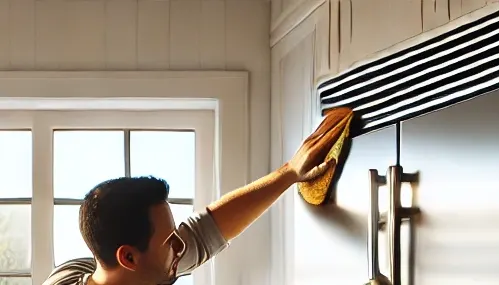
Stainless steel appliances bring a sleek, modern look to any kitchen, but scratches can ruin their polished appearance.
Whether it’s a scuff from a metal spatula or a deeper gouge from daily use, the good news is most scratches can be repaired.
However, removing scratches requires a methodical approach to ensure your appliance looks as good as new. This guide explains how to check whether your appliance is uncoated stainless steel and provides step-by-step solutions for fixing various kinds of scratches.
KEY TAKEAWAYS

Before you start, confirm whether the surface is uncoated stainless steel.
Many appliances feature a clear protective coating to prevent smudges and corrosion, and attempting to remove scratches from coated steel can damage the finish. Also, you won’t be able to match the surrounding coated area if you attempt to repair scratches on coated stainless surfaces.
Here’s how to check:
If the appliance is uncoated, you can proceed to scratch removal. If it’s coated, contact the manufacturer for advice or consider professional repair services.
To cure severe scratches on coated stainless steel, you may need to replace the part instead of repairing the scratches. You can find replacement parts on our Sears PartsDirect website. If you need to have a service technician install a new part, schedule appliance repair service.

Stainless steel has a directional grain, similar to wood. Look closely at the surface, and you’ll notice faint lines running horizontally or vertically. Always work with the grain during any cleaning or repair process to maintain the appliance’s appearance.

Light scratches are shallow and typically caused by everyday wear, such as cleaning with an abrasive cloth or fingernail scratches.
For hairline scratches, this method is usually enough to restore the surface.
Moderate scratches penetrate deeper but don’t reach the metal’s core. Fine-grit sanding pads or compounds designed for stainless steel can help.
Deep scratches require more effort, and you’ll need specialized tools like a stainless steel repair kit.
If you’re unable to remove deep scratches, consider replacing the scratched stainless steel component.
Here’s a helpful YouTube video that shows how to care for stainless steel appliances and keep them looking great:
Stainless steel appliances can withstand years of use if cared for properly.
With a little effort and the right techniques, you can erase unsightly scratches and maintain their elegant appeal.
Always take the time to assess the depth of the scratch, choose the appropriate method, and work carefully to preserve the integrity of the metal to restore your appliance to its original look.
You can often fix light scratches in stainless steel using non-abrasive cleaners, polish and rubbing compound. Work with the stainless steel grain when attempting to fix stainless steel scratches. You can sometimes remove moderate and deep scratches using wet sandpaper (400 grit) or a stainless steel scratch repair kit. If you’re unable to remove scratches, consider replacing the scratched component.
Yes. Non-gel toothpaste can remove light scratches from some stainless steel surfaces. Apply a small amount of paste to a microfiber cloth and polish with the stainless steel grain to help remove light scratches.
Spraying WD-40 on a microfiber cloth and wiping a scratched stainless steel surface with the grain will often cure the appearance of light scratches. The WD-40 won’t remove stainless steel scratches but light scratches will often disappear when polished with this fluid.
Yes. You can remove some light scratches from uncoated stainless steel using Bar Keepers Friend. This non-abrasive polish will often delicately remove the surface around the light scratch so it disappears. Be sure to rub with the stainless steel grain when using this cleaner to remove light scratches. Buff and polish the surface to restore the look of the affected area to match the surrounding stainless steel surfaces of the appliances.
Regular kitchen appliance maintenance can help prevent costly breakdowns, reduce energy costs and extend the life of your appliances. We'll help you keep your refrigerator, dishwasher and range in top shape.
Loading scheduler options...
Want to cut your water bill and help the environment? Discover 4 practical tips to reduce water usage in your household appliances, including washing machines, dishwashers, and refrigerators.

Learn how and why mice can invade your house even though it’s clean. Find out how to prevent rodents from entering your clean and well-kept home.
Discover essential tips to extend the life of your appliances on Sears Home Services.

Get expert tips and tricks on how to clean stainless steel appliances from Sears Home Services. Keep your kitchen shining with our 2026 guide.
ENERGY STAR appliances are energy-efficient products that meet the strict energy efficiency specifications set by the U.S. Environmental Protection Agency or the U.S. Department of Energy. These appliances are designed to use less energy and water, leading to cost savings and a reduced environmental impact.
Wattage is the measure of electrical power expressed in watts (W), indicating the rate at which a device consumes energy.
Natural gas is a fossil fuel used primarily for heating, cooking, and electricity generation. It's a hydrocarbon gas mixture consisting mainly of methane, but it also contains smaller amounts of other hydrocarbons and sometimes sulfur compounds.
A washer screw is a fastening device that combines a screw and a washer, designed to distribute the load of a screwed fastening more evenly and to prevent the screw from loosening under vibration.
When your Payne central air conditioner won’t turn on or isn’t cooling, check for power problems, a failed capacitor, or a clogged condensate drain. This guide covers quick, safe troubleshooting steps and explains when to call Sears Home Services for expert central AC repair.
When your ICP central air conditioner won’t turn on or isn’t cooling, check for power problems, a failed capacitor, or a clogged condensate drain. This guide covers quick, safe troubleshooting steps and explains when to call Sears Home Services for expert central AC repair.
When your Heil central air conditioner won’t turn on or isn’t cooling, check for power problems, a failed capacitor, or a clogged condensate drain. This guide covers quick, safe troubleshooting steps and explains when to call Sears Home Services for expert central AC repair.
When your Carrier central air conditioner won’t turn on or isn’t cooling, check for power problems, a failed capacitor, or a clogged condensate drain. This guide covers quick, safe troubleshooting steps and explains when to call Sears Home Services for expert central AC repair.
When your Comfortmaker central air conditioner won’t turn on or isn’t cooling, check for power problems, a failed capacitor, or a clogged condensate drain. This guide covers quick, safe troubleshooting steps and explains when to call Sears Home Services for expert central AC repair.
When your Ruud central air conditioner won’t turn on or isn’t cooling, check for power problems, a failed capacitor, or a clogged condensate drain. This guide covers quick, safe troubleshooting steps and explains when to call Sears Home Services for expert central AC repair.