 Appointment Lookup
 213-596-2538

Learn how a pressure relief valve works in a water heater.

Electric water heaters safely heat water for your home using electric heating elements and a simple control system. Understanding how your electric water heater works can empower you to maintain and troubleshoot it effectively, saving time and money while ensuring a consistent hot water supply.
In this article, we’ll explain how your electric water heater works and how to keep it working safely and efficiently for years to come.
KEY TAKEAWAYS
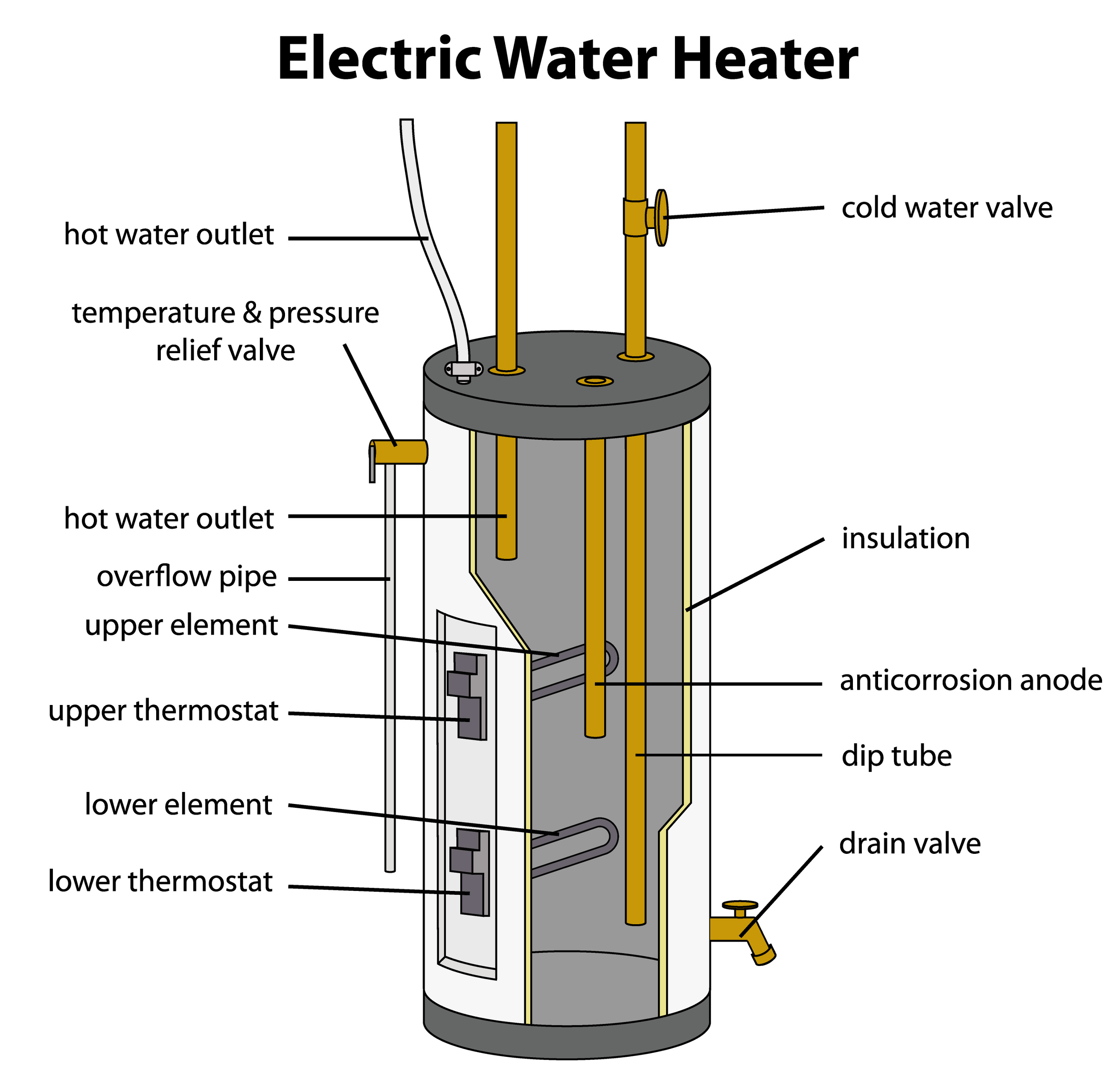
An electric water heater consists of a large, insulated storage tank, usually holding between 30 and 80 gallons of water. It works by heating water using electrical energy and maintaining it at a set temperature until needed. Here's a breakdown of its key components:
The control system of an electric water heater is relatively simple but effective.
The upper thermostat primarily controls the water heater and manages the two heating elements. It ensures the upper element activates first to heat water at the top of the tank.
Once the upper section reaches the desired temperature, the lower thermostat activates the bottom element to heat the remaining water.
This sequence of heating conserves energy by not activating both elements simultaneously.
The thermostat settings are adjustable, typically ranging between 120°F and 140°F, depending on your preference and energy-saving goals.
The heating elements are encased in metal and are immersed directly in the water within the tank where they convert electrical energy into heat. Here's how they function:
The upper heating element is critical for quick access to hot water, while the lower element maintains the tank’s overall temperature.
Regular maintenance is essential to ensure your electric water heater remains efficient and reliable. Follow these tips:
Sediment and mineral buildup can reduce efficiency and damage the heating elements. Flush sediment from the water heater tank by following the procedure shown in this YouTube video:
Follow the steps in the video carefully to prevent damaging heating elements when refilling the water heater.
This safety valve can prevent accidents but must function correctly.
Lift the valve's lever to release water. If no water flows or it doesn’t reseal, replace the valve.
This DIY video shows how to replace the T & P valve:
The anode rod prevents rusting by attracting corrosive elements in the water.
Anode rods have a finite lifespan, typically lasting between 3 and 5 years, depending on the water quality and usage. When the anode rod is fully consumed, the corrosive elements in the water start attacking the tank itself, which can lead to leaks and, eventually, tank failure.
Check the anode rod every few years and replace the rod if it’s less than ½ inch thick or coated with calcium.
Here’s a video that shows how to replace the anode rod:
Even with proper maintenance, you may encounter occasional issues. Here's how to troubleshoot the most common water heater failures.
There are a number of issues that could be to blame when your electric water heater isn't heating. You could have an issue with your power supply or a break in the wiring. One of the two heating elements could be broken, causing your hot water to run out faster than it should. Or your water heater could have a broken thermostat.
This popular YouTube video shows you how to safely check continuity on the various parts and wires inside your water heater so that you can easily fix the problem:
If you’re unable to find and fix the cause of the heating problem yourself, schedule water heater repair service and we’ll fix the water heater for you.
A water heater that overheats water can be a dangerous problem. Aside from possible burning, overheated water could be a sign of a short-circuited heating element or a malfunctioning thermostat.
This DIY troubleshooting video shows you how safely check continuity on the various parts and wires inside your water heater so that you can find the cause of the overheating problem:
If you aren’t able to find and fix the overheating problem on your own, schedule water heater repair service and we’ll send a Sears Home Services technician to your home to fix the problem for you.
When you discover that your water tank is leaking, you’ll likely need to replace the water heater.
Shut off the house circuit breakers to disconnect electrical power and drain the tank as shown in the above video for flushing sediment from the tank.
Understanding how your water heater works will help you properly maintain it and fix problems as they occur.
With regular maintenance and attention to potential issues, your water heater can serve you efficiently for years to come. Stay proactive, and enjoy the comfort of hot water whenever you need it.
Our technicians possess the knowledge and training to fix your water heater, no matter where you bought it.
Loading scheduler options...
Learn how a pressure relief valve works in a water heater.

Learn how a gas water heater works and how to maintain it.

Find answers to 'how does a hybrid water heater work?' at Sears Home Services.

Wondering how your water heater works? Discover the components, types, and maintenance tips to keep hot water flowing reliably in your home. Learn more!
Hard water is water that contains high levels of dissolved minerals, particularly calcium and magnesium. It contrasts with soft water, which has lower concentrations of these minerals.
A thermocouple is a sensor used for measuring temperature, consisting of two different metal wires joined at one end, which generate a voltage proportional to temperature changes.
A K-type thermocouple is a sensor used for temperature measurement, consisting of two dissimilar metal wires that generate a voltage proportional to temperature changes, widely recognized for its accuracy and wide temperature range.
A heat pump water heater is an energy-efficient appliance that uses electricity to move heat from the air or ground into water, rather than generating heat directly.
When your Payne central air conditioner won’t turn on or isn’t cooling, check for power problems, a failed capacitor, or a clogged condensate drain. This guide covers quick, safe troubleshooting steps and explains when to call Sears Home Services for expert central AC repair.
When your ICP central air conditioner won’t turn on or isn’t cooling, check for power problems, a failed capacitor, or a clogged condensate drain. This guide covers quick, safe troubleshooting steps and explains when to call Sears Home Services for expert central AC repair.
When your Heil central air conditioner won’t turn on or isn’t cooling, check for power problems, a failed capacitor, or a clogged condensate drain. This guide covers quick, safe troubleshooting steps and explains when to call Sears Home Services for expert central AC repair.
When your Carrier central air conditioner won’t turn on or isn’t cooling, check for power problems, a failed capacitor, or a clogged condensate drain. This guide covers quick, safe troubleshooting steps and explains when to call Sears Home Services for expert central AC repair.
When your Comfortmaker central air conditioner won’t turn on or isn’t cooling, check for power problems, a failed capacitor, or a clogged condensate drain. This guide covers quick, safe troubleshooting steps and explains when to call Sears Home Services for expert central AC repair.
When your Ruud central air conditioner won’t turn on or isn’t cooling, check for power problems, a failed capacitor, or a clogged condensate drain. This guide covers quick, safe troubleshooting steps and explains when to call Sears Home Services for expert central AC repair.