 Appointment Lookup
 213-596-2538

Discover effective stain removal hacks tested with common household ingredients to tackle grease, grass, and ink stains.
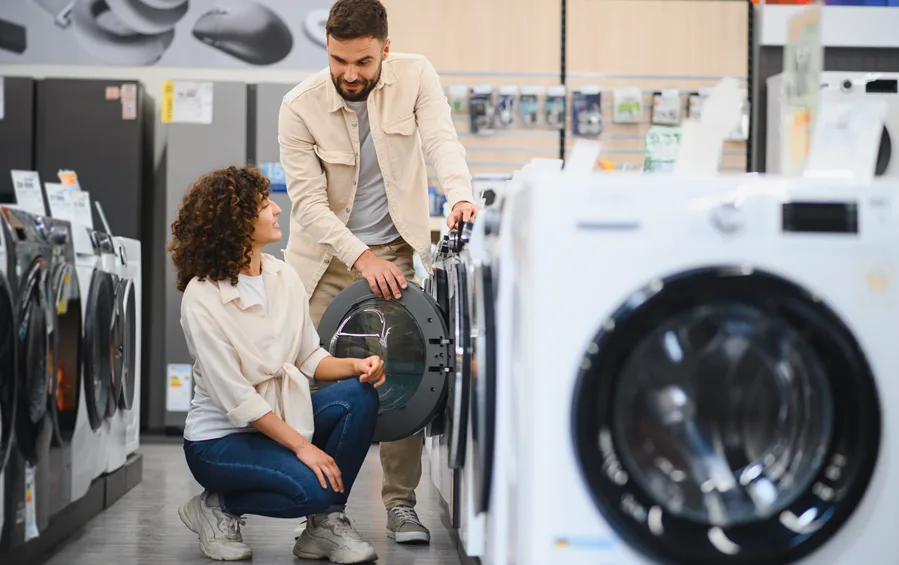
Choosing a washing machine isn’t as simple as picking the one that fits your budget or your laundry room. The difference between front loading and top loading washing machines can significantly impact how well your clothes get cleaned, the energy you use, and even how much detergent you need.
If you’re in the market for a new washer, understanding the key differences between front-load and top-load washing machines will help you make the right decision for your household.
KEY TAKEAWAYS

As the name suggests, top-loading washers feature a lid on top. This design allows users to stand upright while loading and unloading clothes, which is particularly convenient for those with back or knee issues.
Traditional top-load washer models often include an agitator in the drum's center, though newer impeller designs have gained popularity.
Front-loading machines have a horizontal drum with a door on the front. These washers require bending or crouching to load and unload, though adding a pedestal can raise the drum to a more comfortable height.
Their design eliminates the need for an agitator, allowing for more room inside the drum and gentler handling of fabrics.
The tumbling motion of a front-loader mimics the action of hand-washing.
Gravity and minimal water use work together to lift stains and dirt effectively. This efficient cleaning method excels at handling heavily soiled clothes while being gentle on delicates.
Top-loaders with agitators clean aggressively, making them great for tough stains. However, they may not be as gentle on fabrics as front-load models.
High-efficiency (HE) top-loaders without agitators use impellers to create a more subtle cleaning motion, providing a balance between stain removal and fabric care.
Front-load washing machines typically use less water than top-load models.
They fill only a portion of the drum, using specially-designed detergent and precise tumbling to clean effectively.
This reduced water use translates to lower energy costs for heating the water. Additionally, the high-speed spin cycles remove more water from clothes, cutting drying time and energy usage.
Traditional top-loaders fill the entire drum with water for each cycle.
HE top-loaders are more efficient but still lag behind front-loaders in water conservation.
Their spin cycles, while effective, may not remove as much water, potentially increasing drying time and costs.
If space is limited, front-loading washers shine. Their stackable design allows users to pair them with a dryer vertically, freeing up valuable floor space.
Top-loaders require more vertical clearance to open the lid, making them better suited for laundry rooms with ample overhead space.
Of course, you can’t stack a clothes dryer on top of a top-loading washer.
They also tend to be slightly larger overall.
Front-load washing machines often come with a higher price tag. However, their long-term energy and water savings can offset the initial cost.
Routine front-load washer maintenance, like cleaning the rubber door seal and clearing out the drain pump filter, is more cumbersome. Proper cleaning and maintenance is crucial in front-loaders to prevent mold and odors.
Here’s a video that shows what’s involved in cleaning and maintaining a front-load washer:
Top-loading washers are usually less expensive to purchase.
They also require less washer maintenance since their design reduces the risk of mold and mildew growth.
However, the higher water and energy usage may lead to increased operating costs over time.
Choosing between a front-loading and top-loading washing machine depends on your lifestyle, laundry habits, and budget.
If you prioritize efficiency, fabric care, and space-saving options, a front-loader may be the best choice.
On the other hand, if you want a lower upfront cost, faster cycle times, or a machine that's easier to load and unload, a top-loader could be your ideal match.
Understanding the difference between front loading and top loading washing machines ensures you invest in the right appliance for your needs. Consider your priorities, compare the features, and you’ll find a washer that fits your household perfectly.
Increase the lifespan and performance of your washer with our comprehensive maintenance service, ensuring reliable laundry care and continued peace of mind.
Loading scheduler options...
Discover effective stain removal hacks tested with common household ingredients to tackle grease, grass, and ink stains.

Learn how to make any washer an energy efficient washer, and save money on your energy bills by using it the right way.

Discover simple solutions to eliminate detergent residue and ensure your laundry comes out clean and residue-free from your top-load washer.

Unpleasant odors in the laundry room can disrupt the tranquility of your home, signaling underlying issues that demand attention.
The drum is the core part of the washer that holds your laundry and enables the cleaning process through rotation, agitation, and rinsing.
Hard water is water that contains high levels of dissolved minerals, particularly calcium and magnesium. It contrasts with soft water, which has lower concentrations of these minerals.
A washing machine pedestal is a platform that raises the washer off the ground, providing easier access to the appliances and often includes additional storage space such as drawers.
A washer tub is the interior part of a washing machine where clothes are placed for washing, typically made of stainless steel, plastic, or porcelain-coated metal, designed to hold water and withstand the agitation or spinning during the wash cycle.
The most common reasons your LG washer is leaking from bottom are a clogged water valve assembly, broken motor or a cracked drain hose.
The most common reasons your GE washer won't start cycle are a malfunctioning electronic control board, jammed door lock assembly or a faulty user interface.
The most common reasons your Whirlpool washer is not rinsing are a faulty lid switch, a bad water-level pressure switch, or a defective timer.
The most common reasons your GE washer is not filling are a clogged water valve assembly, malfunctioning electronic control board or a bad water level pressure switch.
The most common reasons your Samsung washer top load is not filling with water are a clogged water valve, a malfunctioning PCB, or a cracked hose.
The most common reasons your Samsung washer is noisy are a damaged suspension rod, malfunctioning electronic control board or a broken motor.