 Appointment Lookup
 213-596-2538

Discover how thermostats work to control your home's comfort and energy use. Learn about types, programming tips, and maintenance for a more efficient home.
1. What Is Square Footage, and Why Does It Matter?
2. Gather the Right Tools
3. Measure Any Room in 3 Easy Steps
4. Don’t Forget to Subtract Unusable Space
5. How to Handle Tricky Shapes
6. Common Mistakes That Inflate Your Numbers
7. Real-Life Examples of Square Footage Calculations
8. When to Call in the Pros
9. Tools That Make Measuring Easier
10. FAQs About Square Footage
Frequently Asked Questions

Learn how to calculate square footage accurately with simple steps, practical tips, and tools to measure any space—even tricky layouts—like a pro!
KEY TAKEAWAYS
Figuring out square footage might sound simple, but there are details most people overlook. Whether you’re planning renovations, buying materials, or selling your home, knowing how to measure correctly can save you headaches—and money. This guide simplifies the process with straightforward steps, practical examples, and tips that even seasoned pros might not think of.
Square footage measures the area of a space in square feet. It’s vital for estimating costs, determining a home’s value, and making sure your DIY projects go smoothly. Getting it wrong can lead to overbuying materials or underestimating a property’s worth.
To measure accurately, you’ll need:
Measure twice to avoid errors.
Measure the longest side of the room for the length and the adjacent side for the width. Always measure in feet for consistency.
Use the formula: Length × Width = Square Footage
A living room that’s 15 ft long and 12 ft wide is:
15 × 12 = 180 square feet.
If the room isn’t a perfect rectangle, split it into smaller rectangles, triangles, or circles. Measure each section and add them together.
Unusable areas like fireplaces or built-ins can skew your total. Measure these and subtract them from the total square footage.
If your room is 200 sq. ft. but includes a fireplace taking up 10 sq. ft.:
200 - 10 = 190 sq. ft. of usable space.
Divide the room into two rectangles. Measure each separately and combine the totals.
One section: 10 ft × 8 ft = 80 sq. ft.
Second section: 12 ft × 6 ft = 72 sq. ft.
Total = 80 + 72 = 152 sq. ft.
Use this formula: Base × Height ÷ 2 = Area
A triangular nook with a 6 ft base and a 4 ft height:
(6 × 4) ÷ 2 = 12 sq. ft.
For circles, the formula is: π × Radius² (use 3.14 for π).
If the diameter is 10 ft, the radius is 5 ft:
3.14 × (5 × 5) = 78.5 sq. ft.
Convert inches to feet by dividing by 12. For square inches, divide the total by 144.
Wait until the final step to round your results.
Always account for alcoves, closets, or cutouts.
If your room is 12 ft × 14 ft:
12 × 14 = 168 sq. ft. Add 10% for waste:
168 + (168 × 0.1) = 185 sq. ft.
Measure wall height and width. Subtract window and door areas. Multiply by the number of coats.
Wall: 10 ft × 12 ft = 120 sq. ft.
Window: 3 ft × 4 ft = 12 sq. ft.
Total: 120 - 12 = 108 sq. ft.
For a house with several rooms, measure each space separately, including closets or hallways if required. Sum the totals to get the full square footage. Remember to exclude non-livable areas like garages or unfinished basements unless specified otherwise.
If your space includes complex shapes or built-ins, consider hiring an appraiser or surveyor. They’ll ensure you get precise measurements for real estate listings or large-scale projects.
Quick and accurate for large spaces.
Helps you visualize and calculate irregular layouts.
Many smartphone apps can calculate square footage instantly.
Livable square footage includes all heated and enclosed spaces. It excludes garages, unfinished basements, and outdoor areas.
Divide the total inches by 144 to get square feet.
Measure each room separately, then sum the totals. Don’t include areas like hallways unless specified.
For home repairs, check out appliance repair near me for reliable and professional service.
HVAC checkups from Sears Home Services help keep your heating and cooling system running at its best. Prevent costly repairs and can make your HVAC system more energy efficient with routine maintenance.
Loading scheduler options...
Discover how thermostats work to control your home's comfort and energy use. Learn about types, programming tips, and maintenance for a more efficient home.
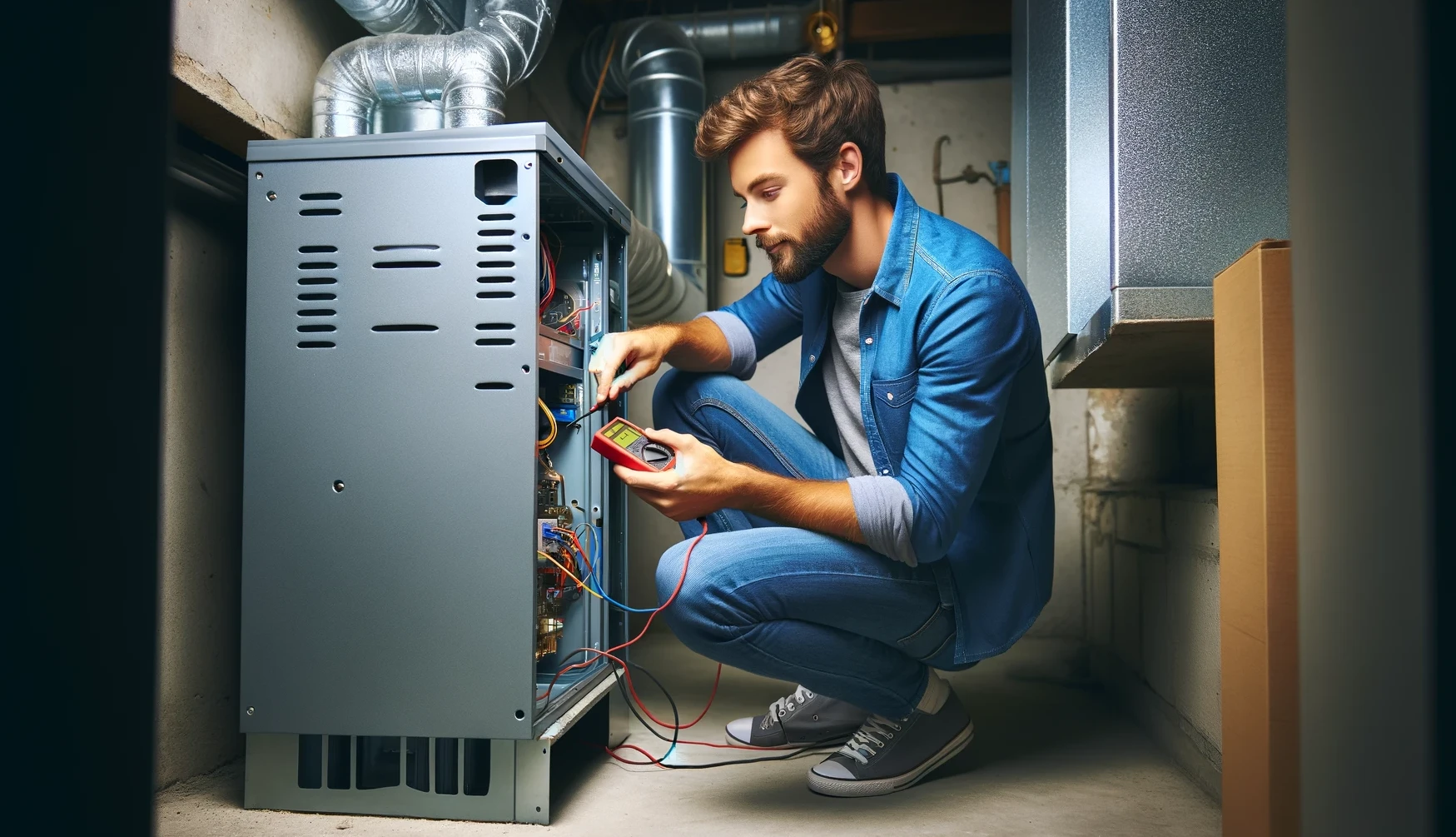
Get expert tips on preparing your furnace for the cold winter months.

Perform these home maintenance tasks to help you enjoy a stress-free school year.

Understanding the various AC air filter ratings helps you determine which type of filter is right for your home.
The 608 Certification, mandated by the Environmental Protection Agency (EPA), is required for HVAC technicians to legally handle refrigerants. It ensures technicians understand refrigerant types, environmental impact, and proper handling techniques.
A compressor is a mechanical device that increases the pressure of a gas by reducing its volume, essential in various systems including refrigerators, air conditioners, and HVAC units for cooling and refrigeration processes.
A condenser is a component of HVAC and refrigeration systems, responsible for releasing absorbed heat from the refrigerant into the outside air or a water line, thus facilitating the cooling process.
A capacitor in an AC unit is an electrical component that stores and releases electrical energy to help start the motor and stabilize the voltage during operation.
When your Payne central air conditioner won’t turn on or isn’t cooling, check for power problems, a failed capacitor, or a clogged condensate drain. This guide covers quick, safe troubleshooting steps and explains when to call Sears Home Services for expert central AC repair.
When your ICP central air conditioner won’t turn on or isn’t cooling, check for power problems, a failed capacitor, or a clogged condensate drain. This guide covers quick, safe troubleshooting steps and explains when to call Sears Home Services for expert central AC repair.
When your Heil central air conditioner won’t turn on or isn’t cooling, check for power problems, a failed capacitor, or a clogged condensate drain. This guide covers quick, safe troubleshooting steps and explains when to call Sears Home Services for expert central AC repair.
When your Carrier central air conditioner won’t turn on or isn’t cooling, check for power problems, a failed capacitor, or a clogged condensate drain. This guide covers quick, safe troubleshooting steps and explains when to call Sears Home Services for expert central AC repair.
When your Comfortmaker central air conditioner won’t turn on or isn’t cooling, check for power problems, a failed capacitor, or a clogged condensate drain. This guide covers quick, safe troubleshooting steps and explains when to call Sears Home Services for expert central AC repair.
When your Ruud central air conditioner won’t turn on or isn’t cooling, check for power problems, a failed capacitor, or a clogged condensate drain. This guide covers quick, safe troubleshooting steps and explains when to call Sears Home Services for expert central AC repair.