 Appointment Lookup
 213-596-2538

Discover how thermostats work to control your home's comfort and energy use. Learn about types, programming tips, and maintenance for a more efficient home.

Welcome to Sears Home Services, your trusted resource for all home maintenance needs. In this guide, we’ll walk you through the process of cleaning your furnace blower in five easy steps. Regular maintenance of your furnace blower is vital for ensuring optimal performance and efficiency. By following these steps, you can keep your blower running smoothly and extend its lifespan. Let's dive in!
KEY TAKEAWAYS
Keeping your furnace blower clean is a key maintenance task every homeowner should prioritize. A clean blower ensures efficient operation, contributes to better indoor air quality, and extends the lifespan of your HVAC system.
The blower circulates heated or cooled air throughout your home. Over time, dust, dirt, and debris can build up on the blower blades and motor, hindering airflow and reducing efficiency. This can lead to decreased performance, uneven temperatures, higher energy consumption, and potential system breakdowns.
Regular cleaning offers these important benefits:
How often should you clean your furnace blower? Generally, it's recommended to clean it at least once a year. However, if you notice signs of reduced airflow, unusual noises, or increased dust, more frequent cleaning may be necessary.
Cleaning the blower is a fairly advanced procedure that requires heavy lifting and attention to detail. If you’re not completely confident that you can complete this cleaning process yourself, schedule Clean & Maintain Service to have a Sears Home Services Technician visit your home and complete the work.
Before beginning, it’s crucial to take safety precautions to protect yourself and prevent accidents. Here are some safety measures to follow:
To properly shut off power to your furnace, follow these steps:
Disconnecting the power is essential to eliminate the risk of electric shock and ensure a hazard-free cleaning process. Safety should always be your top priority when performing any maintenance tasks on your furnace. If you’re unsure how to shut off electrical power to your furnace, have a service technician complete the blower cleaning.
Follow these steps to remove the blower fan and burner assembly covers:
You may see an electronic circuit board attached to the blower fan housing in many furnaces. Some furnaces just have wires attached to the blower fan motor. Take a digital photo of all wiring connections with your cell phone or tablet to document their locations. Disconnect all the electrical connections and wires attached to the blower assembly.
Remove the screws or bolts securing the blower assembly in the furnace. Gently slide out the blower assembly from its housing. It will be heavy. Use a helper if needed.
After removing the blower assembly, vacuum out the blower assembly housing compartment in the furnace to remove dust, dirt and debris.
Using a soft brush or a vacuum cleaner with a brush attachment, gently clean the blower wheel and motor. Be cautious not to damage any delicate parts. Remove any accumulated dust or debris, ensuring the blades of the blower wheel and motor are completely clean. You can use compressed air for cleaning but it will spread dust and dirt throughout the cleaning area. Blowing off the fan blades and motor after cleaning will remove any remaining residual dust after cleaning with a brush and the vacuum cleaner. Wipe the fan housing and motor with a damp cloth and then dry them with a lint-free cloth.
While cleaning, look for signs of wear or damage, such as loose or bent fan blades. If you find any damage, schedule furnace repair service to have a Sears Home Services technician visit your home and check the furnace. Getting your furnace repaired right away will prevent further damage.
Reassemble your furnace in reverse order. Make sure that you properly engage the support rail tabs when reinstalling the blower fan and motor assembly back in the furnace. Reconnect wires correctly as shown in your digital picture of the wiring connections. Restore power and check furnace operation.
If you notice any problems after cleaning the blower, have a service technician examine the furnace and fix any problems.
Even if you clean the furnace blower yourself, it’s always a good idea to schedule professional furnace maintenance yearly to have a Sears Home Services technician maintain your heating system. Here’s a video that shows what happens during professional furnace maintenance:
Following these maintenance tips and cleaning methods ensures your furnace stays in top condition, promoting efficient airflow and prolonging the lifespan of your furnace.
HVAC checkups from Sears Home Services help keep your heating and cooling system running at its best. Prevent costly repairs and can make your HVAC system more energy efficient with routine maintenance.
Loading scheduler options...
Discover how thermostats work to control your home's comfort and energy use. Learn about types, programming tips, and maintenance for a more efficient home.
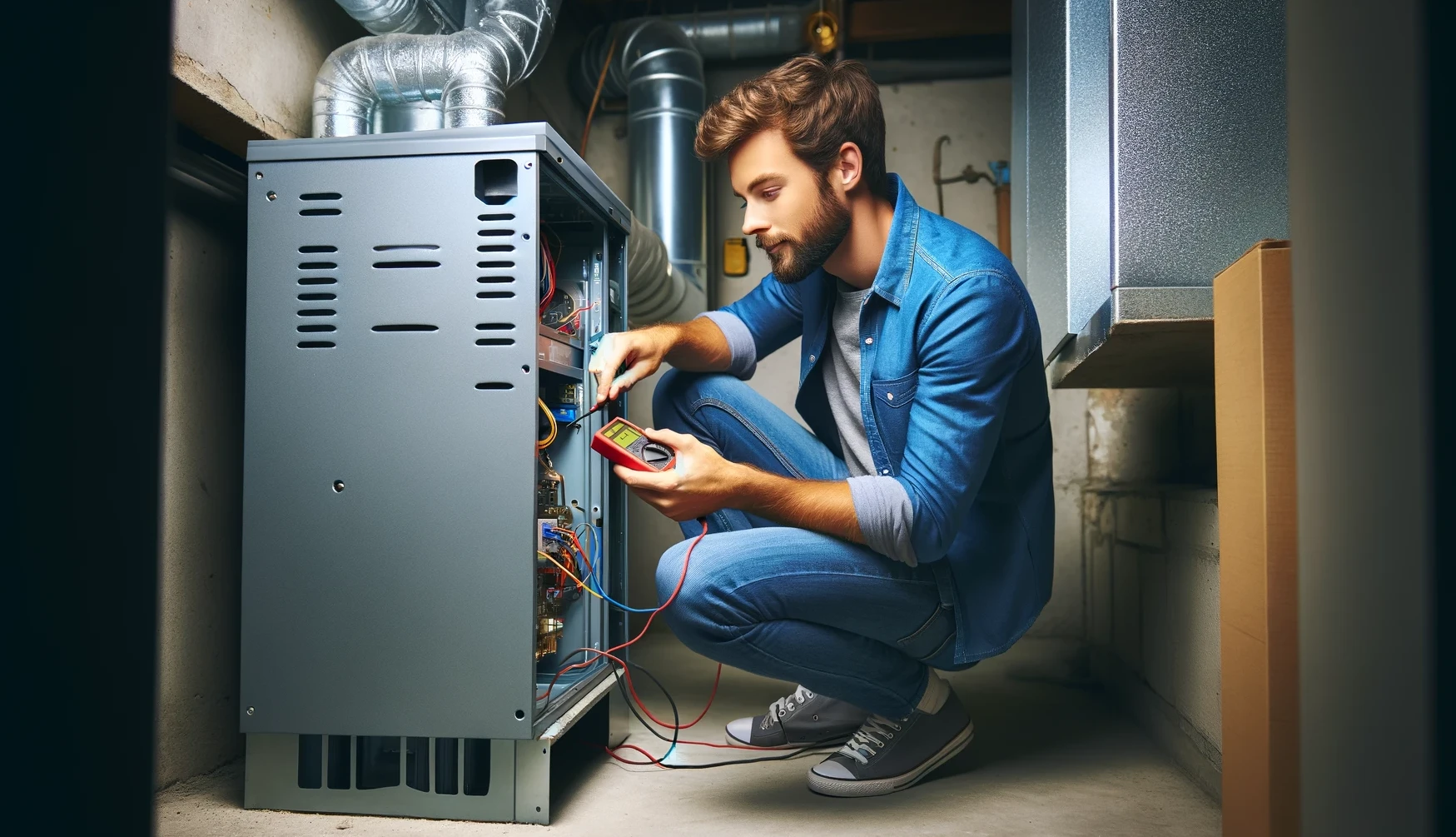
Get expert tips on preparing your furnace for the cold winter months.

Perform these home maintenance tasks to help you enjoy a stress-free school year.

Understanding the various AC air filter ratings helps you determine which type of filter is right for your home.
The 608 Certification, mandated by the Environmental Protection Agency (EPA), is required for HVAC technicians to legally handle refrigerants. It ensures technicians understand refrigerant types, environmental impact, and proper handling techniques.
A compressor is a mechanical device that increases the pressure of a gas by reducing its volume, essential in various systems including refrigerators, air conditioners, and HVAC units for cooling and refrigeration processes.
A condenser is a component of HVAC and refrigeration systems, responsible for releasing absorbed heat from the refrigerant into the outside air or a water line, thus facilitating the cooling process.
A capacitor in an AC unit is an electrical component that stores and releases electrical energy to help start the motor and stabilize the voltage during operation.
When your Payne central air conditioner won’t turn on or isn’t cooling, check for power problems, a failed capacitor, or a clogged condensate drain. This guide covers quick, safe troubleshooting steps and explains when to call Sears Home Services for expert central AC repair.
When your ICP central air conditioner won’t turn on or isn’t cooling, check for power problems, a failed capacitor, or a clogged condensate drain. This guide covers quick, safe troubleshooting steps and explains when to call Sears Home Services for expert central AC repair.
When your Heil central air conditioner won’t turn on or isn’t cooling, check for power problems, a failed capacitor, or a clogged condensate drain. This guide covers quick, safe troubleshooting steps and explains when to call Sears Home Services for expert central AC repair.
When your Carrier central air conditioner won’t turn on or isn’t cooling, check for power problems, a failed capacitor, or a clogged condensate drain. This guide covers quick, safe troubleshooting steps and explains when to call Sears Home Services for expert central AC repair.
When your Comfortmaker central air conditioner won’t turn on or isn’t cooling, check for power problems, a failed capacitor, or a clogged condensate drain. This guide covers quick, safe troubleshooting steps and explains when to call Sears Home Services for expert central AC repair.
When your Ruud central air conditioner won’t turn on or isn’t cooling, check for power problems, a failed capacitor, or a clogged condensate drain. This guide covers quick, safe troubleshooting steps and explains when to call Sears Home Services for expert central AC repair.