 Appointment Lookup
 213-596-2538

Discover how thermostats work to control your home's comfort and energy use. Learn about types, programming tips, and maintenance for a more efficient home.
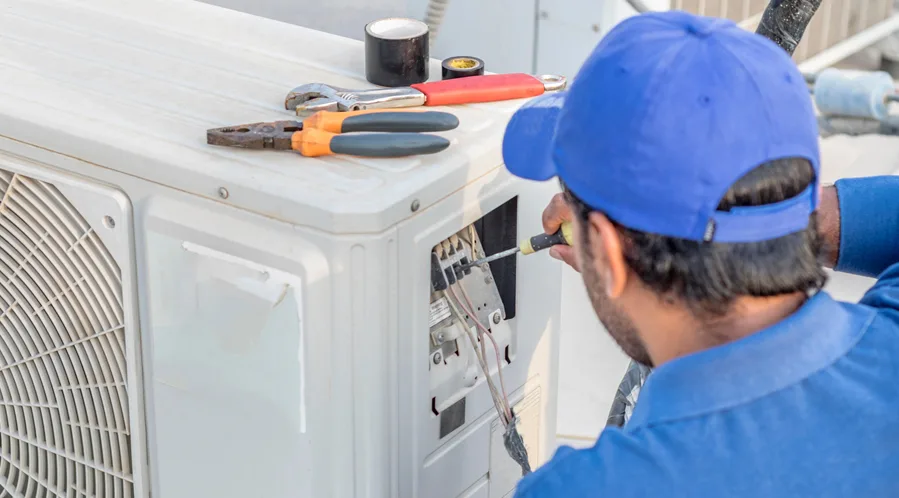
Calling all homeowners with gas appliances! Get ready to save some serious cash. Thanks to the Inflation Reduction Act of 2022, residents in certain states can now reap the benefits of home energy rebates. Not only will these rebates help lighten the load on your wallet, but they'll also help you play your part in creating a greener future. Sounds like a win-win, right?
KEY TAKEAWAYS
On August 16, 2022 President Joe Biden signed the Inflation Reduction Act (IRA) that provides unprecedented home energy rebates to help low- and moderate-income families convert gas appliances and furnaces to cleaner electric versions.
Using clean electricity instead of burning fossil fuels will reduce carbon emissions by a projected 200 million metric tons by 2045.
The U.S. Department of Energy sets guidelines for state energy offices to administer the rebates. The state entities are responsible for setting up and administering the programs that make the rebates accessible to homeowners.
In 2026, these states now have some or all of the home energy rebates available.
Check with your state’s website for more information about HEEHRA rebates now available if you live in these states.
The 2022 IRA provides up to $14,000 in rebates for qualified “electrification” projects. These rebates are only available to households earning less than 150 percent of their area’s annual median income.
Components of electrification projects that qualify for rebates include:
Use the Fannie Mae Area Median Income Lookup Tool to get an idea of the median income in your area. For example, the median income of households in the St. Louis area is $96,800.
If you live in that area, you would qualify for 100 percent rebates if your household earns less than $77,440 (80 % of $96,800 median income). Households earning between $77,440 and $145,200 would qualify for the 50 percent rebate of qualified IRA electrification projects.
These are general guidelines and examples. Specific guidelines for IRA rebates are still being worked out by individual state governments. Check back for more information as new details about IRA rebates emerge.
If you live in a state where rebates are currently offered, check with your state's energy office or agency administering the program to see if you qualify for the rebates based on your income.

A heat pump HVAC system works like an air conditioner in the summer and reverses refrigerant flow in winter to heat your home.
When the HVAC compressor compresses refrigerant, the refrigerant gets hot. The system circulates the hot refrigerant through the evaporator fins inside your home. The blower fan circulates inside air through the evaporator to heat the air inside your home.
When the hot refrigerant can’t provide the heat needed to keep your home comfortable, an electric heating element turns on to supplement refrigerant heating.
The compressor compresses refrigerant and sends the hot refrigerant through the outside condenser unit to cool down the refrigerant. The cooled down refrigerant travels to the inside unit in your home. The refrigerant passes through an orifice to make a fine mist that enters the evaporator. The refrigerant mist absorbs heat from the evaporator and cools the air circulated through the evaporator by the blower fan.
A heat pump water heater uses hot refrigerant gas as the primary heat source for heating water inside the water heater tank. A compressor is positioned at the top of the water heater runs to compress and heat the refrigerant. The refrigerant flows down through heat exchanger tubes inside the water heater tank and heats the water. The refrigerant then flows through an evaporator heat exchanger on top of the water heater to cool the refrigerant down. Next, the refrigerant flows back to the compressor and the heating cycle repeats.
When hot water demand exceeds the refrigerant systems ability to heat water, standard electric water heating elements turn on to heat water.

A heat pump dryer uses hot refrigerant gas to heat the clothes and cooler refrigerant to dehumidify the air that flows through the clothes during the drying cycle. Many heat pump dryers are ventless. Here’s how the dryer works.
The drying cycle in a heat pump dryer takes longer but uses much less energy than a conventional dryer. Also, the clothes don’t get as hot in a heat pump dryer because the dehumidifying process removes moisture from the clothes instead of just hot air flowing through the clothes and out an exhaust vent.
Because a heat pump dryer recycles exhaust air, getting a ventless heat pump dryer will eliminate the hassle of cleaning a dryer vent and will save you money on energy bills.
Understanding the details of these home electrification energy rebates will help you decide whether these changes are right for your home.
If you're eligible for these rebates, you can significantly upgrade your home, save money on energy bills and help the environment.
HVAC checkups from Sears Home Services help keep your heating and cooling system running at its best. Prevent costly repairs and can make your HVAC system more energy efficient with routine maintenance.
Loading scheduler options...
Discover how thermostats work to control your home's comfort and energy use. Learn about types, programming tips, and maintenance for a more efficient home.
Get expert tips on preparing your furnace for the cold winter months.

Perform these home maintenance tasks to help you enjoy a stress-free school year.

Understanding the various AC air filter ratings helps you determine which type of filter is right for your home.
The 608 Certification, mandated by the Environmental Protection Agency (EPA), is required for HVAC technicians to legally handle refrigerants. It ensures technicians understand refrigerant types, environmental impact, and proper handling techniques.
A compressor is a mechanical device that increases the pressure of a gas by reducing its volume, essential in various systems including refrigerators, air conditioners, and HVAC units for cooling and refrigeration processes.
A condenser is a component of HVAC and refrigeration systems, responsible for releasing absorbed heat from the refrigerant into the outside air or a water line, thus facilitating the cooling process.
A capacitor in an AC unit is an electrical component that stores and releases electrical energy to help start the motor and stabilize the voltage during operation.
When your Payne central air conditioner won’t turn on or isn’t cooling, check for power problems, a failed capacitor, or a clogged condensate drain. This guide covers quick, safe troubleshooting steps and explains when to call Sears Home Services for expert central AC repair.
When your ICP central air conditioner won’t turn on or isn’t cooling, check for power problems, a failed capacitor, or a clogged condensate drain. This guide covers quick, safe troubleshooting steps and explains when to call Sears Home Services for expert central AC repair.
When your Heil central air conditioner won’t turn on or isn’t cooling, check for power problems, a failed capacitor, or a clogged condensate drain. This guide covers quick, safe troubleshooting steps and explains when to call Sears Home Services for expert central AC repair.
When your Carrier central air conditioner won’t turn on or isn’t cooling, check for power problems, a failed capacitor, or a clogged condensate drain. This guide covers quick, safe troubleshooting steps and explains when to call Sears Home Services for expert central AC repair.
When your Comfortmaker central air conditioner won’t turn on or isn’t cooling, check for power problems, a failed capacitor, or a clogged condensate drain. This guide covers quick, safe troubleshooting steps and explains when to call Sears Home Services for expert central AC repair.
When your Ruud central air conditioner won’t turn on or isn’t cooling, check for power problems, a failed capacitor, or a clogged condensate drain. This guide covers quick, safe troubleshooting steps and explains when to call Sears Home Services for expert central AC repair.