 Appointment Lookup
 213-596-2538

Discover how dishwashers work, tips for maintenance, and when to seek repairs. Keep your dishwasher running smoothly and your dishes spotless every cycle.
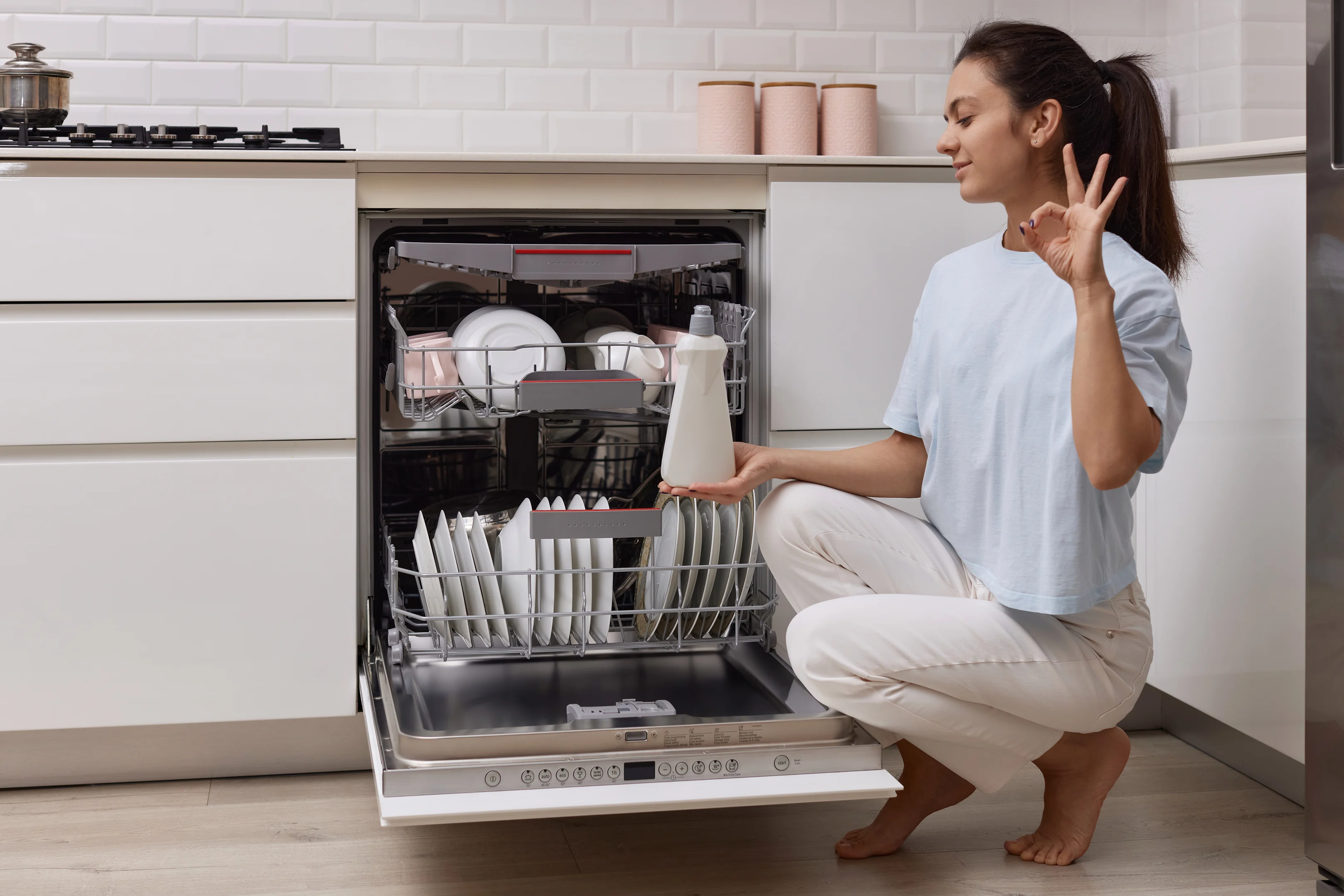
Ever pulled a glass out of the dishwasher only to find it spotted, foggy or streaked? That’s where rinse aid comes to the rescue. A dishwasher’s rinse aid isn’t just an optional accessory; it’s essential for spotless, sparkling dishes.
If you’ve ever wondered how it works and why your dishwasher includes a special dispenser for it, this guide covers everything you need to know.
KEY TAKEAWAYS
Rinse aid is a liquid product that improves drying and prevents water spots and streaks on your dishes.
It works by breaking the surface tension of water. Without rinse aid, water droplets cling to dishes during the final rinse cycle, leaving unsightly marks as they dry.
By reducing water’s tendency to form droplets, rinse aid encourages water to sheet off surfaces, leaving them clean and gleaming. The dishes also dry quickly when you use rinse aid.
Dishwashers include a dedicated rinse aid dispenser, usually located on the inside of the door near the detergent compartment. This dispenser releases a small amount of rinse aid during the final rinse cycle.
Here’s how it operates:

Filling the rinse aid dispenser is simple. Follow these steps:
Here’s a video that shows how to fill the rinse aid dispenser and adjust its setting on common types of dishwashers:
Skipping rinse aid might save a step, but it can lead to disappointing results. Even with a heated dry cycle, dishes without rinse aid often dry unevenly, with water spots and cloudiness marring their appearance.
Additionally, energy-efficient dishwashers rely more on rinse aid because they use less water and heat for drying.
Using rinse aid and maintaining your dispenser ensures your dishwasher delivers the spotless, streak-free results you expect.
Pairing this practice with regular dishwasher maintenance—like cleaning the filter and checking spray arms—keeps your appliance in top condition for years to come.
Schedule annual professional dishwasher maintenance and cleaning to keep your dishwasher in top shape and lasting longer. The technician will check all components in your dishwasher and make adjustments to the appliance works efficiently.
A service technician can spot potential problems and take steps to help you avoid unexpected dishwasher breakdowns during the year.
Now that you know how rinse aid works, filling that dispenser becomes one more way to get the most out of your dishwasher. And keeping your dishwasher well-maintained will help it run smoothly for years to come.
Regular dishwasher maintenance can help prevent costly breakdowns, reduce energy costs and extend the life of your appliance.
Loading scheduler options...
Discover how dishwashers work, tips for maintenance, and when to seek repairs. Keep your dishwasher running smoothly and your dishes spotless every cycle.

Learn how countertop dishwashers work and when you should use them.

Learn how to eliminate bad odors from your dishwasher and prevent them from returning.

Discover the top 5 dishwasher do's and don'ts this BBQ season at Sears Home Services.
A dishwasher basket is a removable container designed to securely hold small items like cutlery and utensils during the wash cycle, ensuring efficient cleaning without loss or damage.
A dishwasher end panel is a finishing piece installed on the exposed side of a dishwasher, primarily when it is at the end of kitchen cabinetry, to ensure a seamless and aesthetically pleasing look in the kitchen.
A dishwasher diverter motor controls the direction of water flow to different spray arms within the dishwasher, ensuring optimal water distribution during each wash cycle for thorough cleaning.
A dishwasher drawer is a compact, space-saving kitchen appliance designed to clean dishes efficiently, resembling a standard kitchen drawer that slides out for easy loading and unloading.
The most common reasons your Frigidaire dishwasher won't start a cycle are a defective electronic control board, damaged power supply board or a failed door switch.
The most common reasons your Amana dishwasher won't drain are a failed drain pump, faulty pump and motor assembly or a cracked drain hose.
The most common reasons your Bosch dishwasher has no heat are a defective electronic control board, clogged water valve or a broken detergent dispenser.
The most common reasons your Electrolux dishwasher is not heating are a defective electronic control board, faulty pump and motor assembly or a damaged user interface control.
The most common reasons your Kenmore dishwasher is not washing are a faulty pump and motor assembly, defective electronic control board or a clogged spray arm.
The most common reasons your Kenmore Elite dishwasher is not washing are a faulty pump and motor assembly, defective electronic control board or a clogged spray arm.