 Appointment Lookup
 213-596-2538

Learn how a propane refrigerator that uses R290 refrigerant works.

A refrigerator keeps our food fresh, helping to keep it safe for consumption and reducing waste. But beyond its everyday convenience, there’s a fascinating process at work. Refrigerators use a specialized cooling cycle, along with carefully designed components, to create and maintain cold temperatures. Understanding how a refrigerator works reveals the science behind the scenes of this must-have appliance and highlights the importance of routine maintenance and prompt repairs.
KEY TAKEAWAYS
Refrigeration is at the heart of keeping our food fresh, safe, and ready to eat. At its core, refrigeration works by removing heat rather than adding cold. This process keeps temperatures low, slowing the natural growth of bacteria that can cause food to spoil. Understanding the basics of how refrigeration functions can help in spotting potential issues early and in making informed decisions on maintenance and repairs.
Refrigeration relies on a few key scientific principles, mainly the idea of heat transfer and the properties of gases under pressure. In simple terms, a refrigerator doesn’t “produce” cold; instead, it draws out heat, leaving the inside space cooler. This process is achieved through a cycle that moves a special substance—called refrigerant—through different phases of temperature and pressure.
Here’s a basic breakdown of refrigeration’s purpose:
The refrigeration cycle is a continuous loop that transfers heat from inside the refrigerator to the outside environment. This cycle is made possible by four main components: the compressor, condenser, evaporator, and expansion valve. Together, they keep the refrigerator’s interior cold and stable.
A simplified overview of how the cycle removes heat:
This cycle of pressurizing, condensing, evaporating, and expanding the refrigerant is what makes cooling possible, providing the ideal environment for storing food.
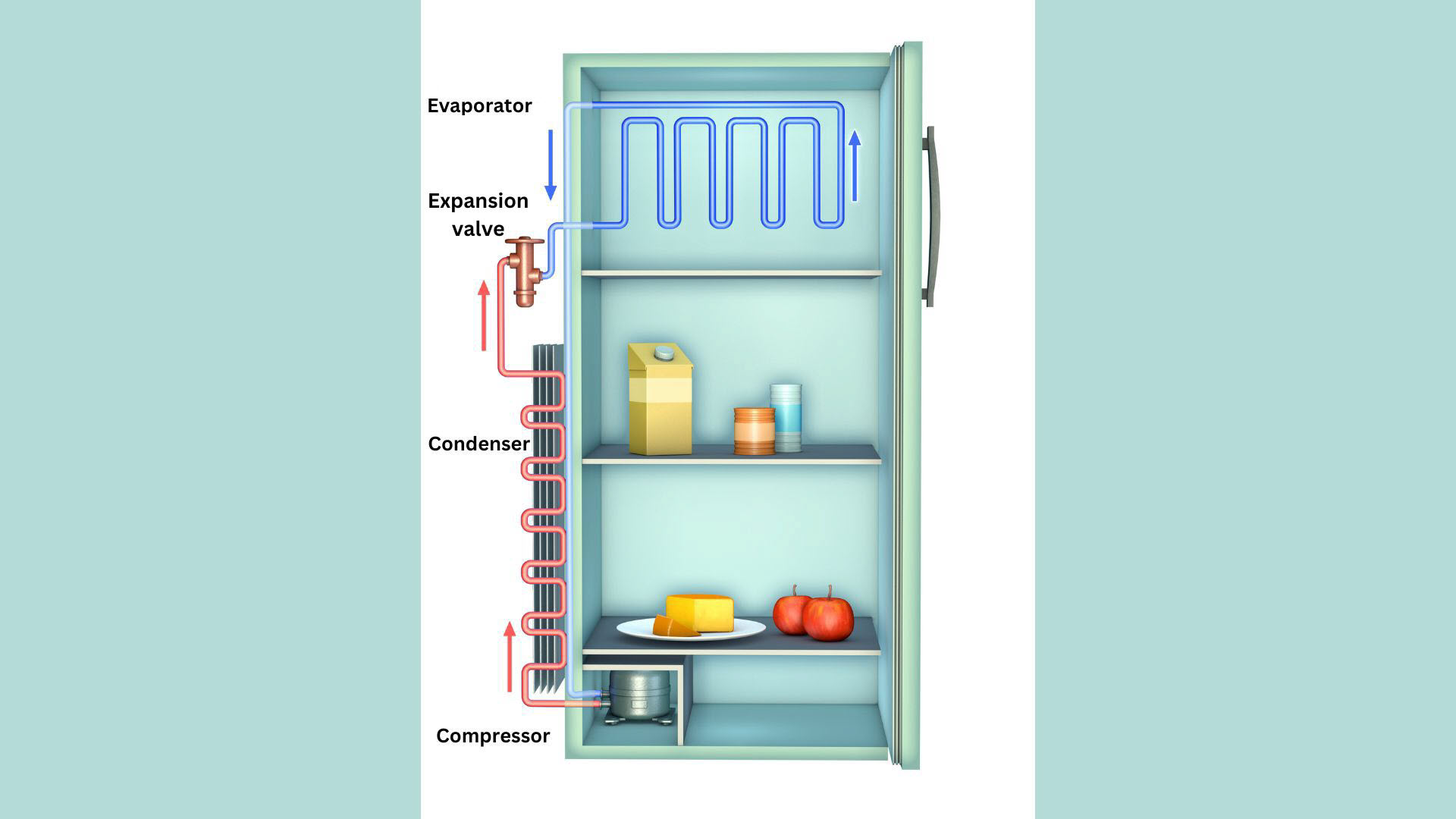
The refrigeration cycle is a precise, ongoing process that moves heat from inside the refrigerator to the outside. Each component plays an important role in keeping the interior stable and cool. By understanding how each part works, you can better grasp how refrigerators keep food fresh and identify potential issues if your refrigerator isn’t cooling properly.
The compressor serves as the starting point and “power source” of the refrigeration cycle. Often considered the “heart” of a refrigerator, it compresses and pressurizes the refrigerant, a special fluid used to transfer heat.
After the refrigerant leaves the compressor, it flows into the condenser, where it begins to cool down. The condenser acts as a heat exchanger, releasing the refrigerant’s absorbed heat to the surrounding air.
Inside the refrigerator, the evaporator is responsible for absorbing heat from the fridge’s contents. It’s the primary component that directly cools the interior space, creating the cold environment needed to keep food fresh.
The expansion valve regulates the flow of refrigerant, which is vital for consistent cooling throughout the cycle. This valve allows the refrigerant to expand as it re-enters the evaporator, lowering its pressure and temperature for optimal cooling.
Refrigerators rely on electricity to power their components and keep food cool. Electricity runs through a system of parts, including the compressor, condenser, and evaporator, to maintain the ideal temperature inside. Understanding how energy is used in refrigerators can help identify opportunities for efficiency and lower energy costs.
Electricity is the primary energy source for refrigerators, and the amount consumed varies by model, age, and features. Older refrigerators tend to use more electricity, while modern models are designed to be more efficient, offering features that help save on energy costs.
Today’s refrigerators come equipped with several features aimed at reducing electricity use and lowering costs. These innovations make it easier to enjoy a cooler fridge without a high energy bill.
Modern refrigerators equipped with these energy-saving features can be both budget-friendly and environmentally conscious, making them a valuable addition to any home.

A refrigerator relies on several essential components to maintain a cool, consistent temperature. While the compressor, condenser, evaporator, and expansion valve perform the main cooling work, additional parts also contribute to its efficiency, temperature control, and overall performance.
The primary components of a refrigerator work together to carry out the refrigeration cycle, which removes heat from inside the fridge and releases it outside. If the refrigerator isn't cooling any more, the primary cause is frequently a failure of one of these components.
These core parts are the main players in creating the cold temperatures required to keep food safe.
Beyond the core components, several other parts contribute to a refrigerator’s efficiency and consistent cooling, helping to maintain a stable internal environment.
Together, these additional parts play an important role in maintaining a consistent temperature, contributing to energy efficiency, and supporting the refrigerator’s overall functionality.
While refrigerators and freezers operate on the same basic principles, freezers are designed to reach lower temperatures to keep food frozen for long-term storage. Freezers come in two main types: free-standing units and freezer compartments within refrigerators. Each type has unique features and differences in how they manage temperatures. Understanding these distinctions can help in maintaining efficiency and troubleshooting cooling issues—especially if your freezer is running but not freezing.
Freezers are engineered to manage lower temperatures, usually around 0°F (-18°C) or lower, to preserve food safely. Whether it's a free-standing freezer or a refrigerator’s freezer compartment, there are specific ways each manages and maintains these temperatures.
These differences in temperature management allow each type to meet the specific freezing needs of the household.
Proper maintenance of both free-standing freezers and refrigerator freezer compartments can help improve efficiency and keep food reliably frozen. Regular attention to key areas can support smooth operation, reduce energy consumption, and extend the life of the unit.
By following these maintenance practices, you can improve the efficiency and lifespan of any freezer, whether it’s a dedicated free-standing model or a freezer compartment within a refrigerator.

Regular maintenance can extend the life of a refrigerator and improve its efficiency, ensuring it cools effectively year-round. Basic upkeep goes a long way, but some situations may require a professional’s expertise to keep everything running smoothly. By following a few simple maintenance steps and knowing when to reach out for help, you can avoid unexpected breakdowns and keep your refrigerator in top condition.
Consistent maintenance keeps a refrigerator cooling efficiently and can even prevent certain issues from developing. A few simple tasks can help reduce energy use and extend the lifespan of the appliance.
These simple steps can make a noticeable difference in keeping your refrigerator running well. For more comprehensive upkeep, consider scheduling professional yearly refrigerator maintenance to ensure all components are in top shape.
While regular maintenance helps prevent many issues, there are times when professional attention is needed. Knowing the signs of common refrigerator problems can help you decide when to call a technician for reliable refrigerator repair.
If you encounter these issues, a professional technician can diagnose and resolve the problem, preventing further damage. Timely repairs help avoid more costly fixes down the road and keep your refrigerator working reliably.
Backed by years of experience, our technicians possess the skills necessary to fix your refrigerator. And because our techs our local, they can fix it for you fast.
Loading scheduler options...
Learn how a propane refrigerator that uses R290 refrigerant works.

Learn how a kegerator works and get answers to frequently asked questions.

Learn how a stepper motor works and how it’s used in refrigerators.

Learn how a refrigerator compressor works and how to recognize and troubleshoot common problems.
A compressor is a mechanical device that increases the pressure of a gas by reducing its volume, essential in various systems including refrigerators, air conditioners, and HVAC units for cooling and refrigeration processes.
A condenser is a component of HVAC and refrigeration systems, responsible for releasing absorbed heat from the refrigerant into the outside air or a water line, thus facilitating the cooling process.
A dual ice maker is a feature in some refrigerators that includes two separate ice makers: one in the fridge compartment and another in the freezer section. This setup doubles the appliance's ice-making capacity.
A French-door refrigerator features two doors that open side-by-side on the top section for the refrigerator compartment, with a bottom freezer drawer, combining style, efficiency, and easy access to both refrigerated and frozen goods.
The most common reasons your LG refrigerator icemaker reset button is not working are a faulty icemaker, a malfunctioning PCB, or a defective water valve.
The most common reasons your Samsung refrigerator is leaking water are a clogged defrost drain, cracked dispenser water tubing or a damaged evaporator.
The most common reasons your Kenmore Elite refrigerator stopped working are a locked compressor, damaged evaporator or a defective electronic control board.
The most common reasons your Maytag refrigerator stopped working are a locked compressor, damaged evaporator or a defective electronic control board.
The most common reasons your Kenmore refrigerator is noisy are a faulty ice maker assembly, defective electronic control board or a locked compressor.
The most common reasons your Kenmore refrigerator fan is not working are a defective electronic control board, damaged evaporator or a locked compressor.