 Appointment Lookup
 213-596-2538

Ensure your refrigerator's efficiency with regular maintenance. Learn 3 key reasons why it's important and get expert tips from Sears Home Services.

Stay informed about food safety with our comprehensive food storage guidelines, covering everything from dairy to meat to vegetables. Learn how long you can keep common refrigerated items fresh and get tips on maximizing the shelf life of your groceries. Plus, discover expert advice on organizing your fridge effectively to prevent food loss and ensure optimal freshness throughout the week.
KEY TAKEAWAYS
Wondering if those leftovers are still good? What about that meat? Or milk? Our infographic breaks down the shelf life of common refrigerated items and offers up tips for keeping food fresh.
Because sell-by dates often aren't reliable indicators of when something has gone bad, it can be difficult to know how long is too long when it comes to an item’s shelf life. These need-to-know food storage guidelines will help keep you healthy and your fridge fresh.
Follow this expert advice to help keep food fresh for longer in your fridge:
Be sure to plan ahead for the week to prevent food loss, and don’t forget to organize your fridge in the most effective way.
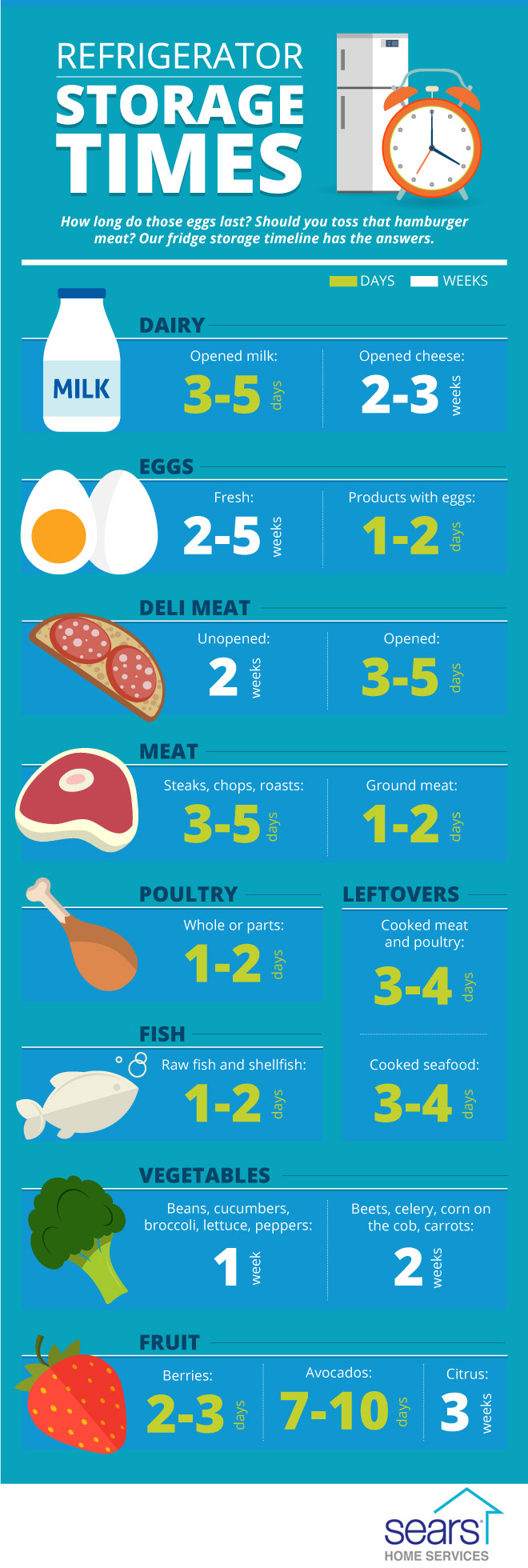
How long do those eggs last? Should you toss that hamburger meat? Our fridge storage timeline has the answers.
Opened Milk: 3-5 days
Opened Cheese: 2-3 weeks
Fresh: 2-5 weeks
Products with eggs: 1-2 days
Unopened: 2 weeks
Opened: 3-5 days
Steaks, chops, roasts: 3-5 days
Ground meat: 1-2 days
Whole or parts: 1-2 days
Leftover cooked meat and poultry: 3-4 days
Raw fish and shellfish: 1-2 days
Leftover cooked seafood: 3-4 days
Beans, cucumbers, broccoli, lettuce, peppers: 1 week
Beets, celery, corn on the cob, carrots: 2 weeks
Berries: 2-3 days
Avocados: 7-10 days
Citrus: 3 weeks
Always stay safe when handling food. When in doubt, throw it out.
Extend the lifespan of your refrigerator and prevent unexpected and costly breakdowns with our routine maintenance service.
Loading scheduler options...
Ensure your refrigerator's efficiency with regular maintenance. Learn 3 key reasons why it's important and get expert tips from Sears Home Services.

Discover the truth behind common refrigerator myths to ensure your food stays fresh and your family stays safe.

Keep cool this summer with top tips for refrigerator efficiency as temperatures rise.
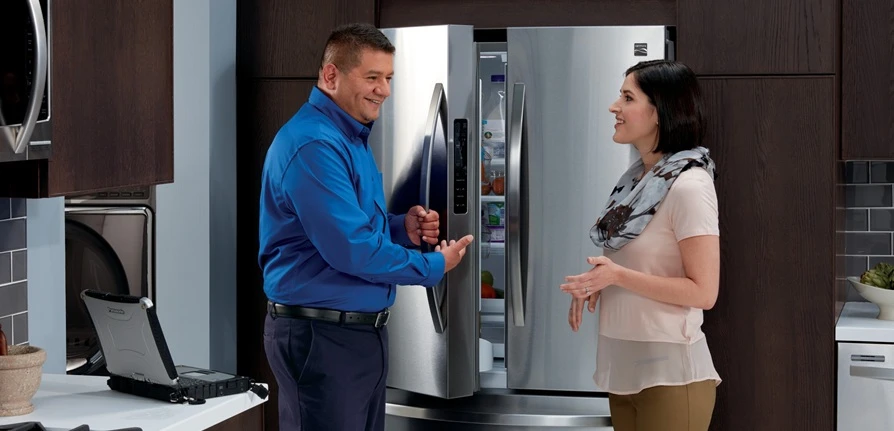
Don't let a broken refrigerator spoil your day. Keep it running smoothly with regular refrigerator maintenance from Sears Home Services.
A compressor is a mechanical device that increases the pressure of a gas by reducing its volume, essential in various systems including refrigerators, air conditioners, and HVAC units for cooling and refrigeration processes.
A condenser is a component of HVAC and refrigeration systems, responsible for releasing absorbed heat from the refrigerant into the outside air or a water line, thus facilitating the cooling process.
A dual ice maker is a feature in some refrigerators that includes two separate ice makers: one in the fridge compartment and another in the freezer section. This setup doubles the appliance's ice-making capacity.
A French-door refrigerator features two doors that open side-by-side on the top section for the refrigerator compartment, with a bottom freezer drawer, combining style, efficiency, and easy access to both refrigerated and frozen goods.
The most common reasons your LG refrigerator icemaker reset button is not working are a faulty icemaker, a malfunctioning PCB, or a defective water valve.
The most common reasons your Samsung refrigerator is leaking water are a clogged defrost drain, cracked dispenser water tubing or a damaged evaporator.
The most common reasons your Kenmore Elite refrigerator stopped working are a locked compressor, damaged evaporator or a defective electronic control board.
The most common reasons your Maytag refrigerator stopped working are a locked compressor, damaged evaporator or a defective electronic control board.
The most common reasons your Kenmore refrigerator is noisy are a faulty ice maker assembly, defective electronic control board or a locked compressor.
The most common reasons your Kenmore refrigerator fan is not working are a defective electronic control board, damaged evaporator or a locked compressor.