 Appointment Lookup
 213-596-2538

Learn how to eliminate bad odors from your dishwasher and prevent them from returning.
Myth 1 – You need to pre-rinse.
Myth 2 – It doesn’t matter how you load it.
Myth 3 – It’ll damage your flatware.
Myth 4 – Good knives are ok to put in there.
Myth 5 – Using a rinsing agent is a waste of time.
Myth 6 – Detergents are all the same.
Myth 7 – The disposal has nothing to do with the dishwasher.
Frequently Asked Questions

Some of us scrub our dishes so well before they go in the dishwasher that they hardly need any more cleaning. If there’s nothing for the detergent to clean, it can be abrasive to dishes. Learn more about this and other dishwasher myths in this helpful article.
KEY TAKEAWAYS
Dishwashers aren’t exactly new-fangled inventions, but there are still a lot of misconceptions about them. Mike Showalter, a field support engineer at Sears, helps us get at the truth behind some common dishwasher myths.

(Text Version of Infographic)
Unless you have large particles of food on your dishes, pre-rinsing creates extra work and could actually hinder dishwasher performance. If there’s nothing for the detergent to work on, it can be abrasive to dishes.
Top Rack: Cups and glasses belong here, between the tines – not perched over them. The little rack with the slots is for the stems of wineglasses. Place bowls at an include so the water drains. Dishwasher-safe plastic also goes here.
Bottom Rack: Best suited for plates, pans, and larger items.
Third rack: Some dishwashers have a slip third rack for spatulas, other tall cooking utensils, and large knives. If you don’t have one, they go on the top rack, facing down.
Everyday flatware is fine to put in the dishwasher. Put utensils in the holder with their handles down, business-end up – with the exception of sharp knives. Those go in point-down. Mix up forks, spoons, and knives.
Nope! Wash your good cooking knives by hand. Ditto for fine china, ceramic cookware, wooden cutting boards, crystal glasses, sterling silver, and silver-plate items.
This is one of the most common mistakes. Rinsing agents allow water to drain after the final rinse and prevent spots and streaks.
Some studies have shown that powders, especially the powder tablets, work best on caked-on food. If you’re a fan of gel or pods, keep a box of powder tablets on hand for really tough loads.
Not true! The dishwasher likely drains into the same pipe as your sink, so making sure it’s not clogged with disposal fodder will help your dishwasher drain efficiently. Also: Run the hot water and then start the dishwasher so the cycle will use hot water from the get-go.
Regular dishwasher maintenance can help prevent costly breakdowns, reduce energy costs and extend the life of your appliance.
Loading scheduler options...
Learn how to eliminate bad odors from your dishwasher and prevent them from returning.

Discover the top 5 dishwasher do's and don'ts this BBQ season at Sears Home Services.
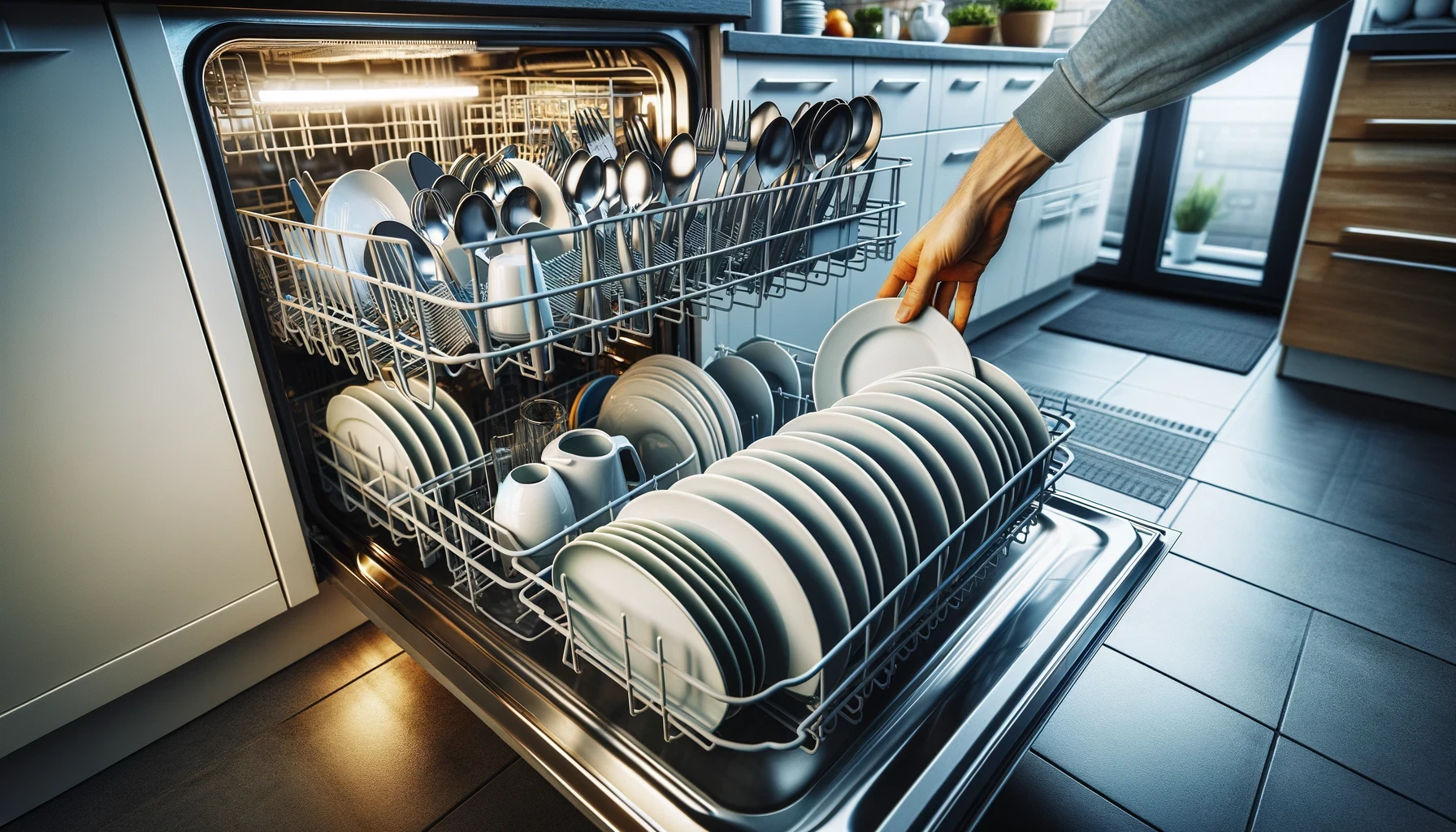
Loading your dishwasher properly will ensure that all dishes get cleaned properly.

If you’ve ever stared at your dishwasher and wondered what cycle to use before just proceeding with the normal wash, you’re definitely not alone.
A dishwasher basket is a removable container designed to securely hold small items like cutlery and utensils during the wash cycle, ensuring efficient cleaning without loss or damage.
A dishwasher end panel is a finishing piece installed on the exposed side of a dishwasher, primarily when it is at the end of kitchen cabinetry, to ensure a seamless and aesthetically pleasing look in the kitchen.
A dishwasher diverter motor controls the direction of water flow to different spray arms within the dishwasher, ensuring optimal water distribution during each wash cycle for thorough cleaning.
A dishwasher drawer is a compact, space-saving kitchen appliance designed to clean dishes efficiently, resembling a standard kitchen drawer that slides out for easy loading and unloading.
The most common reasons your Frigidaire dishwasher won't start a cycle are a defective electronic control board, damaged power supply board or a failed door switch.
The most common reasons your Amana dishwasher won't drain are a failed drain pump, faulty pump and motor assembly or a cracked drain hose.
The most common reasons your Bosch dishwasher has no heat are a defective electronic control board, clogged water valve or a broken detergent dispenser.
The most common reasons your Electrolux dishwasher is not heating are a defective electronic control board, faulty pump and motor assembly or a damaged user interface control.
The most common reasons your Kenmore dishwasher is not washing are a faulty pump and motor assembly, defective electronic control board or a clogged spray arm.
The most common reasons your Kenmore Elite dishwasher is not washing are a faulty pump and motor assembly, defective electronic control board or a clogged spray arm.