 Appointment Lookup
 213-596-2538
Get expert tips on preparing your furnace for the cold winter months.
MYTH 1: Turning your AC off when you leave the house is a waste of energy.
MYTH 2: You only have to change the filter once a year.
MYTH 3: The bigger the HVAC system the better.
MYTH 4: Close the vents in empty rooms to increase energy efficiency.
MYTH 5: My thermostat’s location doesn’t affect heating and cooling.
MYTH 6: I don’t need routine maintenance.
MYTH 7: An energy-efficient unit will automatically reduce my bill.
MYTH 8: Cover the outdoor unit during winter.
Frequently Asked Questions
With so many varying opinions and sources available about HVAC systems, it can be hard to separate fact from fiction. Don’t sweat it. We’re busting some of the most common heating and cooling myths to help keep you and your family comfortable.
KEY TAKEAWAYS
Learn some easy HVAC maintenance tricks and know when to call in an air conditioning repair service.
Between changing the filter, scheduling routine maintenance, and heating or cooling your home in the most efficient way possible, there’s a ton of info out there on how to best maintain your HVAC system. And with so many varying opinions and sources, it can be hard to separate fact from fiction.
Learn the truth about these common heating and cooling systems myths.
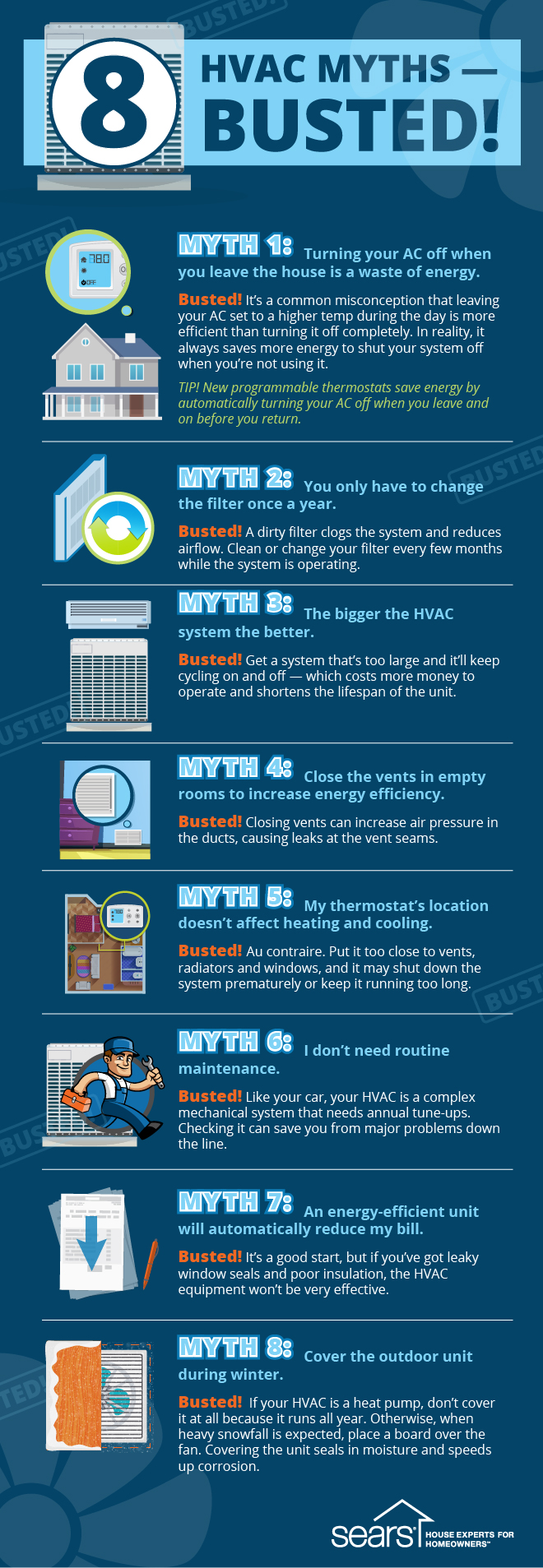
Contrary to popular belief, leaving your AC on all day while you're out is like leaving a tap running – wasteful and costly. Your air conditioner should cool your home based on occupancy. Utilizing a programmable thermostat can align your home's temperature with your schedule, providing comfort while conserving energy and cutting costs.
Think about this: the air you breathe cycles through that filter. Changing it just once a year isn't enough to maintain air quality or system efficiency. Factors like pets, allergies, and household size mean filters should typically be replaced every 30-90 days. Heed your system's manual or professional advice for specific guidance.
Size matters, but bigger isn't always better. An oversized system cycles on and off more, causing wear and increasing bills without improving comfort. The key is finding a unit that's just right for your space, balancing efficiency and performance, much like choosing a vehicle that fits your family's needs.
Modern HVAC systems are balanced networks. Closing vents in unused rooms increases air pressure in the ducts, causing leaks at the vent seams.
Au contraire. Location is crucial. A thermostat near vents, radiators, or in direct sunlight can get false readings, causing your system to over or underperform. Position it in an interior wall and central location, away from direct heat sources for more accurate temperature control and system efficiency.
An HVAC system is like a car; it needs regular check-ups to run smoothly. Annual maintenance prevents minor issues from becoming major, ensuring your system's longevity and reliability. Don't wait for a breakdown to appreciate the value of preventative care.
While an efficient unit is a step in the right direction, your home's insulation and window seals play significant roles. Ensure your home is well-insulated and draft-free to truly reap the benefits of your energy-efficient HVAC system.
If your HVAC is a heat pump, don’t cover it all because it runs all year. Otherwise, when heavy snowfall is expected, place a board over the fan. Covering the unit seals in moisture and speeds up corrosion.
Energy-Saving Tips:
Now that you know the facts, you can take better care of your HVAC system, ensuring it keeps you comfortable while being cost-effective and reliable. Making informed choices is key to effective HVAC management. If you ever need system service or if your HVAC unit stops working, schedule repair service with Sears Home Services.
HVAC checkups from Sears Home Services help keep your heating and cooling system running at its best. Prevent costly repairs and can make your HVAC system more energy efficient with routine maintenance.
Loading scheduler options...
Get expert tips on preparing your furnace for the cold winter months.

Discover how thermostats work to control your home's comfort and energy use. Learn about types, programming tips, and maintenance for a more efficient home.

Perform these home maintenance tasks to help you enjoy a stress-free school year.

Understanding the various AC air filter ratings helps you determine which type of filter is right for your home.
The 608 Certification, mandated by the Environmental Protection Agency (EPA), is required for HVAC technicians to legally handle refrigerants. It ensures technicians understand refrigerant types, environmental impact, and proper handling techniques.
A compressor is a mechanical device that increases the pressure of a gas by reducing its volume, essential in various systems including refrigerators, air conditioners, and HVAC units for cooling and refrigeration processes.
A condenser is a component of HVAC and refrigeration systems, responsible for releasing absorbed heat from the refrigerant into the outside air or a water line, thus facilitating the cooling process.
A capacitor in an AC unit is an electrical component that stores and releases electrical energy to help start the motor and stabilize the voltage during operation.
When your Payne central air conditioner won’t turn on or isn’t cooling, check for power problems, a failed capacitor, or a clogged condensate drain. This guide covers quick, safe troubleshooting steps and explains when to call Sears Home Services for expert central AC repair.
When your ICP central air conditioner won’t turn on or isn’t cooling, check for power problems, a failed capacitor, or a clogged condensate drain. This guide covers quick, safe troubleshooting steps and explains when to call Sears Home Services for expert central AC repair.
When your Heil central air conditioner won’t turn on or isn’t cooling, check for power problems, a failed capacitor, or a clogged condensate drain. This guide covers quick, safe troubleshooting steps and explains when to call Sears Home Services for expert central AC repair.
When your Carrier central air conditioner won’t turn on or isn’t cooling, check for power problems, a failed capacitor, or a clogged condensate drain. This guide covers quick, safe troubleshooting steps and explains when to call Sears Home Services for expert central AC repair.
When your Comfortmaker central air conditioner won’t turn on or isn’t cooling, check for power problems, a failed capacitor, or a clogged condensate drain. This guide covers quick, safe troubleshooting steps and explains when to call Sears Home Services for expert central AC repair.
When your Ruud central air conditioner won’t turn on or isn’t cooling, check for power problems, a failed capacitor, or a clogged condensate drain. This guide covers quick, safe troubleshooting steps and explains when to call Sears Home Services for expert central AC repair.